At Katalyst Engineering Services, we continually strive to drive innovation by deftly utilizing these resources, changing the issues encountered by various industries and fields with potential solutions.
At Katalyst Engineering Services, we continually strive to drive innovation by deftly utilizing these resources, changing the issues encountered by various industries and fields with potential solutions.
Over 70% of manufacturing delays originate from process inefficiencies that remain hidden in day-to-day operations. Manufacturers today face increasing pressure to deliver faster, smarter, and more resilient operations across their manufacturing services, from production planning to assembly and quality control. Traditional methods of identifying inefficiencies often rely on assumptions rather than evidence.
This is where AI process mining is transforming operational decision-making. By analysing real-time system data, organisations gain a transparent view of how production actually runs. Instead of reacting to delays, manufacturers can predict and prevent them. As production complexity increases, data-backed insights are no longer optional. They are essential for maintaining throughput, controlling costs, and ensuring long-term competitiveness in industrial environments.
Most factories are spending a lot of money on automation yet bottlenecks still impact the production. The underlying problem is that it is usually low visibility within interconnected systems. The machines can be automated, yet they do not have complete processes. Process mining manufacturing methods expose these under the carpet inefficiencies by plotting the real work flows as opposed to the perceived ones.
Logs of ERP, MES and IoT systems are analyzed using AI to uncover delays. Such knowledge can assist leaders in going beyond the outward symptoms and concentrate on structural problems that cause sluggish production lines.
Key contributors to persistent bottlenecks include:
Wondering how to align innovation with efficiency in your operations? Our tailored solutions bridge the gap seamlessly
Conventional audits provide only snapshots and rarely capture the true flow of production. AI process mining analyses event-level data from ERP, MES, and operational systems to reconstruct end-to-end workflows. It reveals how materials, machines, and people interact in real conditions, uncovering deviations, rework loops, and idle time often missed by managers. This creates a factual, data-driven foundation for improvement, helping manufacturers identify the sources, duration, and recurring causes of delays.
This level of transparency enables organisations to act faster, prioritise smarter, and sustain long-term operational improvements. For a deeper dive on how AI advances manufacturing and predictive maintenance
Together, this clarity transforms operational complexity into structured, actionable insight that drives measurable production performance gains.
Dashboards and historical reports alone aren’t enough for effective production bottleneck analysis. AI models continuously assess process performance under changing conditions, learning patterns linked to downtime, material shortages, and quality variations. This intelligence shifts manufacturers from reactive fixes to predictive interventions, flagging risks before they impact production. Over time, organisations build a self-improving production environment grounded in real operational behaviour rather than assumptions.
AI-driven bottleneck analysis enables manufacturers to act before disruptions impact output and delivery commitments.
Manufacturing process optimization is not just about speed; it requires balancing efficiency, quality, and operational flexibility. AI process mining enables this by simulating workflow changes before they are applied on the production floor. This reduces implementation risk while speeding up decision-making.
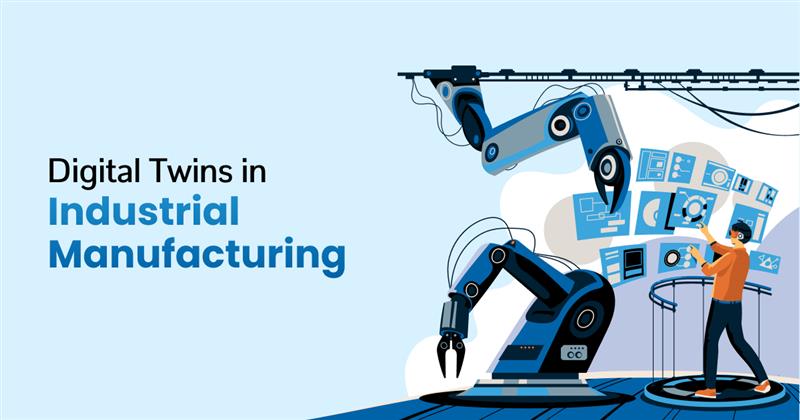
Simulation and operational modeling, especially with tools like digital twins allow teams to test scenarios and optimise throughput virtually before implementation.
AI then tracks the impact of changes in real time, ensuring optimisation efforts stay aligned with business goals. Manufacturers achieve shorter cycle times, better resource utilisation, and stronger adherence to standard operating procedures. As AI continues to learn from live operational data, these improvements scale into sustained performance gains.
Modern manufacturing success depends on seamless coordination between production, procurement, and logistics. AI-powered business automation enables this by aligning data-driven insights across functions. Process mining highlights where handoffs break down, approvals stall, or information gaps slow execution. This allows organisations to automate processes intelligently rather than broadly. Automation becomes targeted, strategic, and measurable, directly supporting operational goals instead of adding complexity.
Key automation enablers include:
Explore related insights on how smart factory technologies integrate automation and AI to scale manufacturing performance.
As manufacturers scale, operational complexity increases exponentially. AI-powered enterprise solutions ensure that process visibility and control scale alongside growth. AI process mining adapts to new plants, systems, and suppliers without sacrificing accuracy. This enables consistent performance across distributed operations while supporting governance and standardisation. Leaders gain a unified, real-time view of global production health, which is essential for strategic planning and risk management.
Enterprise-wide advantages include:
Katalyst Engineering combines deep manufacturing expertise with advanced AI capabilities to deliver measurable, real-world outcomes. Their approach to AI process mining is rooted in practical industrial challenges rather than theoretical models. By integrating process intelligence with operational context, Katalyst helps manufacturers uncover hidden inefficiencies and drive continuous improvement. Their solutions support data-driven decision-making across complex production environments, positioning Katalyst Engineering as a trusted partner in digital manufacturing transformation.
Struggling with designs that don’t scale or processes that slow you down? Katalyst helps you engineer smarter, faster, and better.
Production bottlenecks are no longer inevitable. AI process mining gives manufacturers clear, actionable insights to eliminate inefficiencies, enable faster decisions, and drive sustainable optimisation. Data-driven process intelligence is now a competitive differentiator, and organisations adopting AI-led analysis today will lead tomorrow’s manufacturing landscape.
If recurring delays or hidden inefficiencies are slowing your operations, start with AI process mining to understand your processes and enable resilient growth. Explore how Katalyst Engineering can help to transform your manufacturing with data-driven insights.
A: AI process mining helps manufacturers uncover hidden inefficiencies such as delays, rework loops, and idle time by analysing real production data. It provides visibility into how processes actually run, not how they are assumed to run.
A: Process mining manufacturing identifies where and why bottlenecks occur by analysing event-level data across systems. This enables faster root-cause analysis and more targeted corrective actions.
A: Manufacturers should adopt AI-driven production bottleneck analysis when recurring delays, missed delivery timelines, or rising operational costs indicate systemic process inefficiencies rather than isolated issues.
A: Yes, manufacturing process optimization using AI allows teams to simulate workflow changes digitally before applying them on the shop floor. This minimises operational risk while accelerating improvement cycles.
Why do manufacturers choose Katalyst Engineering for AI process mining?
A: Manufacturers work with Katalyst Engineering because of their strong manufacturing domain expertise combined with practical AI implementation. Their AI process mining approach focuses on real operational challenges and measurable outcomes rather than theoretical models.
Bhavik Shah is the Vice President of Global Engineering and Manufacturing at Katalyst Engineering, with over 22 years of experience in the engineering industry. He specializes in product development, R&D, and engineering delivery operations, driving innovative, design-led solutions across automotive, industrial, and off-highway sectors. Bhavik plays a key role in strengthening engineering strategies, building global partnerships, and delivering high-performance outcomes for clients.
Need help understanding our services in depth? Our team of experts will specify everything you require. Tap on the Contact Us button and connect with our team today!