At Katalyst Engineering Services, we continually strive to drive innovation by deftly utilizing these resources, changing the issues encountered by various industries and fields with potential solutions.
At Katalyst Engineering Services, we continually strive to drive innovation by deftly utilizing these resources, changing the issues encountered by various industries and fields with potential solutions.

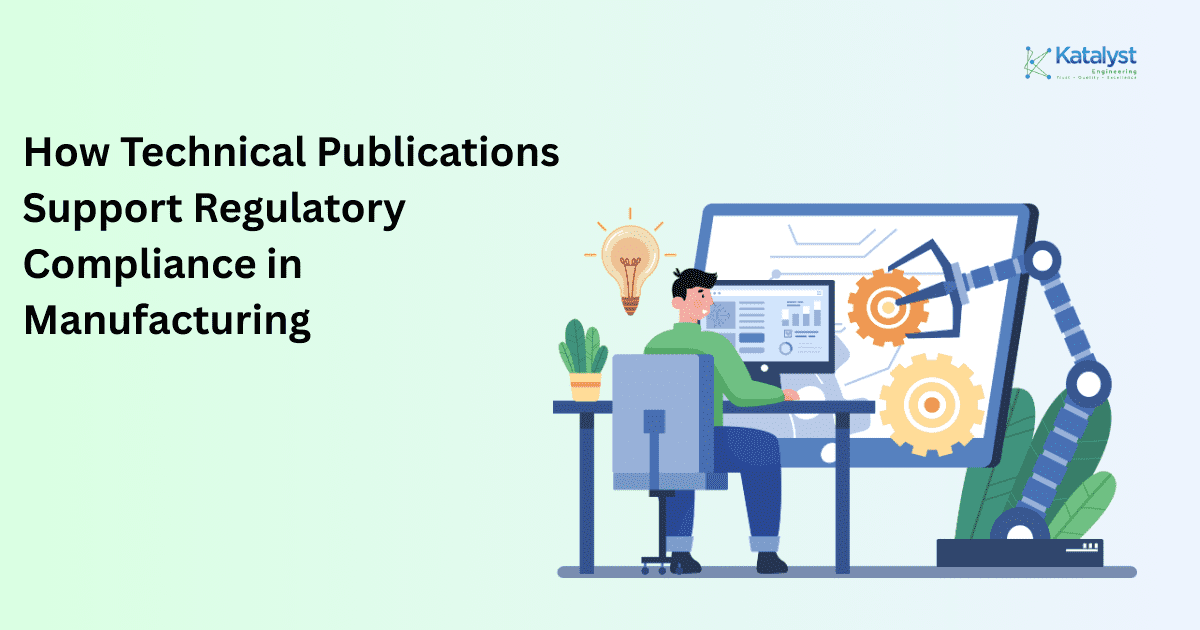
Compliance in manufacturing isn’t just about passing inspections anymore. It demands full traceability, accurate digital records & controlled documentation that stands up to regulatory scrutiny. For many manufacturers, decentralized compliance processes across departments create inconsistency, making audits stressful and corrective actions costly. This is where structured technical publications become essential for manufacturing regulatory compliance.
Technical publications go beyond manuals or SOPs. They are regulated bodies of knowledge that support manufacturing compliance at every stage, from work instructions and validation protocols to inspection standards and safety documentation.
When created with managed templates and version control, they minimize ambiguity and human error while aligning with quality assurance documentation specifications. If you’re exploring how to strengthen your documentation framework, our technical publication services provide structured support tailored to compliance-driven manufacturing environments.
To achieve manufacturing regulatory compliance, you need documentation that creates traceability, defines responsibilities, and records validation outcomes at every process step. Technical publications serve as the written evidence that processes were followed correctly, which is exactly what auditors look for during regulatory reviews.
Manufacturing environments are complex and highly regulated. Poorly managed documentation increases exposure to compliance risks, from audit findings to certification delays. Organizations that align technical publications with regulatory compliance frameworks reduce these risks significantly by ensuring documents reflect current standards and operational changes in real time.
Companies with standardized document structures report better inspection preparedness and fewer non-conformances. Clear publications help operators adhere to proven processes while enabling management to demonstrate accountability during regulatory reviews. This organized system builds trust among regulators and internal stakeholders alike.
Manufacturing compliance requirements exist to ensure product safety, quality consistency, and regulatory adherence across global markets. When documentation systems operate separately from production systems, inconsistencies emerge that can lead to compliance deviations and operational inefficiencies.
Manufacturers that integrate digital production data with technical publications establish better traceability and reduce compliance deviations. Studies show organizations with incorporated compliance structures record greater operational efficiency and lower recall risks. This congruency strengthens regulation in the manufacturing industry and supports sustainable development goals.
Industry Stat
According to 2025 audit data, 73% of manufacturing plants fail at least one audit finding annually, with 42% of failures traced to missing documentation, incomplete audit trails, or outdated records. The average cost of a failed compliance audit is $284,000.
For medical-device manufacturers selling into the U.S., FDA’s Quality Management System Regulation (QMSR), effective February 2, 2026, amended 21 CFR Part 820 and incorporated ISO 13485:2016 by reference.
These regulatory compliance requirements mean manufacturers must maintain centralized, version-controlled documentation systems that prevent unintended use of obsolete versions. External documents must also be identified and controlled to ensure alignment with applicable standards.
| Documentation Challenge | Compliance Impact | Operational Consequence |
| Incomplete SOPs | Audit findings | Production delays |
| Version control gaps | Regulatory non-conformance | Rework costs |
| Missing validation data | Certification issues | Market access delays |
| Poor traceability | Recall exposure | Brand damage |
Organizations that align technical publications with these frameworks reduce risks while supporting real-time updates and digital traceability.
To meet regulatory compliance requirements effectively, you need a structured approach that standardizes templates, enforces version control, and centralizes records. Here’s how traditional and structured documentation approaches compare:
| Capability | Traditional Documentation | Structured Technical Publications |
| Content Creation | Document-centric files | Topic-based, modular components |
| Version Control | Manual tracking | Automated workflows with approval cycles |
| Accessibility | Scattered across departments | Centralized repository with role-based access |
| Audit Readiness | Reactive preparation | Proactive, continuous compliance |
| Update Process | Manual, error-prone | Automated reviews and distribution |
Structured technical publications transform documentation from an administrative burden into a compliance asset that supports audit readiness and operational efficiency.
A systematic manufacturing documentation process ensures technical publications effectively support regulatory compliance.
Here’s five-step framework manufacturers can follow –
Step 1: Conduct a Compliance Gap Assessment
Review existing documents against regulatory requirements and internal standards. Identify missing or outdated records that could trigger audit findings.
Step 2: Define Documentation Architecture
Create standardized templates for SOPs, validation protocols, and quality assurance documentation that align with manufacturing compliance requirements.
Step 3: Implement Version Control and Approval Workflows
Use structured review cycles to ensure regulatory compliance and traceability across all document changes.
Step 4: Digitize and Centralize Records
Adopt secure document management platforms to improve accessibility and audit transparency. This is where a compliance documentation platform manufacturing teams use becomes critical.
Step 5: Monitor and Update Continuously
Regulations evolve. Technical publications must be reviewed periodically to remain compliant with current manufacturing regulations.
This structured approach strengthens compliance manufacturing processes while minimizing operational disruption.

Technical documentation compliance directly impacts audit outcomes by providing verifiable evidence that processes were followed correctly. When documentation is integrated with production systems, updates happen in real-time, ensuring transparency across all processes.
Manufacturers that match digital production data to technical publications establish better traceability and reduce compliance deviations. This is the essence of technical documentation compliance, creating a single source of truth that auditors can trust.
For deeper insights into how documentation gaps affect product safety, explore our analysis on how poor technical documentation impacts product safety and compliance.
Regulatory compliance in manufacturing is often viewed as a cost center. However, structured compliance systems generate measurable business value through reduced audit penalties, faster certifications & improved operational efficiency.
Organizations with strong documentation governance report higher customer trust and better supply chain partnerships. Manufacturing regulatory compliance also enhances brand reputation, strengthening investor confidence and global market expansion efforts.
When compliance manufacturing is embedded into operational strategy, it becomes a competitive advantage rather than an administrative burden. This shift is supported by effective technical documentation and product safety compliance practices.
To improve audit readiness, manufacturers should standardize documentation templates, implement version control, digitize records, and conduct periodic compliance reviews. These steps ensure alignment with evolving manufacturing regulations and reduce last-minute audit preparation stress.
A study on industry benchmarking reveals that manufacturers with digitized documentation systems save up to 40% on audit preparation time. Clarity in document indexing and well-organized metadata enhance retrieval speed during inspections.
For a broader perspective on how technical publications support modern manufacturing operations, read our piece on the role of technical publications in modern manufacturing.
Key Takeaways
If your team is navigating complex regulatory requirements, structured documentation can guide you through. Review your current documentation structure to identify gaps in traceability, validation & process control.
Partnering with expert engineering documentation specialists can simplify compliance work and build long-term regulatory resilience. Learn how Katalyst Engineering can support your compliance documentation needs.

1. What are manufacturing regulatory compliance requirements?
Manufacturing regulatory compliance requirements are documented standards that ensure product safety, quality & traceability. They include ISO 9001, FDA 21 CFR Part 820, and EU directives that mandate controlled documentation, version management, and audit-ready records.
2. How do technical publications support manufacturing compliance?
Technical publications provide structured SOPs, validation records, and process documentation that create traceability. They ensure consistency across operations, which is essential for audit readiness and long-term regulatory compliance.
3. What is a compliance documentation platform for manufacturing?
A compliance documentation platform is a centralized digital system that manages version control, approval workflows, and document distribution. It ensures all records are audit-ready and accessible at the point of use.
4. Why is technical documentation compliance important for audits?
Technical documentation compliance provides verifiable evidence that processes were followed correctly. Auditors rely on this documentation to confirm adherence to manufacturing regulations and quality standards.
5. How can manufacturers improve their documentation process?
Manufacturers can improve by standardizing templates, implementing version control, digitizing records, and conducting periodic compliance reviews. This structured approach ensures alignment with evolving regulations.
6. What role does quality assurance documentation play in compliance?
Quality assurance documentation verifies that production processes meet defined standards. It supports inspections, corrective actions & continuous improvement while minimizing non-conformance risks.
7. How does poor documentation impact manufacturing compliance?
Poor documentation leads to audit findings, certification delays, and increased recall exposure. It creates operational inefficiencies and damages brand credibility when compliance gaps are discovered.
8. Can outsourcing technical publications improve compliance?
Yes. Specialized technical publication services ensure documentation is structured, version-controlled & aligned with regulatory standards. This reduces audit risks while freeing internal teams to focus on core operations.

Senior Vice President, Katalyst Engineering
Bhavik Shah is the Vice President of Global Engineering and Manufacturing at Katalyst Engineering, with over 22 years of experience in the engineering industry. He specializes in product development, R&D, and engineering delivery operations, driving innovative, design-led solutions across automotive, industrial, and off-highway sectors. Bhavik plays a key role in strengthening engineering strategies, building global partnerships, and delivering high-performance outcomes for clients.