At Katalyst Engineering Services, we continually strive to drive innovation by deftly utilizing these resources, changing the issues encountered by various industries and fields with potential solutions.
At Katalyst Engineering Services, we continually strive to drive innovation by deftly utilizing these resources, changing the issues encountered by various industries and fields with potential solutions.
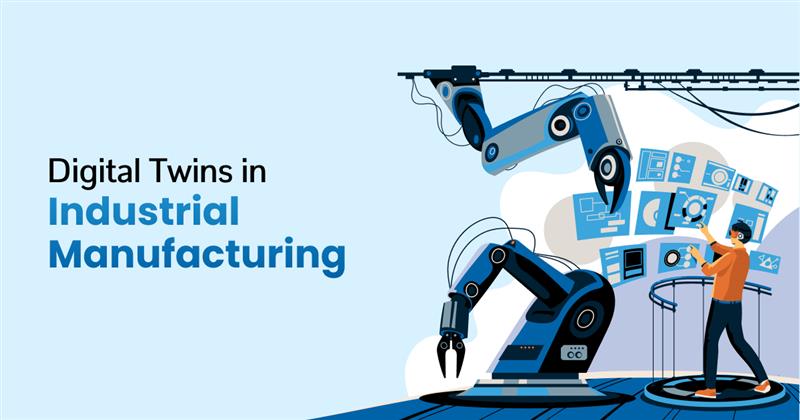
The process of industrial manufacturing is changing to become not reactive but to be data-driven and intelligent ecosystems. The focal point of this transformation is the digital twin in manufacturing, a simulation of physical objects, processes, or systems that recapitulates the behaviour of physical objects in the real world on a real-time basis. Digital twins, unlike other simulations, are constantly updated with live operational data and allow manufacturers to experiment with situations, make predictions, and optimise performance before it is altered on the shop floor.
In the case of engineering-based organisations like Katalyst Engineering, the digital twins are a natural match to the complex industry landscape where precision, up-time and scalability are of great importance. With the growing integration of manufacturing systems, the digital twin technology in manufacturing supply offers an orderly manner of integrating design data, operational intelligence, and lifecycle management. This intersection enables leaders to minimize the risk, enhance effectiveness, and create a presence across siloed assets.
Wondering how to align innovation with efficiency in your operations? Our tailored solutions bridge the gap seamlessly
Digital twin technology is fundamentally a combination of IoT sensors, engineering models, cloud platforms, and analytics to form a constantly developing virtual model. This technology has a high degree of fidelity to machines, production lines, energy systems, and even whole manufacturing facilities in a manufacturing environment.
Visualisation is not what makes digital twins useful, and it is their capacity to model the results based on the varying operating conditions. The current digital twin technology in manufacturing industry allows real-time digital simulation so that teams can test throughput, stress, and failure points without disruption to production.
A study commissioned in the industry suggests that up to 30% higher utilisation of assets and 25% less unplanned downtime are recorded by manufacturers who apply advanced digital twins. These benefits show that digital twins can transcend a theoretical concept into tangible operational benefits when applied in the right way.
The most significant digital twin manufacturing use cases are geared towards the high cost and risk-interest industrial processes. One of the most effective examples is predictive maintenance, whereby digital twins are used to model the way equipment will deteriorate and predict failures before they happen. This enables the maintenance crews to take preventive action and increase the life span of the assets.
The other high value application is in production optimisation, where application of digital twin in manufacturing assists engineers in simulating a layout change, production schedule and material flow scenarios.
The manufacturing organisations that used digital twins in process optimisation realised 15–20% productivity improvements in the intricate production lines. These findings emphasize the role played by digital twins as decision-support systems and not passive digital copies.
Advanced digital twinning software platforms form the backbone of scalable digital twin implementations by enabling consistent modelling across complex manufacturing systems.
These platforms integrate CAD models, sensor data, and operational analytics into a single environment, creating a comprehensive and continuously updated digital representation.
When combined with real-time digital simulation, manufacturers can test operational decisions instantly without interrupting or risking physical production systems.
In industrial manufacturing environments, real-time digital simulation enables stress testing under fluctuating demand, energy load variations, and supply chain disruptions.
The combined capabilities of digital twinning software and simulation ensure digital twins remain dynamic, accurate, and operationally relevant throughout the entire asset lifecycle.
Although it is beneficial, the implementation of a digital twin in manufacturing industry has drawbacks associated with the integration of data, model precision, and organisational preparedness. The legacy systems are not easily interoperable, and therefore, it is hard to consolidate the data streams into one digital twin environment.
Digital twins will end up being unstructured and mere models that lack dynamism in terms of the operations they are engaged in. The winning manufacturers meet these issues by matching digital twin endeavours and designing and implementing engineering processes with lifecycle management approaches.
The collaboration with engineering specialists will make sure that the digital twin technology accounts to the real-life constraints, operational tolerances, and performance constraints.
The expertise in the critical domain that organisations such as Katalyst Engineering provide as engineering-led organisations is an important contribution to digital twin projects. Digital twins need profound knowledge about mechanical systems, industrial processes, and operational limitations to provide significant results. In the absence of engineering accuracy, digital twins may become oversimplified and exhibit lesser applicability to the real world.
Through the combination of digital twin in manufacturing strategy with a solid engineering approach, the manufacturing organizations will guarantee precision, scalability and long-term value. Digital twins are engineered to become enterprise-level systems that help make decisions during the design, operation, and maintenance. This alignment enhances the resiliency of manufacturing in the ever more complex industrial ecosystems.
Struggling with designs that don’t scale or processes that slow you down? Katalyst helps you engineer smarter, faster, and better.
Digital twins are transforming how industrial manufacturers design, operate, and optimise complex systems. Adopting digital twin technology in manufacturing enables greater efficiency, resilience, and long-term innovation.
For manufacturers seeking precision, scalability, and future readiness, engineering-led digital twin frameworks offer a clear path to converting operational complexity into competitive advantage.
1. What is a digital twin in manufacturing?
A: A digital twin in manufacturing is a real-time virtual model of physical assets or processes used to simulate, analyse, and optimise operations continuously.
2. How does digital twin technology improve manufacturing efficiency?
A:Digital twin technology enables predictive maintenance, process optimisation, and real-time decision-making, reducing downtime and operational waste.
3.What are common digital twin use cases in manufacturing?
A:Popular digital twin use cases in manufacturing include predictive maintenance, production planning, quality control, and energy optimisation.
4.How can Katalyst Engineering’s engineering-driven approach help tailor a digital twin in manufacturing to your specific assets, processes, and operational constraints?
A: Katalyst Engineering applies deep engineering expertise to align digital twin models with real-world asset behaviour, ensuring accuracy, scalability, and lifecycle relevance.
5.Are your current manufacturing systems ready to leverage digital twin technology with the level of accuracy, scalability, and lifecycle integration that Katalyst Engineering specialises in?
A: Manufacturing systems are considered ready when they have reliable data streams, defined engineering processes, and a clear lifecycle management framework to support digital twin adoption.
Bhavik Shah is the Vice President of Global Engineering and Manufacturing at Katalyst Engineering, with over 22 years of experience in the engineering industry. He specializes in product development, R&D, and engineering delivery operations, driving innovative, design-led solutions across automotive, industrial, and off-highway sectors. Bhavik plays a key role in strengthening engineering strategies, building global partnerships, and delivering high-performance outcomes for clients.
Need help understanding our services in depth? Our team of experts will specify everything you require. Tap on the Contact Us button and connect with our team today!