At Katalyst Engineering Services, we continually strive to drive innovation by deftly utilizing these resources, changing the issues encountered by various industries and fields with potential solutions.
At Katalyst Engineering Services, we continually strive to drive innovation by deftly utilizing these resources, changing the issues encountered by various industries and fields with potential solutions.

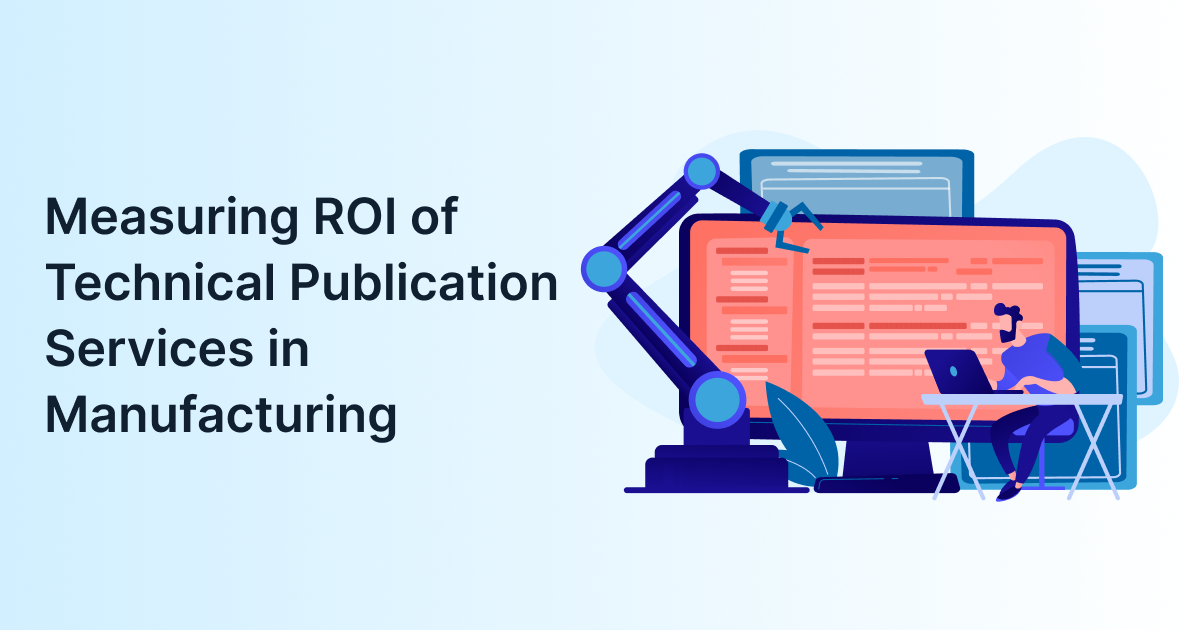
Manufacturing leaders constantly evaluate the financial return of production machinery, software integrations & assembly automation. However, critical engineering documentation is often categorized as overhead rather than a direct contributor to profitability. Modern plant operations demonstrate that investing in specialized technical publication services delivers clear, quantifiable returns by minimizing equipment downtime, streamlining engineering change orders, and eliminating assembly errors.
Key Takeaways
To maximize manufacturing ROI through documentation, organizations must treat technical publications as functional assets that directly reduce scrap rates, accelerate production ramps, and decrease warranty expenditures. Clear work instructions and illustrated parts catalogs ensure operational consistency across both internal assembly lines and external field service networks.
For industrial manufacturers, technical documentation connects design engineering to shop-floor execution. When assembly teams or maintenance technicians consult ambiguous manuals, assembly cycles slow down, and installation mistakes rise. Standardized documentation ensures that engineering intent translates into accurate physical production. In complex technical environments, unstructured or outdated documentation can consume significant engineering capacity.
By centralizing standard operating procedures and digitizing service handbooks, companies protect their bottom line from avoidable operational drag and lost productivity.
To capture the full ROI of automation, plant operators need precise, digital work instructions and troubleshooting trees that match the cadence of automated machinery. Automated production lines require synchronized technical procedures to prevent minor robotic faults from turning into prolonged plant shutdowns.
Modern manufacturing facilities increasingly deploy automated assembly cells and robotic material handlers. You can read more about how advanced robotics in manufacturing redefines plant productivity. However, robotic hardware is only as effective as the technician servicing it.
When documentation integrates directly with automation controllers and machine diagnostic portals, maintenance technicians can diagnose alarm codes instantly. Aligning technical publishing with the impact of AI on technical documentation workflows accelerates structured content delivery, ensuring that automation hardware maintains optimal overall equipment effectiveness.
To evaluate technical publications outsourcing effectively, manufacturing managers compare the total cost of maintaining an internal technical writing department against the agile scalability and structured authoring standards offered by external engineering partners. Outsourcing can shift some documentation costs from fixed internal resources toward project-based, managed-service, or variable delivery models, depending on the engagement structure.
Maintaining in-house technical publication teams requires investments in specialized software licenses, continuous training, and full-time technical writer payroll. External technical documentation specialists streamline these functions with established frameworks and multi-format publishing pipelines.

| Cost factor | In-house | Outsourced |
| Technical writers | Salaries/benefits | Service fees |
| Authoring tools | Licenses | Usually provider-managed |
| Training | Internal | Provider capability |
| Capacity scaling | Hiring | Flexible scope |
| SME involvement | Internal engineering time | Still required |
| QA/review | Internal | Shared/managed |
| Localization | Additional resources | Can be bundled |
| Structured authoring | Internal capability | Provider capability |
| Knowledge retention | Internal | Requires governance |
| Vendor management | Minimal | Additional management effort |
As manufacturing facilities navigate labor constraints and evolving machine variants, partnering with external providers allows core design engineers to focus exclusively on product innovation and throughput optimization. You can explore how external engineering services improve manufacturing efficiency on the plant floor to scale industrial outputs smoothly.
To calculate the ROI industrial leaders expect from technical publication services, organizations evaluate direct cost avoidance and labor recovery against total documentation spend:
ROI (%) = (Net Benefits / Documentation Investment) × 100
“Where, Net Benefits = Cost Savings from Errors avoided + Labour Hours Reclaim”
Key measurable performance indicators include:
Equipping your production lines, channel partners, and field technicians with accurate, structured technical documentation eliminates assembly bottlenecks and protects capital investments. Katalyst Engineering delivers end-to-end technical publication and engineering documentation solutions tailored to complex industrial operations. If you are looking to streamline your engineering workflows and reduce documentation costs, reach out to our specialists to discuss your project requirements.

1. What are technical publications in an industrial manufacturing context?
Technical publications are structured engineering documents, including standard operating procedures (SOPs), installation manuals, maintenance guides, operator handbooks, and illustrated parts catalogs (IPCs), designed to translate complex product designs into clear instructions.
2. How do accurate technical publications reduce warranty costs?
Accurate manuals provide explicit torque specifications, assembly tolerances, and maintenance routines, preventing operator-induced mechanical failures and misdiagnosed field repairs that result in expensive, unnecessary warranty claims.
3. What is the ROI of automation when paired with digital documentation?
Synchronizing digital technical publications with automated assembly cells minimizes mean time to repair (MTTR), optimizes maintenance interventions, and keeps high-value robotic assets running at peak throughput.
4. Why should manufacturing companies consider technical publications outsourcing?
Outsourcing technical documentation eliminates internal software licensing costs, frees design engineers from drafting manuals, and ensures compliance with global authoring standards like DITA and S1000D.
5. How does technical documentation improve plant floor safety?
Standardized safety bulletins, lockout/tagout procedures, and illustrated maintenance sequences ensure operators follow proper safety protocols, reducing workplace incidents and regulatory non-compliance risks.

Senior Vice President, Katalyst Engineering
Bhavik Shah is the Vice President of Global Engineering and Manufacturing at Katalyst Engineering, with over 22 years of experience in the engineering industry. He specializes in product development, R&D, and engineering delivery operations, driving innovative, design-led solutions across automotive, industrial, and off-highway sectors. Bhavik plays a key role in strengthening engineering strategies, building global partnerships, and delivering high-performance outcomes for clients.