Across manufacturing industries, the pressure to deliver innovative products faster has never been greater. Whether an organization produces agricultural equipment, industrial machinery, aerospace components, automotive systems, or medical devices, the ability to shorten product development cycles directly impacts revenue growth, competitive positioning, customer satisfaction & profitability.
However, many manufacturers continue to rely on fragmented product development processes where design, engineering analysis, prototyping & manufacturing planning occur in separate environments. This often results in repeated engineering iterations, delayed feedback loops, excessive physical prototypes & costly redesign efforts that extend launch schedules.
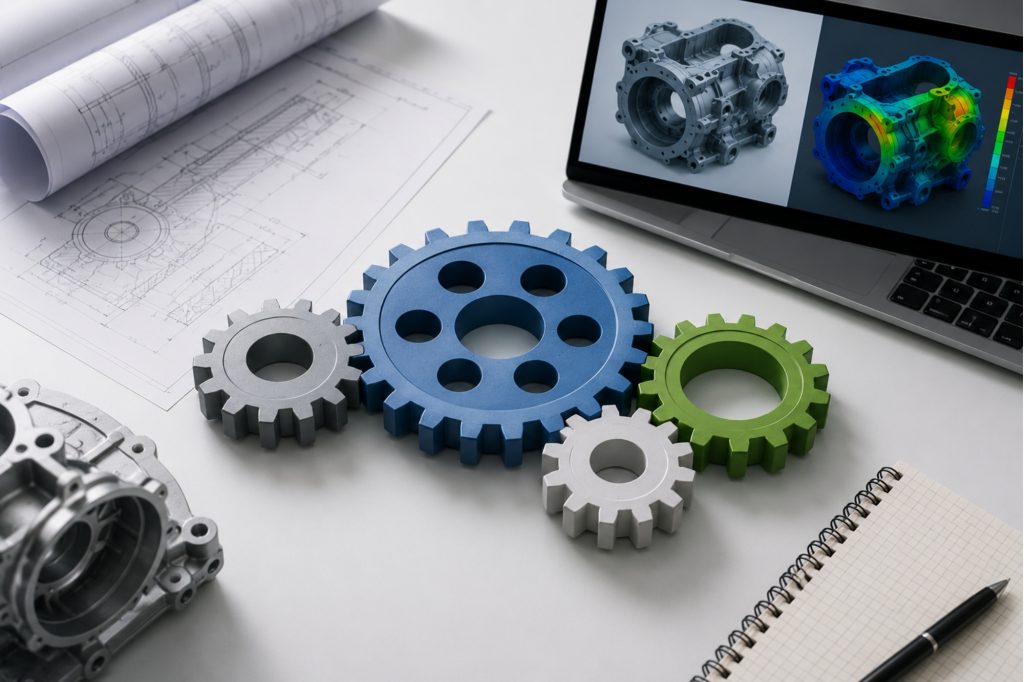
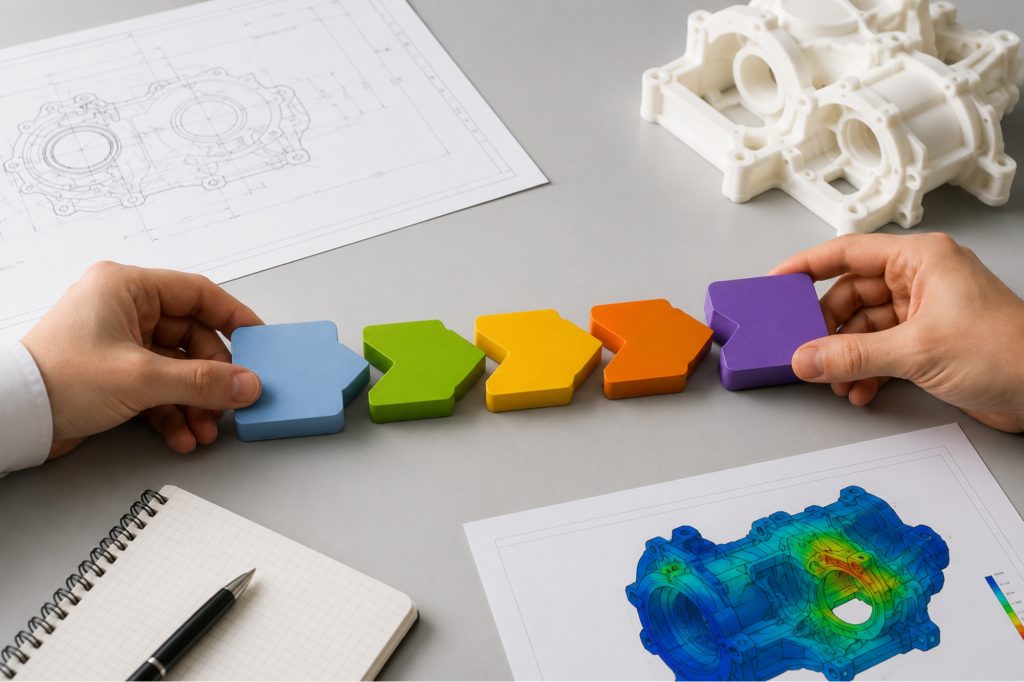
Integrated CAD (Computer-Aided Design) and simulation technologies provide a fundamentally different approach. By bringing design, analysis, validation & optimization together within a connected digital engineering environment, organizations can identify problems earlier, validate performance virtually, reduce development risk & accelerate decision-making throughout the product lifecycle.
This white paper explores –
- Why traditional product development approaches struggle to meet modern market demands
- How integrated CAD and simulation technologies reduce development timelines
- The simulation disciplines driving digital engineering transformation
- Practical implementation strategies for manufacturers
- Key considerations for evaluating digital engineering capabilities
- How engineering organizations can build a more efficient, simulation-driven development process
For engineering leaders, operations managers, product development teams & procurement stakeholders, understanding these capabilities is becoming increasingly important as product complexity and market expectations continue to rise.

The Business Challenge: Why Product Development Takes Longer Than It Should
The modern manufacturing landscape presents a unique set of challenges. Customers expect more sophisticated products; regulatory standards continue to evolve & competitive pressures require organizations to innovate faster while controlling development costs.
At the same time, product complexity is increasing. Today’s products often incorporate –
- Advanced mechanical systems
- Electronics and controls
- Connected technologies
- Lightweight materials
- Enhanced safety requirements
- Higher performance expectations
While product sophistication has increased, many organizations still operate using workflows developed decades ago.
A common product development sequence looks like this –
- Design team develops the initial CAD model.
- Engineering analysis is performed separately.
- Issues are identified after simulation or testing.
- Design modifications are made.
- New prototypes are built.
- The cycle repeats.
Each cycle introduces additional engineering effort, costs & schedule delays.
The Hidden Cost of Late Engineering Changes
One of the most significant drivers of launch delays is the discovery of design issues late in the development process.
When problems emerge during prototyping or production preparation, organizations often face a cascade of downstream impacts –
- Additional engineering redesign work
- New validation requirements
- Supplier and procurement disruptions
- Manufacturing process revisions
- Documentation updates
- Project schedule extensions
The later a design change occurs, the greater its impact across engineering, manufacturing, quality & supply chain functions.
Relative Impact of Design Changes Across Development Stages
| Development Stage | Cost of Change | Schedule Impact |
|---|
| Concept Design | Low | Minimal |
| Preliminary Design | Moderate | Limited |
| Detailed Design | High | Significant |
| Prototype Testing | Very High | Major |
| Production Release | Extremely High | Critical |
The fundamental objective of integrated CAD and simulation technologies is to move validation activities earlier in the development cycle, where issues can be identified and corrected at substantially lower cost.
Understanding Integrated CAD and Simulation Technologies
Integrated CAD and simulation refers to the combination of product design and engineering analysis within a unified digital environment.
Traditionally, CAD and simulation have been treated as separate activities. Designers create geometry while analysts validate performance using separate tools and workflows.
In an integrated environment, these activities become interconnected.
As engineers modify a design, simulation models update alongside the geometry, enabling continuous performance evaluation throughout development.
This creates a more collaborative and efficient engineering process where design decisions are informed by real-world performance data much earlier.
Core Objectives of Integration
An integrated engineering environment enables organizations to –
- Validate designs earlier
- Reduce physical prototype requirements
- Accelerate design iterations
- Improve collaboration among teams
- Optimize product performance
- Reduce engineering rework
- Improve manufacturing readiness
- Shorten product development timelines

Rather than evaluating whether a design works at the end of development, engineers continuously assess and improve performance throughout the process.
How Integrated CAD and Simulation Reduce Time-to-Market
1. Early Design Validation
One of the most powerful advantages of integrated engineering is the ability to identify problems before they become expensive.
In traditional workflows, validation often occurs after designs have progressed through multiple development stages. By that point, implementing changes may require substantial rework throughout the organization.
Integrated simulation allows engineers to validate concepts during early design phases.
Typical Validation Activities
| Engineering Domain | Analysis Performed |
|---|
| Structural Engineering | Stress, deformation, fatigue |
| Thermal Engineering | Heat transfer, temperature distribution |
| Fluid Systems | Flow characteristics, pressure drop |
| Mechanical Systems | Motion, vibration, dynamic behavior |
| Reliability Engineering | Durability and failure assessment |
This early visibility helps teams make informed decisions before resources are committed to tooling, procurement, manufacturing preparation & prototype production.
Key Takeaway
Early validation shifts engineering from a reactive process to a proactive process, dramatically reducing redesign cycles.
2. Virtual Prototyping Reduces Development Cycles
Physical prototypes remain important, but they are often one of the most expensive and time-consuming stages of product development.
Integrated simulation allows engineers to evaluate digital prototypes under virtual operating conditions before manufacturing physical components.
This approach enables organizations to assess –
- Performance
- Durability
- Reliability
- Thermal behavior
- Structural integrity
- Manufacturing feasibility
without waiting for prototype builds.
Benefits of Virtual Prototyping
- Faster concept validation
- Reduced development costs
- Fewer prototype iterations
- Lower material waste
- Accelerated testing cycles
- Improved confidence before production
For manufacturers of heavy equipment, agricultural machinery, aerospace structures & industrial systems, reducing even a single prototype cycle can generate meaningful time and cost savings.
3. Rapid Design Iteration and Optimization
Engineering teams rarely arrive at an optimal solution on the first attempt.
Successful product development typically requires evaluating multiple alternatives and balancing competing objectives such as cost, performance, manufacturability, weight, safety & reliability.
Integrated CAD and simulation platforms significantly streamline this process.
Instead of recreating analysis models after every design change, engineers can rapidly compare alternatives and assess impacts almost immediately.
Traditional vs Integrated Engineering Workflow
| Traditional Workflow | Integrated Workflow |
|---|
| Sequential development | Concurrent engineering |
| Manual data transfers | Shared digital model |
| Simulation after design | Simulation during design |
| Physical testing driven | Virtual validation driven |
| Long feedback loops | Continuous feedback |
| Multiple redesign cycles | Faster optimization |
By shortening engineering feedback loops, organizations can make faster and more informed decisions throughout product development.
The Simulation Technologies Driving Digital Engineering
Finite Element Analysis (FEA)
FEA enables engineers to predict how products will respond to mechanical loads and environmental conditions.
Applications include –
- Structural integrity assessment
- Fatigue analysis
- Stress evaluation
- Deflection prediction
- Failure investigation
FEA is widely used in aerospace, automotive, industrial equipment, agricultural machinery, and medical product development. Read this blog to know FEA’s role in Modern Mechanical Design Validation.
Example
An agricultural implement frame can be digitally evaluated for stress concentrations under varying field loads long before a physical prototype is manufactured.
This enables engineers to strengthen critical regions while avoiding unnecessary material costs.
Computational Fluid Dynamics (CFD)
CFD allows organizations to analyze fluid and airflow behavior in digital environments.
Common applications include –
- Cooling system design
- Aerodynamic optimization
- Hydraulic performance analysis
- Ventilation studies
- Flow path optimization
For products where thermal performance and fluid behavior directly impact functionality, CFD can significantly reduce the need for repeated testing cycles.
Thermal Simulation
Thermal management has become increasingly important across manufacturing sectors.
Thermal analysis helps engineers understand –
- Heat transfer
- Cooling efficiency
- Hotspot formation
- Temperature distribution
- Thermal stress
Industries benefiting from thermal simulation include:
- Automotive manufacturing
- Aerospace systems
- Medical devices
- Electronics
- Industrial machinery
Thermal validation performed early in development often prevents costly redesign efforts later.
Motion and Dynamic Simulation
Motion simulation evaluates how assemblies behave during operation. It enables engineers to study –
- Kinematics
- Mechanical interactions
- Dynamic loading
- Oscillation behavior
- Mechanism performance
This capability helps teams identify issues before physical assembly and testing begin.
Beyond Validation: Simulation-Driven Design Optimization
Many organizations initially adopt simulation to verify designs. The greatest value, however, often comes from optimization.
Simulation-driven optimization allows engineering teams to improve designs before production.
Weight Reduction
Reducing weight remains a key business objective across automotive, aerospace, industrial equipment & agriculture sectors.
Optimization studies help engineers remove unnecessary material while preserving strength and durability.
Reliability Improvement
Simulation reveals fatigue-prone regions, stress concentrations, thermal hotspots & other conditions that may affect product lifespan.
Addressing these issues earlier contributes to higher product quality and lower warranty risk.
Manufacturability Enhancement
By incorporating manufacturing considerations into development earlier, organizations can reduce production bottlenecks and improve scalability.
Optimization Outcomes
| Objective | Potential Benefit |
|---|
| Weight Reduction | Lower material costs |
| Reliability Improvement | Longer product life |
| Thermal Optimization | Better performance |
| Design Simplification | Faster assembly |
| Manufacturing Optimization | Reduced production risk |
The Human Side of Digital Engineering Transformation
While technology is a critical enabler, successful implementation depends equally on people, processes, and organizational alignment.
Many manufacturers invest in advanced software platforms but struggle to achieve expected outcomes because supporting processes remain disconnected.
Common challenges include –
- Engineering silos
- Inconsistent modeling standards
- Limited simulation expertise
- Poor data governance
- Fragmented workflows
- Resistance to change
Digital transformation succeeds when organizations align engineering, manufacturing, quality, procurement, and leadership around a shared development framework.
The Digital Engineering Maturity Model
Level 1: CAD-Centric Development
Characteristics –
- Limited simulation usage
- Heavy reliance on physical testing
- Manual engineering processes
Level 2: Simulation-Assisted Engineering
Characteristics –
- Periodic engineering analysis
- Reduced prototype dependence
- Partially connected workflows
Level 3: Integrated Engineering
Characteristics –
- CAD and simulation integration
- Concurrent validation
- Improved collaboration
Level 4: Simulation-Driven Product Development
Characteristics –
- Digital-first development strategy
- Extensive virtual validation
- Continuous optimization
- Data-driven engineering decisions
Many manufacturers operate between Levels 2 and 3, creating substantial opportunities for process improvement.
Industry Applications
Integrated CAD and simulation technologies are delivering measurable value across multiple industries.
Agriculture Equipment Manufacturing
Applications include –
- Structural durability improvements
- Hydraulic system optimization
- Weight reduction initiatives
- Reliability enhancement
Industrial Heavy Machinery
Organizations utilize simulation to improve –
- Machine performance
- Equipment lifespan
- Load-bearing capacity
- Maintenance efficiency
Automotive Manufacturing
Typical use cases include –
- Crash analysis
- EV battery thermal management
- Structural lightweighting
- Aerodynamic optimization
Aerospace & Defense
Applications include –
- Structural validation
- Thermal analysis
- Compliance support
- Fuel efficiency improvements
Medical Device Engineering
Teams leverage simulation for –
- Functional validation
- Reliability testing
- Thermal performance analysis
- Risk reduction
Organizations seeking expertise across these sectors often rely on specialized providers offering integrated Engineering Services, Mechanical Engineering Services & Manufacturing Engineering Services to supplement internal capabilities and accelerate implementation efforts.
A Practical Roadmap for Implementation
Successfully implementing integrated CAD and simulation requires a structured approach.
Phase 1: Assess Current Capabilities
Evaluate –
- Existing CAD systems
- Simulation tools
- Engineering workflows
- Data management processes
Phase 2: Identify High-Impact Opportunities
Prioritize areas with –
- High engineering rework
- Excessive prototype requirements
- Long validation cycles
- Frequent design changes
Phase 3: Establish Standardized Workflows
Develop repeatable methods for –
- Modeling
- Validation
- Design reviews
- Data management
Phase 4: Scale Across the Organization
Expand successful practices into –
- Product design
- Manufacturing engineering
- Quality assurance
- Supplier collaboration
Phase 5: Continuously Optimize
Use engineering performance metrics to refine processes and maximize return on investment.
Why Experience Matters
Integrated CAD and simulation technologies are powerful, but software alone does not guarantee results.
Successful implementation requires expertise in –
- Product design
- Engineering analysis
- Simulation methodologies
- Manufacturing processes
- Validation strategies
- Digital engineering workflows
This is especially true in highly regulated and performance-critical industries where development decisions can have significant operational, financial & compliance implications.
Organizations increasingly seek engineering partners capable of connecting design, simulation, and manufacturing into a cohesive development strategy.
At Katalyst Engineering, our teams support manufacturers through advanced CAD modeling, FEA, CFD, thermal analysis, virtual prototyping, product design, manufacturing engineering & technical consulting services. Through this integrated approach, clients can accelerate development while improving product performance and reducing engineering risk.
For additional information, readers may also explore Katalyst Engineering’s Case Studies & industry-specific engineering solutions.
Conclusion
The need to reduce time-to-market continues to reshape product development strategies across manufacturing industries.
Integrated CAD and simulation technologies provide organizations with a practical path toward faster innovation by enabling earlier validation, virtual prototyping, streamlined collaboration & simulation-driven optimization.
The most successful manufacturers are moving beyond isolated engineering tools toward connected digital engineering ecosystems where design, analysis & manufacturing operate together as part of a unified process.
Organizations that embrace this approach are better positioned to –
- Reduce development timelines
- Improve product quality
- Lower engineering costs
- Minimize project risk
- Increase innovation capacity
- Respond more effectively to changing market demands
As products become more complex and customer expectations continue to rise, integrated CAD and simulation capabilities will increasingly become a competitive necessity rather than a technological advantage.
Accelerate Product Development with Katalyst Engineering
Reducing time-to-market requires more than faster design tools. It requires a connected engineering strategy that integrates design, simulation, validation & manufacturing expertise from the earliest stages of development.
Katalyst Engineering helps manufacturers leverage advanced CAD, FEA, CFD, thermal simulation, virtual prototyping & manufacturing engineering capabilities to streamline product development and bring products to market faster.
Schedule a No-Cost Consultation to discuss your product development goals and identify opportunities to improve engineering efficiency, reduce risk & accelerate innovation.