At Katalyst Engineering Services, we continually strive to drive innovation by deftly utilizing these resources, changing the issues encountered by various industries and fields with potential solutions.
At Katalyst Engineering Services, we continually strive to drive innovation by deftly utilizing these resources, changing the issues encountered by various industries and fields with potential solutions.

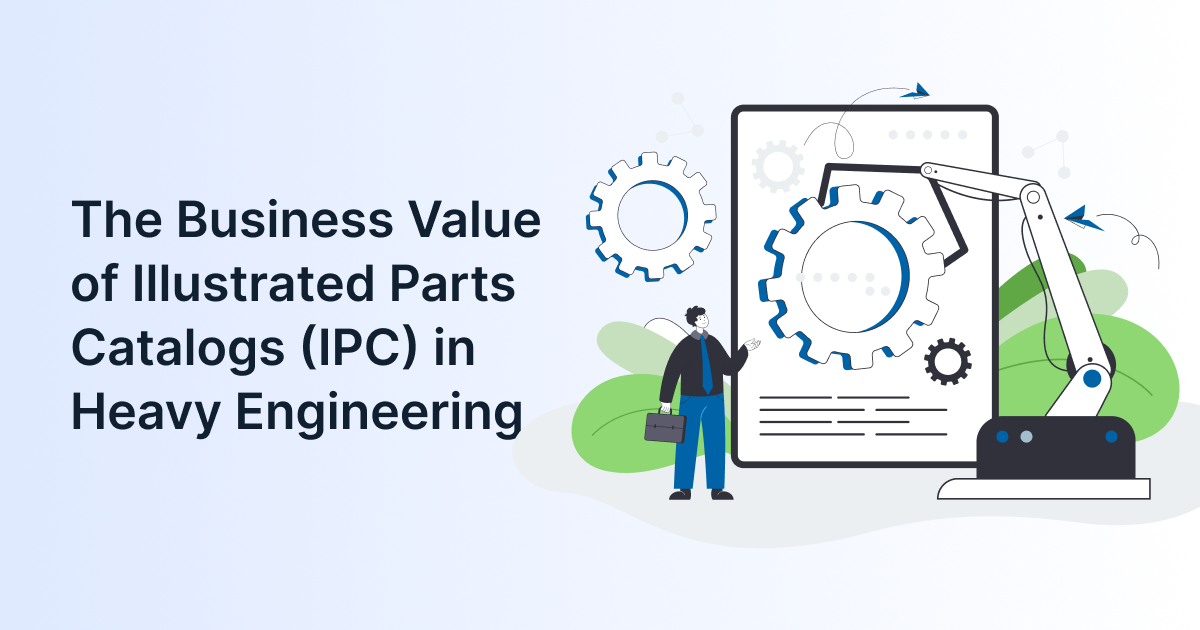
To maximise uptime and control lifecycle costs in heavy engineering, you need an illustrated parts catalog that visually maps components, links them to accurate data, and integrates with spare parts workflows. IPCs reduce ordering errors, accelerate maintenance & enable engineering services teams to deliver measurable operational efficiency.
In heavy engineering environments, where equipment is complex, downtime is expensive & accuracy is non-negotiable, documentation is no longer a back-office function. Illustrated parts catalogs (IPCs) have evolved into strategic assets that connect engineering design services, spare parts management & aftermarket support. When implemented as part of advanced engineering solutions, IPCs directly influence productivity, safety & profitability.
At Katalyst Engineering, IPCs are delivered through specialised technical publication services that align engineering intent with real-world service needs, ensuring heavy engineering organisations scale efficiently without compromising reliability.

To support complex machinery throughout its lifecycle, an illustrated parts catalog provides exploded diagrams, part numbers, descriptions & interchangeability data in a structured, visual format. In heavy engineering, IPCs act as a single source of truth for service, procurement & operations teams.
An illustrated parts catalog goes beyond a static engineering parts catalog. Modern IPCs are often delivered as interactive parts catalogs, enabling users to search assemblies, zoom into components & validate compatibility instantly. For heavy equipment manufacturers, EPCs and industrial parts catalogs become critical extensions of their engineering services ecosystem.
Without IPCs, heavy engineering firms face longer maintenance cycles, incorrect part orders & increased equipment downtime due to manual interpretation of drawings and fragmented documentation.
Common challenges include –
As highlighted in Katalyst Engineering’s analysis of external engineering services improving manufacturing efficiency, documentation gaps often translate directly into plant-floor inefficiencies.
To improve spare parts management in heavy engineering, you need an illustrated parts catalog that visually connects every component to accurate part numbers, BOM data & revision history. IPCs eliminate ambiguity in part identification, streamline ordering workflows & reduce excess inventory caused by incorrect or duplicate purchases.
This directly answers one of the most searched questions – how IPC improves spare parts management, by replacing ambiguity with visual and data-driven clarity.
To reduce equipment downtime in heavy engineering, IPCs enable faster fault isolation and first‑time‑right part replacement. By removing guesswork from component identification, illustrated parts catalogs shorten maintenance cycles and prevent repeat shutdowns caused by incorrect or incompatible parts.
This is the measurable role of IPC in reducing equipment downtime, particularly in mining, construction & energy sectors.
Unplanned equipment downtime can cost industrial manufacturers up to $260,000 per hour, depending on asset criticality and production scale. Poor spare‑parts visibility and incorrect part identification are among the leading contributors to these losses.
Source: Illustrated Parts List (IPL) Training Presentation
https://www.scribd.com/presentation/849361208/IPL-Training
This reinforces why IPCs are increasingly embedded into enterprise-level engineering services and digital transformation strategies.
To scale service efficiency, interactive parts catalogs outperform traditional PDFs by enabling real-time search, 3D visualisation & system integration.
| Feature | Traditional Engineering Parts Catalog | Interactive Parts Catalog |
| Visual clarity | Static 2D drawings | Zoomable 2D/3D visuals |
| Searchability | Manual | Intelligent, part-level |
| Error reduction | Limited | High |
| Integration | None | ERP, PLM, CMMS |
| Scalability | Low | High |
As discussed in digital engineering trends driving unit cost reduction, interactive IPCs are foundational to cost optimisation.
To deliver end-to-end value, IPCs must be embedded within advanced engineering solutions that connect design, manufacturing & aftermarket support.
IPCs are no longer isolated deliverables. They integrate with –
This integration aligns with the future-focused view outlined in the future of sustainable engineering, where documentation supports circularity and lifecycle optimisation.
To achieve operational excellence, the benefits of illustrated parts catalogs in heavy engineering include reduced downtime, improved safety, faster service cycles & lower lifecycle costs.
Core Benefits –
These benefits compound when IPCs are delivered through specialised engineering services rather than generic documentation workflows.
To preserve engineering intent across the asset lifecycle, IPCs translate design data into service-ready documentation that remains accurate despite configuration changes.
Through structured authoring and change management, IPCs ensure –
This mirrors insights from Katalyst Engineering’s blog on structured authoring in technical publications.
In heavy engineering, operational efficiency depends on clarity, accuracy & speed. Illustrated parts catalogs deliver all three, when built as part of integrated engineering services and advanced engineering solutions. From reducing downtime to improving aftermarket profitability, IPCs create tangible business value across the asset lifecycle.
If you’re ready to transform your engineering documentation into a performance driver, talk to our experts today.

1. What is an illustrated parts catalog used for?
An illustrated parts catalog is used to visually identify components, assemblies & part numbers for maintenance, repair & spare parts ordering. In heavy engineering, it reduces errors, speeds up service workflows & supports accurate procurement across complex equipment fleets.
2. How does an IPC differ from an engineering parts catalog?
While an engineering parts catalog focuses on design intent, an IPC translates that data into service-ready visuals. IPCs are optimised for technicians and aftermarket teams, whereas traditional engineering parts catalogs are primarily design-focused.
3. Are interactive parts catalogs better than PDFs?
Yes. Interactive parts catalogs enable search, zoom, filtering & system integration, which significantly reduces lookup time and ordering errors compared to static PDF-based industrial parts catalogs.
4. How do IPCs reduce equipment downtime?
IPCs reduce downtime by enabling faster part identification, accurate ordering & first-time right repairs. This directly addresses the role of IPC in reducing equipment downtime in heavy engineering operations.
5. Can IPCs integrate with ERP and PLM systems?
Modern IPCs are designed to integrate with ERP, PLM & CMMS platforms, making them a core component of advanced engineering solutions and digital service strategies.
6. Who should create IPCs for heavy engineering companies?
IPCs should be developed by specialised engineering services providers with expertise in technical publications, configuration management & heavy equipment documentation standards.

Senior Vice President, Katalyst Engineering
Bhavik Shah is the Vice President of Global Engineering and Manufacturing at Katalyst Engineering, with over 22 years of experience in the engineering industry. He specializes in product development, R&D, and engineering delivery operations, driving innovative, design-led solutions across automotive, industrial, and off-highway sectors. Bhavik plays a key role in strengthening engineering strategies, building global partnerships, and delivering high-performance outcomes for clients.