At Katalyst Engineering Services, we continually strive to drive innovation by deftly utilizing these resources, changing the issues encountered by various industries and fields with potential solutions.
At Katalyst Engineering Services, we continually strive to drive innovation by deftly utilizing these resources, changing the issues encountered by various industries and fields with potential solutions.

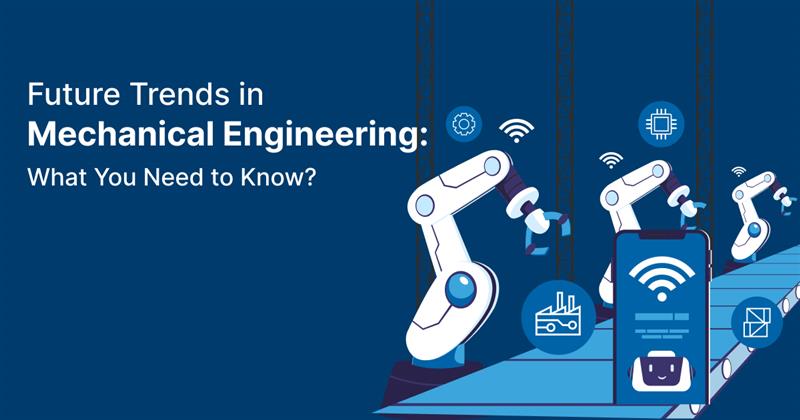
The engineering environment is changing at a high rate and mechanical engineering trends are influencing the changes across the industries. Engineering has ceased being focused on physical design and production. It has now brought data, automation and digital intelligence into each phase of the lifecycle.
This trend is essentially defining the future of mechanical engineering with engineers being required to trade off innovation, reliability and scalability. Those organizations that have embraced the new mechanical engineering methods are becoming more efficient with their assets, minimizing the downtime, and are responding quicker with their assets in relation to the demands in the market.
The engineering teams ought to provide smarter systems which are flexible, robust, and sustainable. These requirements are challenging the profession to higher technology, forecasting capabilities, and decision-making based on performance.
One of the most impactful mechanical engineering trends is the rise of simulation-first design. Advanced mechanical engineering now relies on virtual models to test performance, durability, and efficiency before physical production begins. This reduces engineering risk while improving design accuracy across complex projects.
Research show that simulation-led workflows reduce development cycles by nearly 30%. This approach strengthens the future trend in mechanical engineering by enabling engineers to validate assumptions early and optimize outcomes. As systems become more complex, simulation-driven engineering is becoming a standard rather than an option.

The utilization of the new technologies in the Future trend in mechanical engineering field is transforming the way systems are designed and maintained. Engineers now have the support of artificial intelligence, digital twins, and predictive power in the form of advanced analytics that provide real-time insights. The technologies assist in determining performance gaps prior to failures.
Factors that influencing modern mechanical engineering include:
Environmental responsibility is no longer optional, making sustainable mechanical engineering one of the most important mechanical engineering trends today. Engineering teams are increasingly tasked with designing systems that minimize energy consumption, reduce emissions, and support circular manufacturing models.
Sustainability is now embedded into material selection, thermal design, and system efficiency calculations. The Future trend in mechanical engineering will continue to prioritize designs that align with environmental regulations while maintaining industrial performance standards.
This shift positions engineers as key contributors to long-term corporate sustainability goals. make the para in pointers.
Additive manufacturing in mechanical engineering has matured from a prototyping tool into a production-ready technology. Engineers now leverage 3D printing techniques to manufacture complex components efficiently, reducing material waste and accelerating production timelines.
This trend supports advanced mechanical engineering and aligns with sustainability goals, making it a critical part of modern industrial practices.
Data analytics has become central to modern mechanical engineering, enabling engineers to make informed, performance-based decisions. Real-time operational data supports better planning, predictive maintenance, and system optimization across large-scale projects.
These insights reinforce the future trend in mechanical engineering by linking technical execution with measurable business outcomes.
| Trend Area | Business Impact |
| Digital Simulation | 30% faster design cycles |
| Predictive Maintenance | 25% less downtime |
| Additive Manufacturing | 35% lower material waste |
| Sustainable Design | 20% lifecycle cost reduction |
As mechanical engineering trends accelerate, engineering leadership and domain expertise become critical success factors. Organizations need partners that understand both traditional engineering fundamentals and evolving digital methodologies. This balance ensures scalability, compliance, and long-term asset reliability in complex projects.
Engineering-driven organizations that invest in advanced mechanical engineering capabilities are better equipped to manage global delivery models, regulatory complexity, and technology integration challenges.

Katalyst Engineering represents the evolution of modern mechanical engineering by combining engineering excellence with digital innovation. Its approach supports industries navigating the future of mechanical engineering through scalable design, analysis, and execution expertise.
Staying ahead of engineering change requires insight and adaptability. Understanding future-focused engineering trends helps organizations build smarter, more resilient systems.
A: Key mechanical engineering trends include digital twins, AI-driven design, and sustainability-led engineering.
2. How is the future of mechanical engineering changing?
A: The future of mechanical engineering is becoming data-driven, predictive, and sustainability-focused.
3. Why is additive manufacturing important in mechanical engineering?
A: Additive manufacturing in mechanical engineering reduces waste and accelerates complex production.
4. What role do emerging technologies play in mechanical engineering?
A: Emerging technologies in mechanical engineering improve system intelligence and predictive capabilities.
5. How does sustainable mechanical engineering add value?
A: Sustainable mechanical engineering reduces costs while meeting environmental and regulatory goals.

Senior Vice President, Katalyst Engineering
Bhavik Shah is the Vice President of Global Engineering and Manufacturing at Katalyst Engineering, with over 22 years of experience in the engineering industry. He specializes in product development, R&D, and engineering delivery operations, driving innovative, design-led solutions across automotive, industrial, and off-highway sectors. Bhavik plays a key role in strengthening engineering strategies, building global partnerships, and delivering high-performance outcomes for clients.