At Katalyst Engineering Services, we continually strive to drive innovation by deftly utilizing these resources, changing the issues encountered by various industries and fields with potential solutions.
At Katalyst Engineering Services, we continually strive to drive innovation by deftly utilizing these resources, changing the issues encountered by various industries and fields with potential solutions.

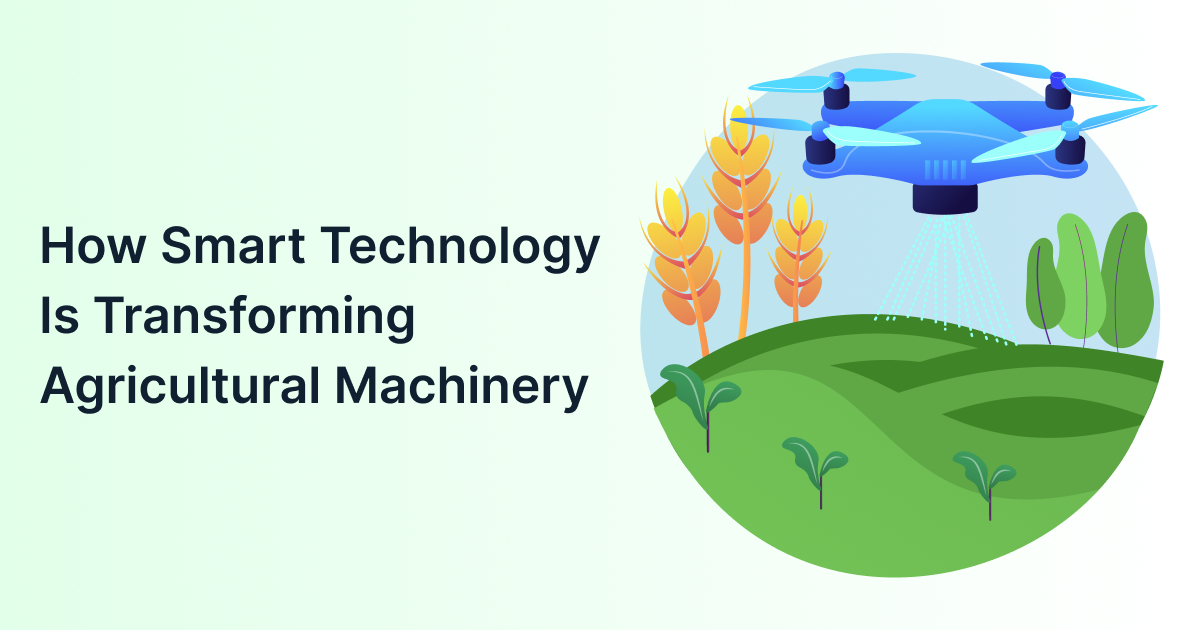
Modern agricultural machinery has reached the physical limits of raw mechanical scale, forcing OEMs to pivot toward embedded intelligence to drive the next leap in productivity. This article breaks down how smart agriculture and advanced sensor fusion are redefining equipment design, shifting the engineering focus from horsepower to data processing. By understanding these integration frameworks, design teams can accelerate their time-to-market while reducing warranty risks on complex electro-mechanical systems. Bridging the gap between heavy iron and delicate sensors is where early warranty issues usually begin; referencing frameworks from specialized service providers that caters agricultural equipment manufacturing helps lock down those interfaces before metal is cut.
Equipment downtime during a critical two-week harvest window can cost a commercial farm its entire profit margin for the year. This brutal reality is why engineering teams are rapidly pivoting from purely mechanical upgrades to integrating advanced agriculture technology directly into the chassis. Agricultural machinery is no longer just iron and hydraulics; it is a mobile edge-computing node.
For OEMs, this means the design constraints have fundamentally changed. You are no longer just optimizing for soil compaction or torque. You are designing around CAN bus networks, ruggedized LiDAR, and machine-learning modules that must survive extreme vibration, dust, and temperature swings. Smart farming technology is the new baseline, and integrating it flawlessly is now the primary driver of market share, compliance, and reduced unit cost.

Historically, advancing agricultural machinery meant making it wider, heavier, and more powerful. We have reached the lateral limit of that approach. True lateral thinking in modern design requires borrowing sensor fusion paradigms from aerospace and applying them to the dirt. Agriculture technology now dictates the product lifecycle.
When a combine harvester can autonomously adjust its rotor speed based on real-time moisture data, the mechanical engineering must perfectly handshake with the software. This is the essence of smart agriculture. If the smart farming technology fails, the machine fails, escalating warranty claims and damaging OEM reputation.
Integrating these systems introduces high project risk. Electrical routing, thermal management for ECUs, and signal interference become primary engineering hurdles. As teams work on overcoming top engineering challenges in agricultural machinery manufacturing , cross-disciplinary simulation is non-negotiable.
Every piece of smart farming technology added to agricultural machinery must justify its unit cost through tangible field performance. According to a comprehensive report on connectivity in agriculture by McKinsey & Company, the successful adoption of advanced agriculture technology could add $500 billion to global GDP by 2030. This growth is entirely dependent on OEMs successfully delivering reliable agricultural machinery.
Furthermore, the integration of smart agriculture systems directly impacts manufacturing lead times. Sourcing specialized microchips and ruggedized sensors introduces supply chain volatility. According to public data from the USDA, the adoption of precision agriculture technology has grown significantly, reflecting a massive surge in demand for these specialized components within agricultural machinery.
Consider the engineering leap required for modern automated spraying systems in agricultural machinery. Traditional agricultural machinery broadcast-sprayed entire fields, wasting expensive chemicals and risking environmental compliance fines.
By integrating agriculture technology, specifically stereoscopic cameras and edge-AI, the machine now identifies individual weeds at 15 mph and triggers a specific nozzle for a micro-burst of herbicide. This specific application of smart farming technology reduces herbicide usage by up to 77%. For the OEM, however, this means the boom design must now minimize vibration to prevent camera blur, requiring entirely new mechanical dampening systems to support the agriculture technology.
Quote “The future of our industry is not about the size of the machine, but the intelligence within it. We are moving toward a world where agriculture technology allows for plant-by-plant management at scale.” |
When you commit to smart farming technology, the traditional design sequence breaks. You cannot design the mechanical frame and figure out the electronics later. The integration of agriculture technology requires concurrent engineering.
This complex phase of aligning hardware with intelligence is exactly what teams navigate when taking farm machinery from concept to production.
| Feature Category | Legacy Agricultural Machinery | Smart Agriculture Equipment | Business Consequence |
| Control Systems | Operator-driven mechanical levers | Automated CAN bus / ISOBUS integration | Reduces operator fatigue; lowers labor costs. |
| Maintenance | Reactive (run-to-failure) | Predictive (IoT condition monitoring) | Maximizes uptime during narrow harvest windows. |
| Input Application | Broad-acre continuous flow | Variable-rate micro-targeting | Slashes unit cost of seeds/chemicals; ensures compliance. |
| Data Utilization | None | Real-time yield and machine health mapping | Validates ROI for end-users; enables remote diagnostics. |
Integrating agriculture technology into agricultural machinery is not just a feature upgrade; it is a fundamental architectural transformation.

The integration of smart farming technology into agricultural machinery is the only viable path forward for OEMs looking to remain competitive. By treating agriculture technology as a core chassis component rather than an aftermarket add-on, engineering teams can drastically improve machine uptime, ensure environmental compliance, and lower the unit cost of operation for the end-user. The most successful smart agriculture products emerge from concurrent engineering, where mechanical durability meets software agility. If you are navigating the complexities of modernizing your equipment lines, explore our dedicated engineering support to help mitigate design risks and accelerate your deployment. To discuss how we can support your specific autonomous agricultural machinery integration or precision agriculture equipment design goals, reach out to us at Katalyst Engineering’s contact page and let’s turn your concept into a field-ready reality.
1. How does agriculture technology improve the uptime of agricultural machinery?
Smart agriculture uses predictive maintenance sensors to monitor heat and vibration in critical mechanical parts. This allows operators to replace components before a catastrophic field failure, keeping the equipment running during crucial harvest times.
2. What is the role of ISOBUS in smart farming technology?
ISOBUS acts as the universal language for agricultural machinery, allowing a tractor from one brand to seamlessly communicate with an implement from another. This standardized agriculture technology reduces electronic compatibility issues and simplifies field operations.
3. Why is edge computing necessary for modern agricultural machinery?
Smart farming technology generates massive amounts of data from cameras and sensors that cannot be processed fast enough over rural cellular networks. Edge computing analyzes this data directly on the machine in real-time, enabling instantaneous adjustments like targeted spraying.
4. How does smart agriculture impact the mechanical design process?
Integrating agriculture technology requires structural changes, such as vibration dampening for delicate sensors and reinforced housing for computing modules. It forces a shift from purely mechanical engineering to highly integrated electro-mechanical design.
5. Does Katalyst Engineering assist with integrating smart farming technology into legacy designs?
Yes, Katalyst supports OEMs by engineering retrofits and redesigning existing chassis to safely and efficiently house modern agriculture technology, CAN bus systems, and precision agriculture sensors.

Senior Vice President, Katalyst Engineering
Bhavik Shah is the Vice President of Global Engineering and Manufacturing at Katalyst Engineering, with over 22 years of experience in the engineering industry. He specializes in product development, R&D, and engineering delivery operations, driving innovative, design-led solutions across automotive, industrial, and off-highway sectors. Bhavik plays a key role in strengthening engineering strategies, building global partnerships, and delivering high-performance outcomes for clients.