At Katalyst Engineering Services, we continually strive to drive innovation by deftly utilizing these resources, changing the issues encountered by various industries and fields with potential solutions.
At Katalyst Engineering Services, we continually strive to drive innovation by deftly utilizing these resources, changing the issues encountered by various industries and fields with potential solutions.

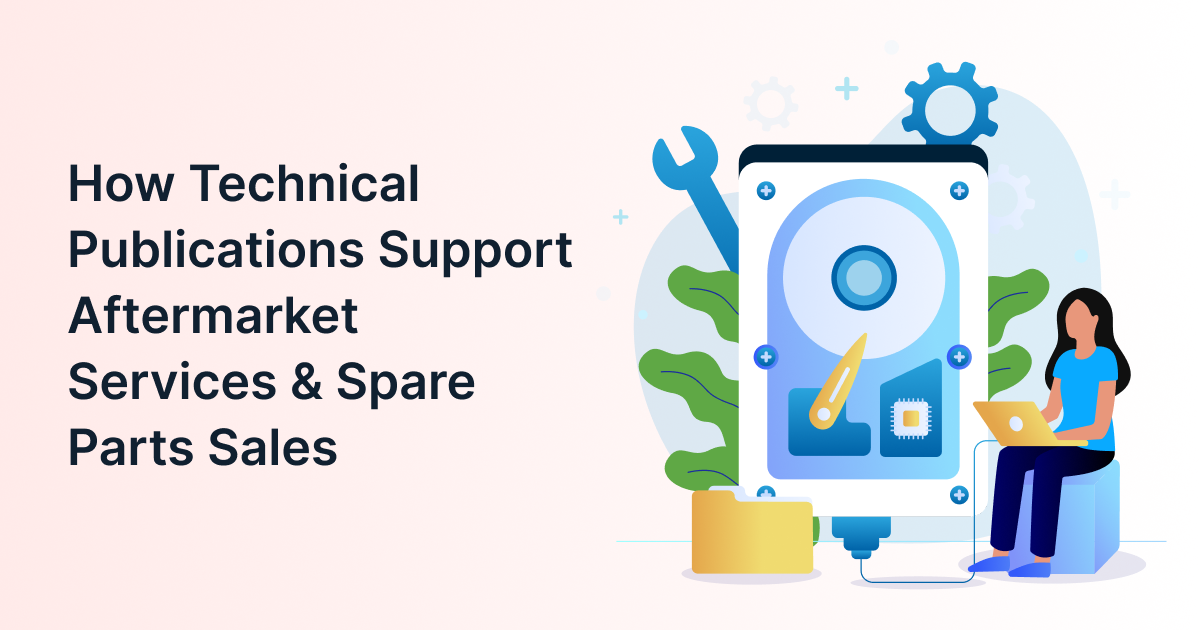
To strengthen aftermarket services and increase spare parts revenue, you need structured technical manual development supported by digital tools like parts catalog software and technical documentation management systems. These enable accurate part identification, faster service execution & better customer experience, directly influencing aftermarket profitability.
In modern manufacturing, documentation is no longer just a support function, it has become a strategic revenue driver. As digital transformation in engineering accelerates, organisations are relying on advanced engineering solutions to connect documentation with service delivery, inventory systems & customer touchpoints.
Well-developed technical publications, manuals, service guides & illustrated parts catalog systems, act as the bridge between engineering intent and real-world product support.
Instead of treating documentation as static content, forward-thinking manufacturers are integrating it into their aftermarket strategy. This is where specialised technical publication services begin to play a crucial role in enabling scalable and revenue-focused documentation ecosystems.

To improve aftermarket services, you need technical publications that deliver structured, easy-to-access information for service teams. These documents help technicians diagnose issues quickly, access correct repair procedures & reduce downtime, leading to improved service quality and higher customer satisfaction.
How They Add Real Business Value
1. Faster Issue Resolution Across Service Teams
2. Reduced Downtime for End Customers
3. Improved Field Service Efficiency
4. Stronger Alignment Between Engineering and Service Teams
The role of aftermarket services is evolving from reactive maintenance to proactive lifecycle management & technical publications are at the core of this transformation.
To increase spare parts sales, you need effective technical manual development that integrates with digital catalogs and service workflows. This ensures accurate part identification, reduces ordering errors & simplifies the buying process for customers and service teams.
Key Ways It Drives Revenue
1. Accurate Part Identification at Every Touchpoint
2. Visual Clarity Through Illustrated PartsCatalogs
3. Streamlined Ordering Process
4. Increased Customer Confidence
To scale aftermarket operations effectively, you need parts catalog software integrated with technical documentation systems. This enables real-time access to parts data, enhances searchability & ensures accurate ordering, making spare parts management more efficient and scalable.
Key Capabilities
1. Real-Time Data Synchronisation
2. Intelligent Search and Navigation
3. Integration with Enterprise Systems
4. Scalability for Global Businesses
Did You Know?
“Companies leveraging digital parts catalog systems report up to 25% faster service response times, according to Documoto Blog”
To optimise spare parts management, you need structured and standardised technical documentation that ensures consistent part identification, tracking & classification, reducing inventory errors and improving supply chain efficiency.
1. Standardisation Across Systems
2. Improved Inventory Accuracy
3. Enhanced Traceability and Compliance
4. Reduced Operational Costs
To stay competitive, organisations must adopt digital transformation in engineering, integrating documentation with intelligent platforms. This enables real-time updates, automation & data-driven insights, transforming technical publications into dynamic, business-critical assets.
1. From Static Manuals to Interactive Platforms
2. AI-Driven Documentation Workflows
A deeper dive into this shift is covered in The impact of AI on technical documentation workflows, where we explore how automation is reshaping documentation strategies.
3. Integration with IoT and Smart Systems
4. Increased Focus on User Experience
To ensure sustainable growth, manufacturers must prioritise aftermarket services as a key revenue stream. These services extend product life, improve customer loyalty & generate recurring revenue, making them critical to long-term business success.
Why Aftermarket Services Matter More Than Ever
1. High-Margin Revenue Stream
2. Customer Retention and Loyalty
3. Competitive Differentiation
4. Data-Driven Business Insights
Industry Stat
According to McKinsey, aftermarket services can contribute up to 50% of profits for industrial companies.
To maximise ROI, organisations need engineering documentation services that align technical content with business goals. These services improve operational efficiency, reduce documentation costs & enhance service performance.
ROI Drivers
For a deeper understanding of ROI measurement, explore measuring ROI of technical publication services in manufacturing, which breaks down measurable business benefits.
To scale documentation efficiently, you need modular documentation systems that allow content reuse and rapid updates. This reduces redundancy and ensures consistent information delivery across products.
1. Faster Updates Across Product Lines
2. Improved Consistency
3. Reduced Long-Term Costs
Learn more about this approach in how modular documentation reduces long-term documentation costs.
| Feature | Traditional Documentation | Digital Documentation |
| Accessibility | Limited, manual access | Instant, global access |
| Updates | Time-consuming | Real-time updates |
| User Experience | Static and text-heavy | Interactive and visual |
| Integration | Standalone systems | Integrated with enterprise tools |
| Impact on Sales | Indirect | Directly supports revenue growth |

Technical publications are no longer just operational necessities, they are strategic assets that drive business growth. When aligned with digital transformation in engineering and supported by advanced engineering solutions, they empower organisations to maximise aftermarket services and spare parts revenue.
From improving service efficiency to enabling accurate spare parts ordering, documentation plays a central role in modern manufacturing success. Companies that invest in structured, scalable documentation systems will not only improve operations but also unlock new revenue opportunities.
If you’re looking to transform your technical documentation into a business driver, it’s time to take the next step. Contact our experts to build a smarter, revenue-focused documentation strategy.
1. What is technical manual development?
Technical manual development involves creating structured, user-friendly documents that guide installation, operation & maintenance. These manuals ensure accurate information delivery, supporting aftermarket services by enabling efficient repairs and reducing downtime.
2. How do technical publications improve spare parts sales?
They simplify part identification through clear documentation and visuals. This reduces errors in ordering, speeds up transactions & increases customer confidence, leading to higher sales and fewer returns.
3. What is the role of aftermarket services?
Aftermarket services include maintenance, repairs & spare parts sales. They extend product life, improve customer satisfaction & generate recurring revenue, making them critical for long-term business success.
4. What is an illustrated parts catalog?
An illustrated parts catalog combines visual diagrams with detailed part information, allowing users to identify and order components accurately. It is essential for efficient spare parts management.
5. How does parts catalog software benefit organisations?
It digitises parts information, enables real-time updates & integrates with enterprise systems. This improves accuracy, efficiency & scalability in spare parts management.
6. Why is digital transformation important in technical documentation?
It enables automation, improves accessibility & enhances integration with other systems, making documentation more effective and scalable in supporting business operations.
7. What are engineering documentation services?
These services focus on creating, managing & optimising technical documents to align with business objectives, improve efficiency & ensure compliance.
8. How does modular documentation reduce costs?
By reusing content across multiple documents, modular documentation reduces duplication, speeds up updates & lowers long-term maintenance costs.

Senior Vice President, Katalyst Engineering
Bhavik Shah is the Vice President of Global Engineering and Manufacturing at Katalyst Engineering, with over 22 years of experience in the engineering industry. He specializes in product development, R&D, and engineering delivery operations, driving innovative, design-led solutions across automotive, industrial, and off-highway sectors. Bhavik plays a key role in strengthening engineering strategies, building global partnerships, and delivering high-performance outcomes for clients.