At Katalyst Engineering Services, we continually strive to drive innovation by deftly utilizing these resources, changing the issues encountered by various industries and fields with potential solutions.
At Katalyst Engineering Services, we continually strive to drive innovation by deftly utilizing these resources, changing the issues encountered by various industries and fields with potential solutions.

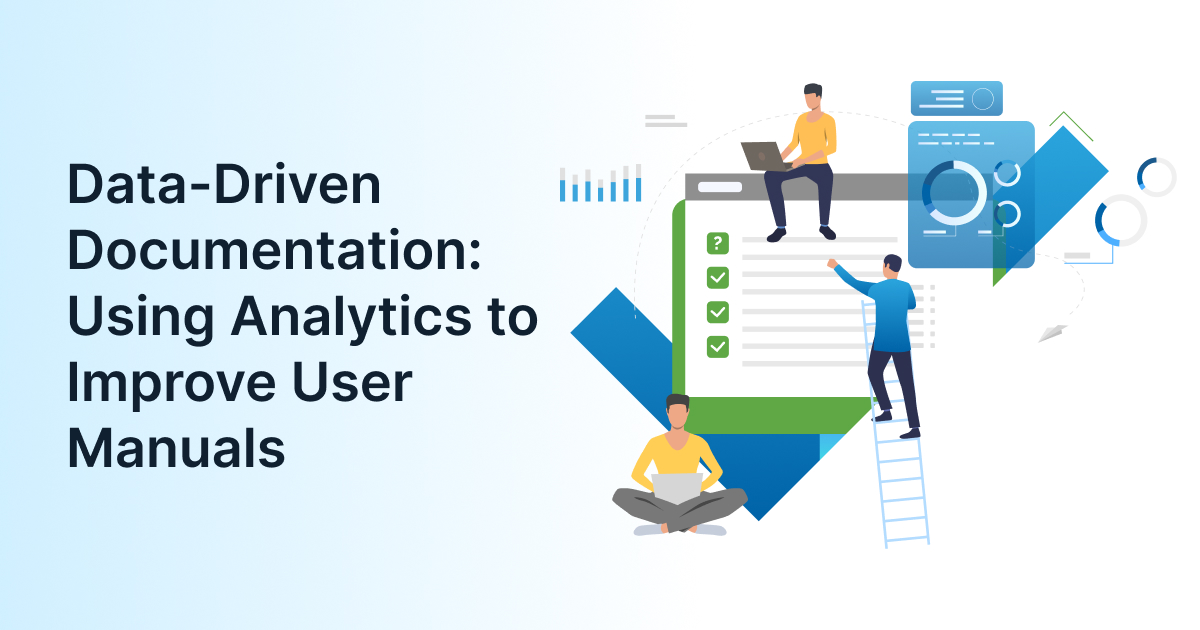
To improve user manuals effectively, you need to adopt data driven documentation that uses analytics to understand user behaviour, optimise content & continuously refine documentation performance. This ensures your manuals evolve based on real usage, not assumptions, making them more relevant, actionable & efficient.
In today’s landscape shaped by digital transformation in engineering, documentation is no longer static. Engineering teams are expected to deliver continuously improving, user-centric content. This is where data driven documentation, powered by technical documentation analytics, plays a critical role.
Instead of relying on subjective feedback, organisations now use digital documentation analytics to track how users interact with manuals. What they read, where they struggle & how they navigate.
If you’re looking to operationalise this approach at scale, integrating technical publication services can help streamline analytics, automation & content optimisation efforts.

To build effective user manuals, you need data driven documentation that replaces assumptions with measurable insights and aligns documentation with real user needs. This ensures better usability, faster onboarding & reduced dependency on support teams.
Traditional documentation approaches often fail because they –
In contrast, data driven documentation enables –
This shift is particularly important in organisations adopting advanced engineering solutions, where products are complex and user expectations are high. Without analytics, manuals can quickly become bottlenecks instead of enablers.
To improve user manuals, you need technical documentation analytics that tracks user behaviour and identifies exactly where content succeeds or fails. These insights allow teams to refine structure, clarity & accessibility based on real usage data.
Instead of guessing what users need, analytics reveals –
By analysing time-on-page and completion rates, teams can identify –
Understanding how users move through manuals helps –
Search analytics highlights –
Where users exit documentation indicates –
This type of insight-driven refinement is at the core of digital transformation in engineering, where data informs every operational decision, including documentation.
To measure documentation performance effectively, you need to track user manual analytics metrics that reflect engagement, usability & task success. These metrics provide a clear view of what’s working and what needs improvement.
Key Metrics That Matter
| Metric | Insight | Documentation Impact |
| Page Views | Popular content | Helps prioritise updates |
| Bounce Rate | User dissatisfaction | Indicates unclear content |
| Time on Page | Engagement depth | Shows content relevance |
| Search Queries | User intent | Guides content creation |
| Task Completion Rate | Usability | Measures success of instructions |
These metrics are essential for building smart documentation systems that continuously adapt to user needs.
For example, if users frequently search for a feature but don’t find it, that’s a signal to create or restructure content, something traditional documentation cannot easily detect.
To fully leverage analytics, you need smart documentation solutions that combine AI, modular content & automation to streamline content creation and optimisation. These solutions ensure documentation remains consistent, scalable & continuously updated.
Key Capabilities of Smart Documentation Solutions
These capabilities are critical for organisations working with advanced engineering solutions, where documentation must scale across multiple product variants and user roles.
To reduce documentation costs, you need data driven documentation that focuses efforts on high-impact content while eliminating inefficiencies. This ensures resources are allocated based on actual user needs rather than assumptions.
Where Cost Savings Come From
Tracking ROI is equally important. For a deeper dive, explore measuring ROI of technical publication services, which explains how analytics ties documentation to business outcomes.
Industry Stat
“Companies that leverage data-driven decision-making are 23 times more likely to acquire customers and 19 times more likely to be profitable, as mentioned in McKinsey insights”
This reinforces why data driven documentation is becoming a key component of digital transformation in engineering initiatives.
To scale analytics and improve efficiency, you need AI-powered digital documentation analytics that automates insights, predicts user needs & enhances personalisation. AI transforms documentation from reactive to proactive.
AI Applications in Documentation
AI is already reshaping workflows across industries. Explore its broader implications in AI in technical documentation workflows.
For organisations focused on advanced engineering solutions, AI ensures documentation keeps pace with rapid product innovation.
To implement data driven documentation successfully, you need a structured approach that combines analytics tools, content strategy & continuous optimisation practices. A phased process ensures long-term sustainability.
Step-by-Step Implementation Framework
This structured approach ensures alignment with broader digital transformation in engineering goals, where continuous improvement is key.
To adopt data driven documentation effectively, you need to anticipate and address challenges such as data silos, skill gaps & organisational resistance. Overcoming these barriers is critical for success.
Common Barriers
The solution lies in investing in smart documentation solutions and aligning teams around shared metrics and goals.

Key Takeaways
Data-driven approaches are redefining how documentation is created, maintained & optimised. By adopting data driven documentation, organisations can ensure their manuals are not only accurate but also aligned with real user behaviour.
As engineering systems grow more complex, leveraging digital documentation analytics becomes essential, not optional. Combined with smart documentation solutions, this approach enables organisations to stay competitive in the era of advanced engineering solutions.
Ready to optimise your documentation strategy with analytics-driven insights? Connect with experts to get your documentations strategized and optimised.
1. What is data driven documentation and why is it important?
Data driven documentation uses analytics to improve content based on real user behaviour. It ensures manuals remain relevant, reduces guesswork & enhances usability, making it critical for modern engineering environments.
2. How does user manual analytics improve documentation quality?
User manual analytics tracks metrics like engagement, search behaviour & task success. These insights help teams identify gaps, optimise content & improve overall documentation effectiveness.
3. What tools are used for digital documentation analytics?
Tools include analytics platforms, CMS integrations, AI-powered documentation tools & heatmaps. These help track user behaviour and optimise documentation content.
4. What are smart documentation solutions?
Smart documentation solutions combine AI, modular content & automation to improve efficiency, scalability & user experience in documentation workflows.
5. How does data driven documentation reduce costs?
It reduces redundant content, minimises rework, improves efficiency & lowers support costs by providing better and more accessible documentation.
6. How can AI improve technical documentation?
AI automates content analysis, personalises user experiences, identifies gaps & enhances search capabilities, significantly improving documentation workflows.
7. Which industries benefit most from data driven documentation?
Industries implementing advanced engineering solutions, such as manufacturing, automotive, aerospace & SaaS, benefit the most due to complex documentation needs.
8. How do I start implementing data driven documentation?
Start by auditing existing content, defining KPIs, using analytics tools, adopting modular content strategies & continuously optimising based on insights.

Senior Vice President, Katalyst Engineering
Bhavik Shah is the Vice President of Global Engineering and Manufacturing at Katalyst Engineering, with over 22 years of experience in the engineering industry. He specializes in product development, R&D, and engineering delivery operations, driving innovative, design-led solutions across automotive, industrial, and off-highway sectors. Bhavik plays a key role in strengthening engineering strategies, building global partnerships, and delivering high-performance outcomes for clients.