At Katalyst Engineering Services, we continually strive to drive innovation by deftly utilizing these resources, changing the issues encountered by various industries and fields with potential solutions.
At Katalyst Engineering Services, we continually strive to drive innovation by deftly utilizing these resources, changing the issues encountered by various industries and fields with potential solutions.

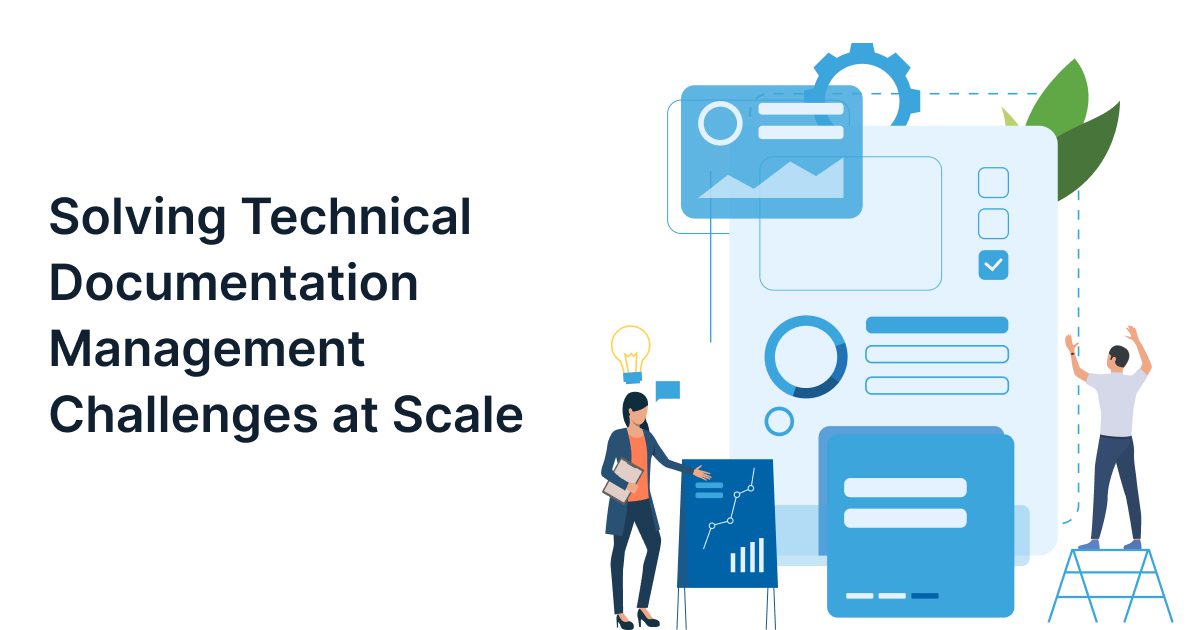
A product change may take only a few hours to approve in engineering, but updating every affected manual, service instruction, parts catalog, and training document can take much longer. Technical documentation management provides the controlled process needed to identify affected content, coordinate reviews, manage revisions, and publish accurate information across the product lifecycle. It brings content creation, review, approval, version control, publishing, and maintenance into one controlled process. For organizations managing complex product information, technical publication services can also help structure and maintain documentation without taking core engineers away from product development.

To manage technical documentation effectively, you need a controlled process for creating, reviewing, approving, publishing, updating, and retiring product information. Technical documentation management covers manuals, specifications, drawings, service instructions, illustrated parts catalogs, work instructions & compliance records across the product lifecycle.
It is more than storing files in shared folders. It defines how information is created, who reviews it, which version is approved, where it is published, and when it must be updated or retired.
For engineering and manufacturing organizations, this process connects product data with the information used by operators, technicians, service teams, customers & regulatory stakeholders.
To reduce technical documentation issues, you need to identify where information becomes inaccurate, delayed, duplicated, or difficult to find. The most common problems include version confusion, repeated content, slow technical reviews, disconnected engineering data, unclear ownership, outdated manuals, and difficulty managing multiple product variants.
These issues often become more pronounced as an organization grows:
These problems affect more than productivity. Poor technical documentation can also affect product safety and compliance when users rely on incorrect or outdated instructions. Read more about how poor technical documentation impacts product safety and compliance.
Industry statistic
The National Institute of Standards and Technology estimated that inadequate modeling information costs U.S. manufacturers billions of dollars. Its analysis included an estimated $8.4 billion spent on engineers answering questions and creating additional drawing documentation, along with $3.8 billion spent by machinists doing similar work. These figures relate to broader manufacturing information challenges, but they show why reliable engineering information matters.
To create reliable technical documentation, you need a process that connects engineering information with authoring, review, publishing, and maintenance. After this the approval stage arrives. A consistent technical documentation process gives every stakeholder a clear responsibility and helps ensure that users receive accurate information in the right format.
| Stage | What happens |
| Planning | Define audience, scope, purpose and output |
| Source collection | Gather approved engineering data |
| Authoring | Create technical content |
| Technical review | Validate technical accuracy |
| Quality & compliance review | Check terminology, formatting and requirements |
| Approval | Obtain formal release approval |
| Publishing | Generate required outputs |
| Distribution | Deliver the approved version |
| Maintenance | Update, review, archive or retire content |
The process should also define document ownership. A technical writer may own content development, while engineers, quality teams, product managers, and service specialists contribute to technical review, validation, and approval.
To improve technical documentation quality, you need to combine clear writing with strong content governance. The most effective practices include writing for a defined user, using consistent terminology, creating reusable content, controlling revisions, linking updates to engineering changes, and reviewing published documentation regularly.
1. Write for a specific user
A service technician, machine operator, engineer & end customer may need different levels of detail. Identify the user’s task before writing so the document provides the right information without unnecessary explanation.
2. Use consistent terminology
Create an approved glossary for product names, components, warnings, units, and common instructions. Consistent language makes content easier to understand and reduces confusion across manuals.
3. Use structured templates
Templates help authors follow the same content order and formatting rules. They also make reviews faster because stakeholders know where to find warnings, specifications, procedures, and revision information.
4. Create reusable content
Do not rewrite the same safety instruction or maintenance procedure for every manual. Store reusable content as controlled components so one approved update can be applied wherever that content appears.
Structured authoring systems such as DITA are designed to organize technical information into reusable, topic-based modules that can be published in different formats. DITA resources provide further information about this approach.
5. Control revisions
Every released document should have a clear revision number, approval status, effective date, and change history. Users should be able to identify the current approved version without relying on file names alone.
6. Connect documentation with engineering changes
When a drawing, specification, component, or procedure changes, the documentation team should know which deliverables are affected. When technical documentation is connected to PLM data, engineering changes can be traced to the manuals, service instructions, parts catalogs, and other deliverables they may affect. This reduces the risk of publishing documentation based on outdated product configurations.
7. Review published content regularly
Not every document needs to be rewritten frequently, but every important document should have an owner and review schedule. This helps identify obsolete procedures, outdated images, and references to discontinued components.
To improve a technical documentation workflow, you need to remove unnecessary handoffs and connect documentation activities with engineering data. A strong workflow defines ownership, uses standard templates, tracks review status, maintains revision history, and gives writers access to the latest approved product information.
Practical improvements include –
When content is copied across multiple manuals, every engineering change creates additional update work. A structured content approach can significantly reduce this duplication. Learn more about technical publications for product lifecycle management and how documentation can connect more closely with product lifecycle data.
To choose the right technical documentation solution, you need to consider product complexity, content reuse, compliance requirements, publishing formats & integration needs. These technologies solve different documentation problems, so organizations should evaluate them based on how content is created, controlled, reused, and connected to engineering data.
Depending on the organization, the solution may include a document management system, engineering document management system, component content management system, structured authoring platform, PLM integration, or external technical publication support.
| Solution | Best suited for | Main capability |
| Document Management System | Managing files and records. | Storage, access, permissions, and approvals. |
| Engineering Document Management System | Controlling engineering documents. | Revision control, traceability, and engineering workflows. |
| CCMS | Managing reusable technical content. | Modular authoring, content reuse, and publishing. |
| PLM integration | Connecting documentation with product data. | Change traceability and configuration control. |
| Structured authoring | Creating consistent modular content. | Separating content from presentation. |
| External publication support | Supporting capacity or specialist needs. | Authoring, conversion, illustration, and publishing. |
These systems are not always alternatives. An organization may use PLM to manage product data, an EDMS to control engineering records & a CCMS to create and publish reusable technical content.
The right combination depends on the organization’s current systems, documentation volume, product variants, compliance needs, and future publishing plans.
Compliance depends not only on having the right technical information, but also on being able to demonstrate that the information was reviewed, approved, released, and maintained correctly.
To support compliance through engineering documentation management, you need traceable content, controlled revisions, documented approvals, and evidence that users can access the correct information. A reliable system helps connect engineering changes with affected manuals, instructions, specifications, and service documents.
Key controls include –
Technical publications support a wider compliance process by communicating approved product information because they communicate approved product information to the people who build, operate, service, and maintain equipment. Read more about the role of technical publications in compliance standards.
To measure documentation performance, you need metrics that show how quickly content is created, reviewed, updated, found & reused. Useful measures include revision cycle time, review time, content reuse rate, search time, localization effort, obsolete-content rate, and documentation error rate.
| Metric | What it shows |
| Revision cycle time | How quickly engineering changes reach documentation. |
| Review cycle time | How long content takes to move from draft to approval. |
| Content reuse rate | How much approved content is reused across deliverables. |
| Search time | How easily users find required information. |
| Obsolete-content rate | How much published content needs replacement or retirement. |
| Documentation error rate | How often released content requires correction. |
| Documentation change-to-release time | Measures how quickly an engineering change is reflected in published documentation. |
| First-time-right rate | Measures how often documentation passes review without major rework. |
These measures can help teams identify where a documentation workflow is slowing down. For example, a long review cycle may indicate unclear ownership, while a low reuse rate may indicate that content is being managed as complete files rather than reusable components.

Technical documentation management works best when it is treated as part of the engineering lifecycle rather than as a final writing task. A clear process, defined workflow, structured content, controlled revisions, and regular reviews help engineering teams keep product information accurate and accessible. These practices also make it easier to manage product changes, support compliance & serve users across different formats and markets.
If engineering changes are creating documentation delays, repeated updates, or version-control issues, Katalyst Engineering can help you build a more structured technical publication workflow from content development and illustration to revision control, publishing, and lifecycle support.
1. What is technical documentation management?
Technical documentation management is the process of creating, reviewing, approving, publishing, updating, and retiring engineering and product information. It helps teams maintain accurate, approved, and accessible manuals, specifications, service instructions, work instructions, and compliance records throughout the product lifecycle.
2. What are common technical documentation issues?
Common issues include outdated documents, poor version control, duplicate content, delayed reviews, disconnected engineering data, inconsistent terminology, and unclear ownership. Legacy Word and PDF files can make these problems harder to manage because teams often update and distribute information manually.
3. What should you look for in technical documentation management software?
Technical documentation management software should support version control, approval workflows, content reuse, structured authoring, traceability, controlled publishing, search, and integration with engineering or PLM systems. The right capabilities depend on documentation volume, product complexity, compliance requirements, and publishing needs.
4. What is included in a technical documentation process?
The process usually includes planning, source-data collection, authoring, technical review, quality review, approval, publishing, distribution, and maintenance. Each stage should have a responsible owner, a defined output, and a record of the document’s revision and approval status.
5. What are the best practices for technical documentation?
The main practices include writing for a defined user, using consistent terminology, applying structured templates, maintaining version control, reusing approved content, linking updates to engineering changes, and reviewing published information regularly.
6. How does a CCMS differ from a document management system?
A document management system generally manages files, records, permissions, and approval workflows. A CCMS manages reusable content components, structured topics, relationships, and publishing outputs. Some organizations use both systems together.
7. How can engineering documentation management improve compliance?
It improves compliance by controlling revisions, recording approvals, maintaining traceability, and reducing the risk of obsolete information remaining in circulation. It also helps connect engineering changes with affected manuals and service documents.
8. When should a company consider external technical publication support?
External support may help when internal engineers lack the time for documentation, when legacy files need conversion, or when specialist skills are required for structured authoring, technical illustration, XML conversion, PLM integration, or multi-format publishing.

Senior Vice President, Katalyst Engineering
Bhavik Shah is the Vice President of Global Engineering and Manufacturing at Katalyst Engineering, with over 22 years of experience in the engineering industry. He specializes in product development, R&D, and engineering delivery operations, driving innovative, design-led solutions across automotive, industrial, and off-highway sectors. Bhavik plays a key role in strengthening engineering strategies, building global partnerships, and delivering high-performance outcomes for clients.