At Katalyst Engineering Services, we continually strive to drive innovation by deftly utilizing these resources, changing the issues encountered by various industries and fields with potential solutions.
At Katalyst Engineering Services, we continually strive to drive innovation by deftly utilizing these resources, changing the issues encountered by various industries and fields with potential solutions.

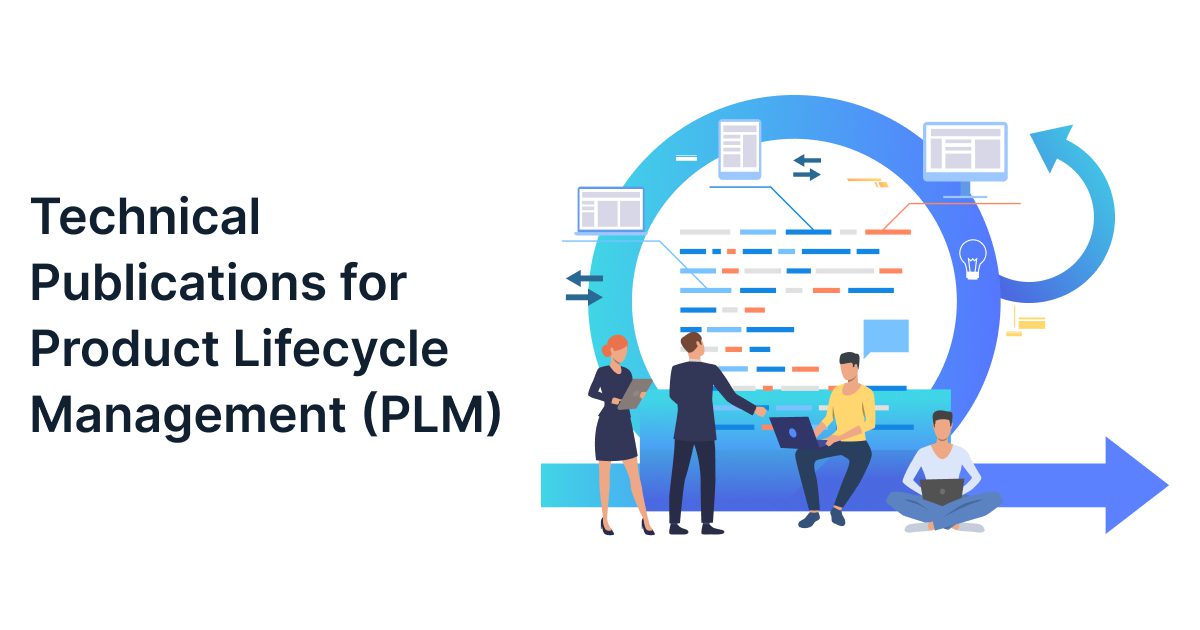
To manage product information throughout its lifecycle, organizations need more than a PLM platform. They also need a reliable way to convert engineering data into clear instructions, manuals, service information, and manufacturing documentation that people can use.
This is the role of technical publications for PLM. Technical publications connect engineering, manufacturing, quality, service, and end users by turning product data into usable product knowledge. Organizations evaluating their documentation workflow can also explore Katalyst Engineering’s technical publication services for support with structured, accurate, and lifecycle-focused documentation.
Product Lifecycle Management (PLM) systems manage information such as CAD models, bills of materials, specifications, test results, and engineering changes. However, this information is not always ready for an operator, service technician, or customer. It must be reviewed, structured, and published in the right format.
Summary
To understand the relationship, think of PLM as the system that manages the product definition and technical publications as the information layer that explains how to build, use, maintain, and support that product.
PLM may contain the latest part number, assembly structure, design revision, or engineering change order. A technical publication translates those details into content that answers practical questions –
This makes PLM technical publications an important connection between product data and product use.
The National Institute of Standards and Technology describes PLM as managing a product from conception through design, manufacturing, service, and disposal. It also emphasizes the importance of integrating people, data, processes, and business systems across the product lifecycle.
In practical terms, engineering publications PLM workflows help ensure that information created during design remains useful after the product reaches production, service & the field.
To support effective technical publication management, PLM must provide accurate, accessible, and traceable product information. The publication process then uses that information to create controlled content for specific users and product configurations.
A connected workflow may include –
The goal is not to copy every item in a PLM database into a manual. The goal is to select relevant information and present it in a form that the intended user can understand quickly.
For example, an engineer may work with a detailed CAD assembly and engineering bill of materials. A service technician needs a step-by-step procedure, the correct replacement part, required tools, safety warnings, and applicable torque values. Both depend on the same product definition, but they need different documentation.
This is why product lifecycle technical publications should be treated as part of the product information process rather than as an activity performed only at the end of development.
To support the full product lifecycle, technical publications must evolve as the product moves from design to manufacturing, operation, maintenance, and retirement. Each stage creates different information needs, and outdated content can affect safety, quality, cost, and customer experience.
| Product lifecycle stage | Documentation commonly required | How PLM helps |
| Concept and design | Requirements, design specifications, system descriptions | Maintains approved product information |
| Development and testing | Test procedures, validation records, design reviews | Connects documentation to product revisions |
| Manufacturing | Assembly instructions, work instructions, inspection procedures | Links instructions to product structures and processes |
| Installation and operation | Installation guides, operator manuals, training content | Supports product configuration and release control |
| Service and maintenance | Service manuals, troubleshooting guides, parts catalogs | Helps maintain accurate parts and procedures |
| Retirement | Decommissioning, disposal, and compliance records | Preserves lifecycle history and traceability |
Technical publications help organizations preserve product knowledge even when employees, suppliers, systems, or product variants change. They also give manufacturing and service teams a consistent reference instead of forcing them to rely on informal explanations or disconnected files.
For companies working with complex equipment, the difference is significant. A small design change can affect an assembly instruction, spare-parts list, maintenance procedure, illustration, and safety warning. A controlled connection between PLM and documentation makes these relationships easier to identify and review.
To reduce PLM challenges, organizations need to address the information and process gaps that prevent engineering data from becoming usable documentation. The most common problems involve disconnected systems, frequent changes, product variants, unclear ownership, and limited access to approved information.
Fragmented product information
Engineering, manufacturing, quality, and service teams may store information in different systems. When authors cannot easily identify the approved source, they may work from outdated drawings, spreadsheets, or email attachments.
Frequent engineering changes
A revised component can affect several documents at once. Without change notifications and impact analysis, a manual may remain unchanged even after the product definition has been updated.
Multiple product configurations
Products often vary by region, customer, model, software version, or optional equipment. Documentation must show the right procedure for the right configuration. Generic content can create confusion and increase service risk.
Weak content ownership
PLM teams may own product data while technical authors own manuals. If responsibility for review, approval, and release is unclear, content can remain in progress for too long or be published without sufficient validation.
Difficult data retrieval
PLM systems can contain large volumes of highly detailed information. Technical authors need meaningful access to the data, not simply access to more files. Search, metadata, relationships, and clear version labels are essential.
A strong documentation strategy should address these issues before selecting new tools. Technology can support the workflow, but it cannot replace clear processes and accountability.

To improve PLM documentation, organizations should connect content planning with engineering change management, standardize how information is created, and validate every publication against the correct product configuration.
The following product lifecycle management best practices provide a practical starting point.
Connect documentation to engineering change control
Documentation review should be part of the engineering change process. When a component, procedure, or product configuration changes, the workflow should identify which publications may be affected.
This does not mean every change requires a complete rewrite. It means the right subject matter experts and technical authors can assess the impact before the change is released.
Use a single approved source
Teams should define where the authoritative product information is stored. This may include a PLM system, a component content management system, or an integrated information environment.
The important point is that authors and reviewers should know which source takes priority when information conflicts.
Apply structured authoring where reuse matters
Structured authoring divides documentation into reusable topics or content components instead of treating each manual as one large file. A safety warning, inspection step, or tool requirement can then be reused across several publications.
The S1000D specification is one example of a structured approach used for technical publications with a Common Source Database. Structured methods can also support HTML, PDF, mobile, and other outputs from a shared content base.
For a broader look at this approach, see Katalyst Engineering’s discussion of structured authoring and technical publication bottlenecks.
Create configuration-specific documentation
A publication should clearly identify the models, serial ranges, variants, or software versions it supports. This is especially important when products share similar assemblies but use different components or procedures.
Metadata, applicability rules, and controlled product structures can help authors deliver the correct content without duplicating entire manuals.
Standardize terminology and templates
Approved terminology makes instructions easier to understand and improves consistency across documents. Templates also reduce time spent formatting content and make review easier.
Standards should cover –
Measure documentation performance
Organizations should track practical measures such as review time, revision cycle time, outdated-document findings, reuse rates, search success, and service-related documentation issues.
These measures help teams identify whether the documentation process is actually improving product support or simply producing more files.
PLM Documentation: Traditional vs. Connected Approach
To choose an effective approach, organizations should compare how information is created, updated, approved, and delivered. A traditional document-based process may work for a small product range, but it becomes difficult to control as product complexity and configuration requirements increase.
| Area | Traditional document process | Connected PLM documentation process |
| Source information | Files, emails, and local folders | Controlled product and content sources |
| Change updates | Manual search across documents | Change-driven review and impact assessment |
| Content reuse | Copy and paste | Reusable content components |
| Configuration control | Often managed manually | Supported by metadata and applicability |
| Review process | Separate from engineering changes | Linked to approval and release workflows |
| Delivery | Mainly static documents | PDF, HTML, mobile, and other formats |
| Long-term maintenance | Difficult to audit | More traceable and manageable |
A connected process does not remove the need for human review. It gives reviewers better information and helps them focus on content accuracy instead of locating files.
To build a reliable workflow, teams should move from approved product data to user-focused content through defined authoring, review & release steps. The workflow should be simple enough to follow and controlled enough to prevent outdated information from reaching production or service teams.
Consider an industrial equipment manufacturer launching a new machine.
Engineering creates the design definition, parts structure, specifications, and test records in PLM. The technical publication team uses this information to develop installation instructions, operator information, maintenance procedures, troubleshooting content, and an illustrated parts catalog.
Before release, engineering validates the technical details, service teams check whether the procedures are practical, and quality or compliance reviewers confirm that required information is present. Once approved, the documentation is released for the correct machine configuration.
Later, engineering replaces a pump with a new model. The change process identifies the affected assembly instructions, parts information, maintenance procedure, and illustration. Authors update the relevant content components, reviewers validate the changes, and the revised publications are released with clear version control.
This is the practical value of connecting technical publications PLM workflows: a product change becomes easier to trace through the information that supports the product.
Organizations can also connect technical documentation with ERP and MES environments. The article on linking PLM with the shop floor provides additional context on how product information moves into manufacturing and operations.
To support engineering PLM, technical publications must preserve the connection between product definition and product use. Engineers create and manage the technical data, while publication teams turn that data into instructions that manufacturing, service, and customers can follow.
This connection supports –
However, integration should be planned around user needs. A service technician does not need unrestricted access to the entire engineering database. They need the correct procedure, for the correct product, in a format that is easy to search and use.
That is also why documentation quality depends on more than software. It requires technical authors who understand engineering information, reviewers who understand the product, and a governance process that defines how content moves from draft to release.
| PLM | Technical publication management |
| Manages product definition and lifecycle data | Manages user-facing technical content |
| CAD/product structures | Manuals and procedures |
| BOMs | Service instructions |
| Engineering changes | Publication revisions |
| Product configurations | Content applicability |
| Engineering approvals | Publication review/release |
| Product lifecycle traceability | Documentation traceability |
To modernize PLM publications, organizations are moving from static documents toward structured, searchable, and digitally delivered content. This allows technical information to be updated more efficiently and delivered through the channels used by engineers, operators, and service teams.
Digital transformation may include –
The aim is not to make every publication complex or interactive. A well-designed PDF may still be appropriate for some users. The right format depends on the product, workflow, environment, safety requirements, and available technology.
For more on this transition, read about the digital transformation of technical publications.
Technical publications are the practical connection between a product’s engineering definition and the people who build, operate, maintain, and support it. PLM systems provide the product information backbone, but that information creates value only when it is converted into accurate and accessible documentation.
A connected approach helps organizations manage changes, support product variants, preserve knowledge, and improve communication across the product lifecycle. It also creates a stronger foundation for structured authoring, digital delivery, and future integration with manufacturing and service systems.
If your documentation is difficult to update, disconnected from engineering changes, or spread across multiple sources, the next step is to review the current workflow and identify where information is being lost. You can contact Katalyst Engineering to discuss your technical publication and PLM documentation requirements.

1. What are technical publications in PLM?
Technical publications in PLM are manuals, service guides, work instructions, and parts catalogs created from product lifecycle data.
2. How do technical publications support PLM?
They turn engineering data into clear instructions for designing, manufacturing, operating, maintaining & servicing products.
3. What is technical publication management?
Technical publication management is the process of creating, reviewing, approving, publishing, updating, and controlling technical documents.
4. What are the main PLM challenges for technical publications?
The main challenges include outdated data, disconnected systems, frequent engineering changes, multiple product variants, and poor version control.
5. Why is structured authoring useful for PLM documentation?
Structured authoring creates reusable content, making documentation easier to update, manage, and publish in different formats.
6. How can companies improve PLM documentation?
Companies can improve PLM documentation by using approved data sources, linking documents to engineering changes, standardizing content & maintaining version control.
7. What is the difference between PLM and technical publication management?
PLM manages product data and lifecycle processes. Technical publication management converts that data into user-focused documentation.
8. How often should PLM documentation be updated?
PLM documentation should be reviewed when a product, component, process, configuration, or safety requirement changes in a way that could affect the publication. The change should trigger an impact assessment rather than automatically requiring every document to be revised.
9. Can technical publications be integrated directly with PLM?
Yes, depending on the PLM and publication architecture. Integration can exchange product structures, revisions, change information, configurations and other approved data, while the publication system manages authoring, content reuse, review and publishing.

Senior Vice President, Katalyst Engineering
Bhavik Shah is the Vice President of Global Engineering and Manufacturing at Katalyst Engineering, with over 22 years of experience in the engineering industry. He specializes in product development, R&D, and engineering delivery operations, driving innovative, design-led solutions across automotive, industrial, and off-highway sectors. Bhavik plays a key role in strengthening engineering strategies, building global partnerships, and delivering high-performance outcomes for clients.