At Katalyst Engineering Services, we continually strive to drive innovation by deftly utilizing these resources, changing the issues encountered by various industries and fields with potential solutions.
At Katalyst Engineering Services, we continually strive to drive innovation by deftly utilizing these resources, changing the issues encountered by various industries and fields with potential solutions.

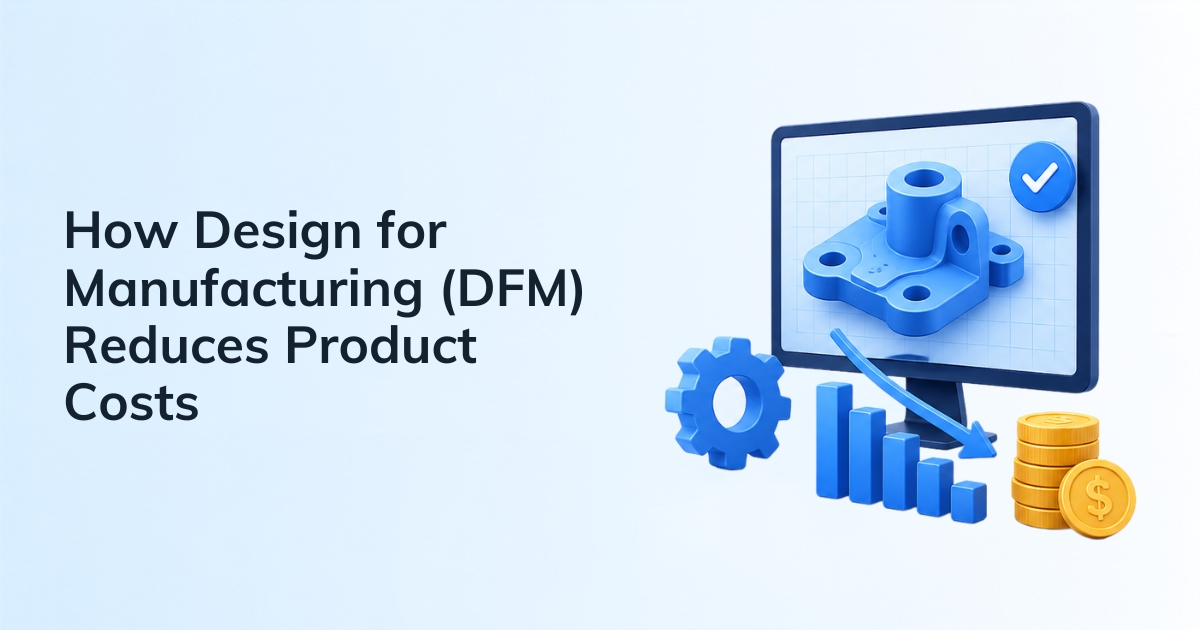
Design for manufacturing DFM reduces product costs by simplifying product designs, minimising material waste, reducing assembly complexity & identifying manufacturability challenges before production begins. By integrating manufacturing requirements into the design stage, organisations can reduce rework, accelerate product development & improve overall manufacturing efficiency while maintaining product quality.
In today’s highly competitive manufacturing environment, reducing costs is no longer solely about negotiating supplier contracts or increasing production volumes. A significant percentage of manufacturing expenses are determined long before production begins, during the design phase itself.
This is why manufacturers are increasingly adopting design for manufacturing DFM methodologies alongside modern Manufacturing Engineering Services to improve product quality, accelerate development timelines, and achieve sustainable cost savings. Combined with ongoing digital transformation in engineering initiatives and advanced engineering solutions, DFM enables businesses to identify inefficiencies early, optimise designs for production & deliver products that are easier and more economical to manufacture.
Whether developing industrial equipment, automotive components, agricultural machinery, or consumer products, organisations that embrace a structured DFM process often gain a measurable competitive advantage through improved manufacturability and reduced production costs.

To reduce manufacturing costs effectively, you need to design products with manufacturing capabilities, limitations, and efficiencies in mind from the very beginning of development.
Design for manufacturing is an engineering methodology that evaluates how product designs impact production processes before manufacturing begins. Rather than focusing solely on functionality, DFM considers materials, manufacturing methods, assembly requirements, tolerances, tooling & quality control requirements during the design phase.
The primary objective is to ensure products can be manufactured consistently, efficiently, and cost-effectively at scale.
A comprehensive DFM process typically evaluates –
By addressing these factors early, manufacturers can avoid costly production issues, redesigns, and delays.
Industry Stat
McKinsey reports that companies adopting digital engineering and advanced product development approaches can achieve productivity improvements of up to 30% while accelerating development cycles and reducing overall engineering costs.
To understand cost reduction in manufacturing, you need to recognise that many production expenses are determined by design decisions made long before manufacturing starts.
Every design choice affects manufacturing performance. Material selection impacts procurement costs. Tight tolerances increase machining complexity. Excessive part counts increase assembly labour requirements. Complex geometries often require specialised tooling or additional manufacturing processes.
When these considerations are overlooked, costs quickly escalate across the entire product lifecycle.
Traditional Design vs Design for Manufacturing DFM
| Factor | Traditional Design Approach | Design for Manufacturing DFM |
| Manufacturing Input | Late-stage involvement | Early-stage involvement |
| Engineering Changes | More frequent | Reduced significantly |
| Material Waste | Higher | Lower |
| Production Efficiency | Moderate | Higher |
| Tooling Costs | Often increased | Optimised |
| Product Quality | Variable | Improved consistency |
| Time-to-Market | Longer | Faster |
This structured approach to product design optimization helps manufacturers achieve better commercial outcomes while maintaining product performance.
To achieve measurable cost reduction in manufacturing, you need a systematic approach that identifies inefficiencies before products reach production.
The DFM process helps reduce manufacturing costs through multiple optimisation strategies.
Simplified Product Designs
Design complexity often drives manufacturing expenses. DFM encourages designers to simplify product structures while maintaining functionality.
Examples include –
Fewer complexities lead to lower production costs and improved manufacturing efficiency.
Reduced Material Waste
Materials represent a significant portion of production costs. DFM evaluates how material choices and component geometries affect –
Better material utilisation contributes directly to cost reduction in manufacturing.
Lower Assembly Costs
Assembly labour remains a major cost factor across many industries. DFM principles help teams –
Simplified assembly processes often result in faster production and reduced quality issues.
Prevention of Costly Engineering Changes
Identifying production challenges during development is significantly less expensive than correcting them after tooling and production investments have been made.
Manufacturers operating in equipment-intensive sectors frequently rely on DFM reviews to minimise downstream engineering risks. For example, this guide on Design for Manufacturability in Agricultural Equipment demonstrates how early manufacturability planning helps agricultural equipment manufacturers reduce production complexity while maintaining durability and performance requirements.
To maximise manufacturing efficiency, you need product designs that balance functionality, quality, manufacturability & cost simultaneously.
Modern product design optimization extends beyond product performance. It focuses on ensuring products can be manufactured efficiently at scale.
Key optimisation areas include –
Material Selection Optimisation
Selecting the right material requires balancing –
Tolerance Optimisation
Overly tight tolerances often increase production costs without delivering measurable value.
DFM reviews evaluate whether tolerances can be adjusted while maintaining product functionality and quality.
Manufacturing Process Alignment
Designs should align with intended manufacturing methods such as –
This alignment improves manufacturability and reduces unnecessary production challenges.
To modernise DFM implementation, you need digital tools that improve visibility, collaboration, and design validation throughout development.
The ongoing digital transformation in engineering has significantly enhanced DFM capabilities. Modern engineering teams utilise –
These technologies allow engineers to validate manufacturability earlier, reducing costly physical iterations and accelerating decision-making.
As digital transformation in engineering continues to evolve, organisations can achieve greater confidence in manufacturing readiness before production investments are made.
To gain maximum value from DFM, you need to view it as a long-term business strategy rather than a short-term cost-cutting exercise.
While reduced manufacturing costs are often the most visible benefit, DFM also improves –
Forward-thinking manufacturers increasingly integrate DFM into broader business transformation initiatives.
This strategic perspective is explored further in Beyond Cost Reduction: A Manufacturing Leader’s Guide to Design for Manufacturability (DFM), which examines how manufacturers use DFM to create long-term operational advantages beyond immediate production savings.
To improve manufacturing efficiency across complex production environments, many industries apply DFM engineering principles throughout product development.
Industries commonly using DFM engineering include –
The greater the manufacturing complexity, the greater the value generated through structured DFM practices.
To establish an effective DFM programme, organisations need cross-functional collaboration, standardised processes & continuous improvement practices.
Best practices include –
Many organisations accelerate implementation by partnering with experienced engineering providers that offer design optimization services and manufacturing-focused product development expertise.

Design for manufacturing DFM has become an essential methodology for manufacturers seeking to reduce costs while maintaining product quality, reliability, and market competitiveness.
By integrating manufacturing considerations into product development from the earliest stages, organisations can simplify designs, reduce waste, minimise assembly complexity, and prevent costly production issues. Combined with digital transformation in engineering initiatives and modern advanced engineering solutions, DFM enables companies to improve efficiency across the entire product lifecycle.
Rather than viewing manufacturability as a production challenge, successful organisations recognise it as a design responsibility. The earlier manufacturing expertise is incorporated into product development, the greater the opportunity for meaningful cost reduction in manufacturing and long-term business success.
Ready to optimise product designs and lower manufacturing costs? Connect with our engineering experts today.
1. What is design for manufacturing DFM?
Design for manufacturing DFM is an engineering methodology that focuses on designing products that are easier, faster & more cost-effective to manufacture. It evaluates materials, manufacturing processes, assembly methods, and production constraints during development to improve manufacturability and reduce costs.
2. How does the DFM process reduce manufacturing costs?
The dfm process reduces costs by simplifying designs, reducing material waste, lowering assembly labour requirements & identifying manufacturing challenges before production begins. This prevents expensive engineering changes later in the product lifecycle.
3. Why is product design optimization important?
Product design optimization helps manufacturers balance performance, manufacturability, quality, and cost. It ensures products can be produced efficiently while meeting customer and market requirements.
4. What is the role of DFM engineering?
DFM engineering evaluates how design decisions affect manufacturing efficiency. Engineers use DFM principles to improve production readiness, reduce risks, and support cost-effective manufacturing strategies.
5. How does digital transformation in engineering support DFM?
Digital transformation in engineering provides tools such as simulations, digital twins, and virtual prototyping that help manufacturers validate designs before production, reducing errors and improving efficiency.
6. Which industries benefit most from DFM?
Automotive, aerospace, industrial equipment, agricultural machinery, medical devices, and electronics manufacturers commonly use DFM because manufacturing efficiency directly impacts profitability and scalability.
7. What are design optimization services?
Design optimization services help organisations improve product manufacturability, performance, and production efficiency through engineering analysis, DFM reviews, simulation & manufacturing readiness assessments.
8. When should DFM be implemented?
DFM should be implemented as early as possible in product development. Early adoption maximises cost savings and reduces the likelihood of expensive modifications during production.

Senior Vice President, Katalyst Engineering
Bhavik Shah is the Vice President of Global Engineering and Manufacturing at Katalyst Engineering, with over 22 years of experience in the engineering industry. He specializes in product development, R&D, and engineering delivery operations, driving innovative, design-led solutions across automotive, industrial, and off-highway sectors. Bhavik plays a key role in strengthening engineering strategies, building global partnerships, and delivering high-performance outcomes for clients.