At Katalyst Engineering Services, we continually strive to drive innovation by deftly utilizing these resources, changing the issues encountered by various industries and fields with potential solutions.
At Katalyst Engineering Services, we continually strive to drive innovation by deftly utilizing these resources, changing the issues encountered by various industries and fields with potential solutions.

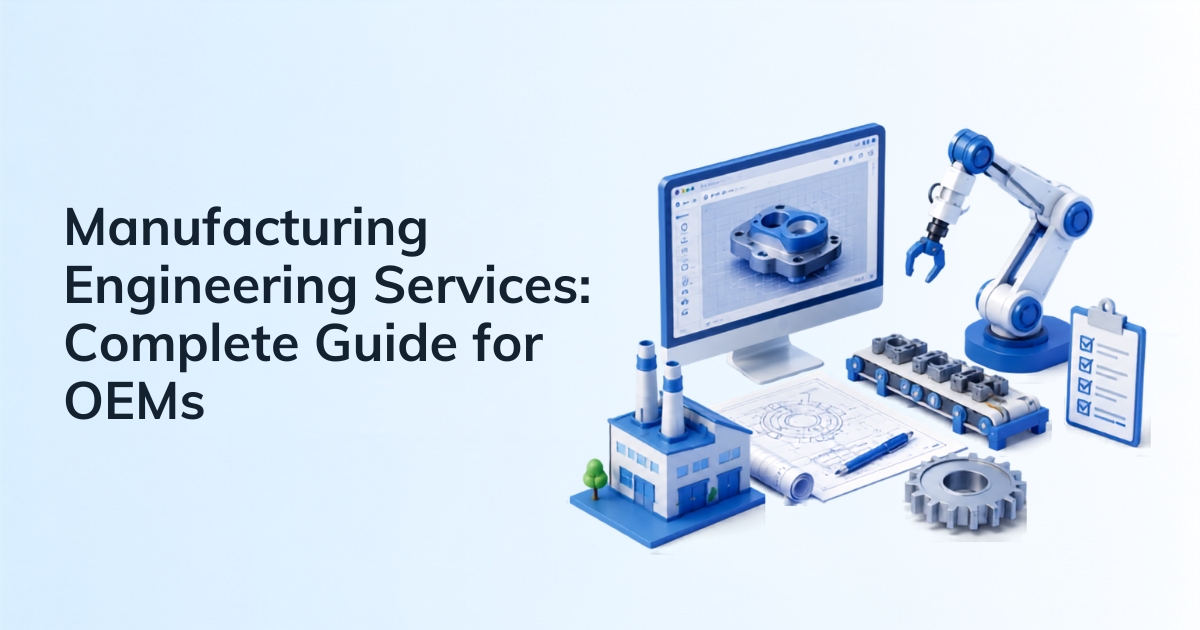
Manufacturing engineering services help OEMs improve product quality, reduce production costs, accelerate time-to-market & enhance operational efficiency. By combining engineering design for manufacturing, process optimisation, and digital technologies, these services enable manufacturers to build scalable, resilient & future-ready operations while supporting broader digital transformation in engineering initiatives.
The manufacturing landscape is evolving rapidly. OEMs today must respond to shorter product lifecycles, rising customer expectations, supply chain volatility, increasing regulatory requirements & pressure to innovate faster than ever before. At the same time, maintaining quality and profitability remains a constant challenge.
This is where engineering & manufacturing services create significant value. These services help bridge the gap between product development and production by ensuring designs are practical to manufacture, processes are efficient & operations are aligned with long-term business goals.
For manufacturers looking to accelerate product development and improve production performance, Katalyst Engineering’s manufacturing engineering services provide support across product engineering, manufacturing readiness, process optimisation, and digital transformation programmes.

To improve production efficiency and product quality, manufacturers need specialised engineering support that ensures products move smoothly from concept to production. Manufacturing engineering services provide the expertise, processes & technologies required to make manufacturing operations more efficient, cost-effective, and scalable.
Manufacturing engineering services encompass a wide range of activities focused on improving product manufacturability and production performance. Rather than treating product design and manufacturing as separate functions, these services create alignment between engineering intent and production realities.
Typical manufacturing engineering services include –
Together, these capabilities form the foundation of modern engineering & manufacturing services, helping OEMs improve productivity while reducing operational risks.
To remain competitive while managing increasing product complexity, OEMs need engineering support that improves both product development and manufacturing performance. Engineering & manufacturing services help companies achieve these goals simultaneously.
Today’s manufacturers face significant challenges –
Engineering specialists help address these challenges by implementing advanced engineering solutions that improve production processes, reduce waste & support long-term growth.
Key Industry Statistic
According to Deloitte’s Smart Factory Study, manufacturers implementing smart factory initiatives reported improvements of up to 12% in labour productivity, 11% in factory capacity utilisation, and 10% in quality.
These results demonstrate why engineering-led operational improvements have become strategic priorities for OEMs worldwide.
To successfully bring products to market, manufacturers require multiple engineering disciplines working together throughout the product lifecycle. Manufacturing engineering services provide integrated expertise that supports every stage from concept development to production optimisation.
Product Development Support
Engineering teams help ensure products meet both functional and manufacturing requirements. This collaborative approach reduces the likelihood of costly redesigns later in the development cycle while improving product quality and production readiness.
Process Engineering
Process engineering focuses on designing and refining manufacturing workflows. Engineers evaluate cycle times, material flow, equipment requirements & operational efficiency to minimise bottlenecks and improve productivity.
Tooling and Fixture Design
Proper tooling plays a critical role in ensuring consistent production outcomes. Custom fixtures, jigs, and tooling solutions improve accuracy, reduce variation & support higher production volumes.
Production Line Development
Production line planning involves designing efficient manufacturing layouts, workstation configurations & automation strategies. These improvements help maximise throughput while reducing operational inefficiencies.
Quality Engineering
Quality engineering ensures products consistently meet customer and regulatory requirements. Activities include inspection planning, process capability analysis, root cause investigations & continuous improvement initiatives.
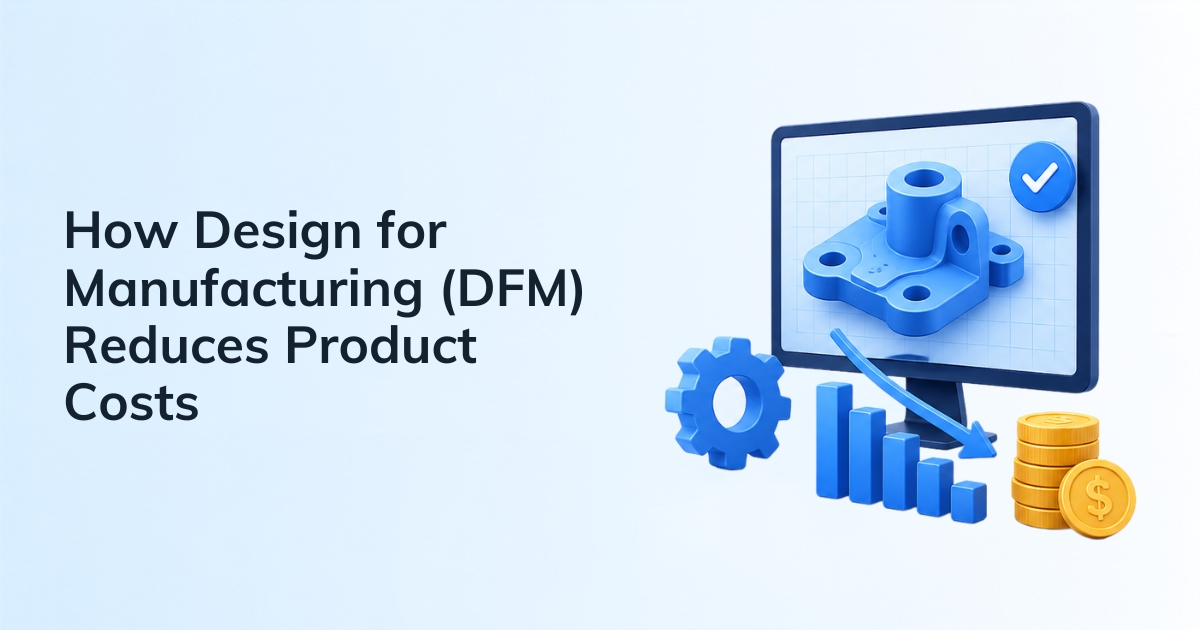
To reduce production costs and improve manufacturing efficiency, manufacturers need to consider production requirements during product development. Engineering design for manufacturing helps achieve this by aligning product designs with manufacturing realities from the outset.
Engineering design for manufacturing focuses on creating products that are easier, faster, and more cost-effective to produce. Instead of identifying problems once production begins, teams proactively evaluate manufacturability during the design phase.
Lower Production Costs
One of the primary advantages of engineering design for manufacturing is cost optimisation. By simplifying part geometries, reducing unnecessary components & selecting suitable manufacturing methods, engineers can significantly reduce material, tooling, and labour costs.
Even minor design changes can generate substantial long-term savings when products move into full-scale production.
Faster Product Development Cycles
Manufacturability reviews help engineers identify challenges before tooling investments or production setup activities begin. This reduces redesign requirements and helps products reach the market faster.
Improved Product Quality
Products designed with manufacturing requirements in mind tend to be easier to build consistently. Improved assembly processes, reduced complexity & better process control often result in fewer quality issues and lower warranty costs.
To avoid expensive production issues and redesign efforts, manufacturers should adopt engineering design for manufacturability principles early in product development. This approach ensures designs are aligned with production capabilities before manufacturing begins.
While often used interchangeably with DFM, engineering design for manufacturability focuses specifically on evaluating whether products can be produced efficiently, consistently, and at scale.
Key principles include –
Simplifying Product Structures
Complex products often require additional tooling, manufacturing steps & quality inspections. Simplifying designs helps reduce production costs while improving reliability.
Standardising Components
Using common parts across multiple products can improve procurement efficiency, reduce inventory complexity & simplify assembly operations.
Optimising Material Selection
Material decisions directly impact manufacturability, product performance, sustainability goals, and production costs. The right material selection supports both engineering and commercial objectives.
Designing for Automation
As manufacturing facilities embrace automation, products should be designed to accommodate robotic assembly, automated inspection & advanced manufacturing technologies.
Reducing Assembly Operations
Reducing the number of assembly steps simplifies production processes and improves overall efficiency. It also lowers the risk of manufacturing errors and inconsistencies.
For industries embracing smart manufacturing initiatives, the principles of engineering design for manufacturability increasingly support broader digital transformation in engineering strategies.
To improve operational visibility and data-driven decision-making, OEMs are investing in digital engineering and manufacturing services. These technologies create connected manufacturing environments that improve productivity, quality & agility.
The rise of Industry 4.0 continues to accelerate digital transformation in engineering across manufacturing sectors worldwide.
Modern digital engineering and manufacturing services include –
| Technology | Primary Benefit |
| Digital Twins | Virtual process validation |
| Manufacturing Simulation | Reduced prototyping costs |
| AI Analytics | Predictive insights |
| Smart Factory Systems | Enhanced visibility |
| Digital Workflows | Better collaboration |
| Industrial Automation | Increased efficiency |
Digital twin technology has become one of the most important capabilities within modern manufacturing ecosystems. Manufacturers exploring implementation strategies can learn more from our guide on Digital Twin Technology in Manufacturing Engineering Explained.
Did You Know? Manufacturers that successfully implement digital technologies can improve productivity by 15% to 30% and reduce machine downtime by 30% to 50%, according to research from McKinsey. These improvements demonstrate why digital engineering and manufacturing services have become central to modern manufacturing strategies. |
To improve competitiveness and operational performance, OEMs leverage manufacturing engineering expertise to optimise products, processes, and production systems. The result is greater efficiency, lower costs & stronger long-term business performance.
Accelerated Time-to-Market
Engineering support helps identify production challenges before they delay product launches. This enables teams to move from concept to manufacturing more efficiently.
Cost Optimisation
Manufacturing engineering specialists evaluate product designs, workflows, equipment utilisation, and material consumption to uncover savings opportunities across operations.
Improved Product Quality
When manufacturing considerations are incorporated throughout the product lifecycle, product consistency and reliability often improve significantly.
Greater Scalability
External engineering support allows organisations to expand capabilities without significantly increasing fixed overhead costs.
Enhanced Operational Visibility
Data-driven manufacturing solutions improve decision-making across production environments.
Digital twin implementations are increasingly delivering measurable value in this area. Manufacturers interested in real-world use cases can also explore Digital Twins in Industrial Manufacturing to understand how virtual models improve planning, monitoring, and operational performance.
These outcomes reflect how advanced engineering solutions contribute directly to sustainable growth and manufacturing excellence.
To determine the most effective operating model, manufacturers should evaluate whether internal resources can support current and future engineering requirements.
| Factor | In-House Team | Engineering Partner |
| Expertise | Limited to internal resources | Multi-disciplinary specialists |
| Scalability | Often constrained | Flexible and expandable |
| Technology Access | Requires investment | Immediate access |
| Project Support | Capacity dependent | On-demand support |
| Cost Structure | Fixed overhead | Flexible engagement |
| Industry Exposure | Internal experience | Cross-industry best practices |
Many OEMs adopt a hybrid approach that combines internal expertise with external engineering & manufacturing services for specialised projects and transformation initiatives.
To maximise return on investment, manufacturers should select engineering partners with proven expertise, industry experience, and strong digital capabilities.
When evaluating potential partners, consider –
Industry Experience
Industry-specific knowledge often accelerates project execution and improves outcomes.
Technical Capabilities
Look for expertise across product engineering, manufacturing engineering, automation, and digital technologies.
Digital Manufacturing Expertise
Strong competencies in digital engineering and manufacturing services are increasingly important as Industry 4.0 adoption accelerates.
Scalability and Flexibility
Engineering demands can vary significantly over time. The ideal partner can scale resources based on changing requirements.
Focus on Innovation
The best providers continuously develop advanced engineering solutions that help clients improve competitiveness and operational efficiency.
To remain competitive in the coming years, OEMs must embrace technologies that drive automation, intelligence, sustainability & operational agility. Manufacturing engineering will play a critical role in enabling this transformation.
Several trends are shaping the future of manufacturing –
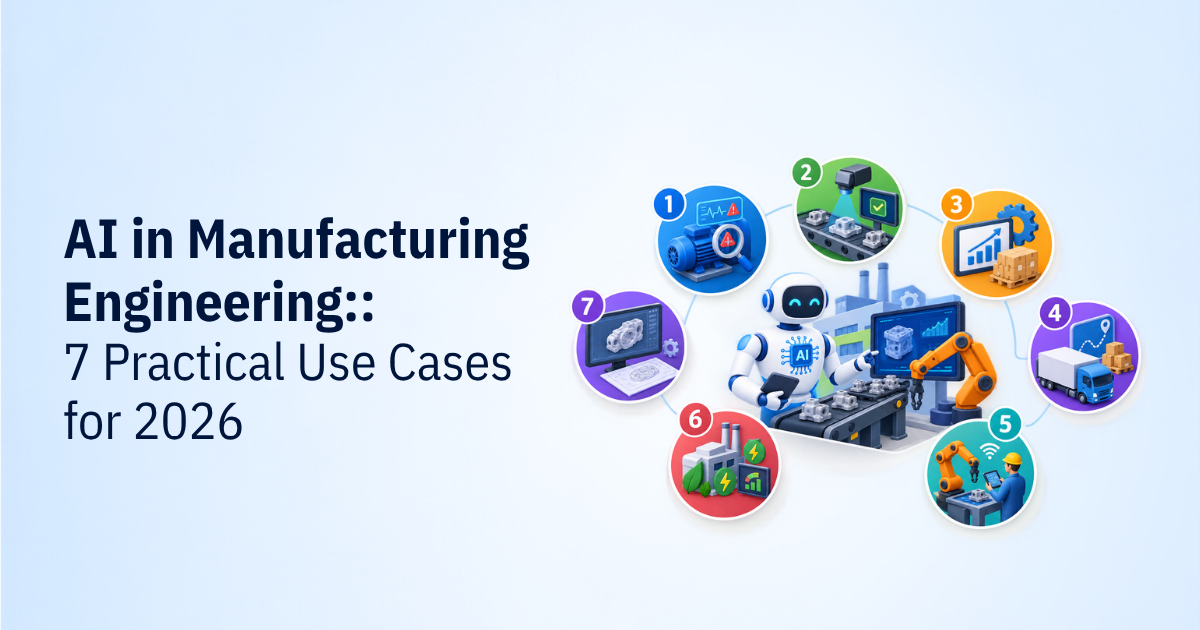
Artificial intelligence is already reshaping manufacturing decision-making across design, production, and maintenance functions. Manufacturers interested in emerging use cases can explore our article on AI in Manufacturing Engineering: Practical Applications for Modern Factories.
As these technologies mature, digital transformation in engineering will continue driving significant improvements in productivity, quality & product innovation.

Manufacturing excellence today requires more than efficient production processes. OEMs need integrated engineering expertise that connects product development, manufacturing readiness, process optimisation, and digital innovation.
By leveraging engineering & manufacturing services, manufacturers can reduce costs, improve quality, accelerate time-to-market & build resilient operations capable of supporting long-term growth. Whether implementing engineering design for manufacturing, adopting engineering design for manufacturability, or investing in digital engineering and manufacturing services, a strong engineering strategy is essential for future competitiveness.
Ready to strengthen your manufacturing operations and accelerate innovation? Connect with the engineering experts at Katalyst Engineering to discuss your manufacturing goals.
1. What are engineering & manufacturing services?
Engineering & manufacturing services help manufacturers improve product development, manufacturability, production processes, quality & operational performance. These services support the entire product lifecycle from concept through production and continuous improvement.
2. How do manufacturing engineering services reduce production costs?
They identify inefficiencies in product design, manufacturing processes, tooling, workflows, and automation opportunities. By optimising these areas, manufacturers can reduce waste, improve productivity & lower overall production expenses.
3. What is engineering design for manufacturing?
Engineering design for manufacturing is the practice of designing products that can be produced efficiently, consistently, and cost-effectively using available manufacturing resources and processes.
4. What is engineering design for manufacturability?
Engineering design for manufacturability focuses on ensuring products are practical to manufacture at scale. It evaluates factors such as materials, component complexity, assembly requirements & production feasibility.
5. Why are digital engineering and manufacturing services important?
These services help manufacturers adopt technologies such as digital twins, AI, automation, simulation, and advanced analytics, enabling smarter and more efficient manufacturing operations.
6. How do digital twins improve manufacturing operations?
Digital twins create virtual representations of products, systems, or production environments. They help manufacturers optimise performance, predict issues, test process changes & improve decision-making before implementing changes physically.
7. When should OEMs involve manufacturing engineering teams?
Ideally, manufacturing engineering teams should be involved during the early product development stage. Early involvement helps identify manufacturability challenges before they impact production schedules and costs.
8. What industries benefit from manufacturing engineering services?
Industries such as automotive, aerospace, industrial equipment, agriculture, construction equipment, energy, medical devices & electronics frequently use manufacturing engineering services to improve productivity and product quality.

Senior Vice President, Katalyst Engineering
Bhavik Shah is the Vice President of Global Engineering and Manufacturing at Katalyst Engineering, with over 22 years of experience in the engineering industry. He specializes in product development, R&D, and engineering delivery operations, driving innovative, design-led solutions across automotive, industrial, and off-highway sectors. Bhavik plays a key role in strengthening engineering strategies, building global partnerships, and delivering high-performance outcomes for clients.