At Katalyst Engineering Services, we continually strive to drive innovation by deftly utilizing these resources, changing the issues encountered by various industries and fields with potential solutions.
At Katalyst Engineering Services, we continually strive to drive innovation by deftly utilizing these resources, changing the issues encountered by various industries and fields with potential solutions.

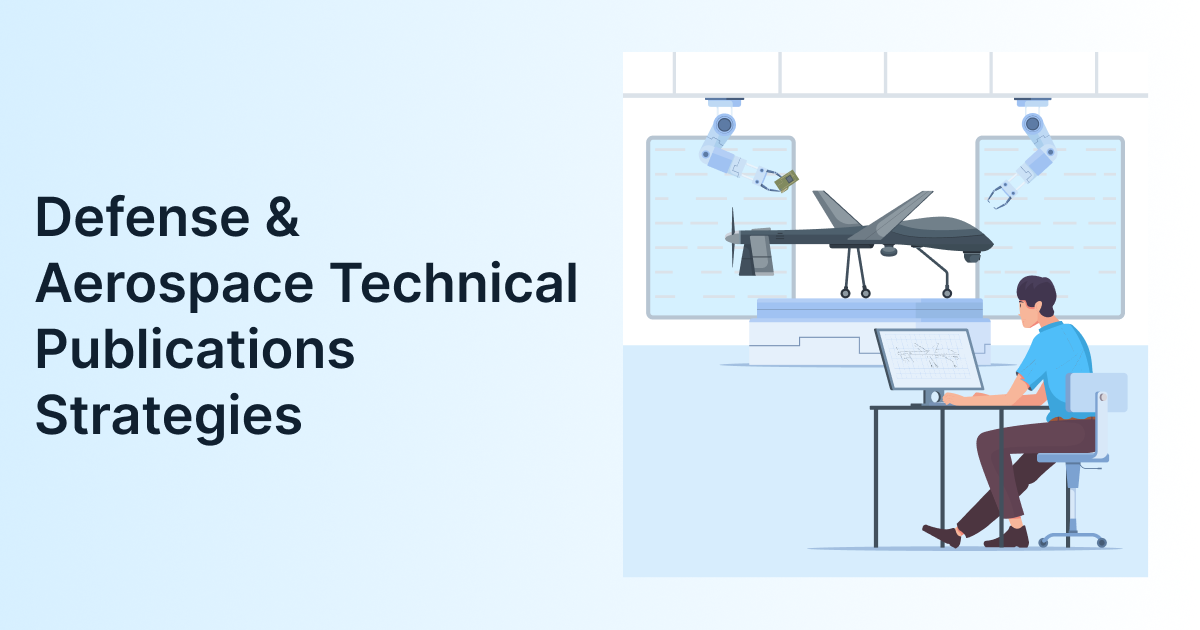
Modern flight systems, sophisticated military hardware, and complex defense mechanisms require documentation that matches their engineering precision. Every maintenance procedure, inspection guideline, and operational instruction must be accurate, compliant, and easily accessible to ensure safety, reliability, and mission success.
In an era defined by rapid technological advancements, the creation and management of aerospace technical publications have evolved from a routine administrative function into a critical, board-level strategic capability. As aircraft systems become increasingly software-driven and regulatory requirements continue to expand, organizations must harness effective technical publication services to deliver precise, standardized documentation faster than ever while maintaining complete traceability and compliance.
This guide explores how forward-looking defense & aerospace sector organizations can leverage modernized documentation workflows to improve collaboration, accelerate updates, reduce operational risks, and keep complex fleets airworthy, compliant, and mission ready.

Modern aerospace technical publications are vital because they bridge the gap between complex engineering designs and field execution. They ensure absolute safety, regulatory compliance, and maximum operational availability by delivering precise instructions directly to the maintenance technicians, pilots, and field operators who keep fleets flight-ready under any condition.
Historically, documentation was treated as an afterthought, something compiled during the final phases of production.
Today, the sheer density of electronic systems, composite materials, and software components makes that approach obsolete. Navigating this environment demands a deep understanding of the importance of technical publications in aerospace, ensuring safety and efficiency at every turn.
Beyond Manuals: The Expanding Role of Technical Publications
In modern operations, the scope of documentation goes far beyond traditional paper-bound binders. Aerospace technical publications directly support the entire operational lifecycle, serving as the primary resource for:
When organizations emphasize the importance of technical publications in aerospace, they directly improve safety margins and enhance long-term operational resilience.
Documentation Challenges Modern Aerospace Organizations Face
Developing compliant aerospace technical publications is highly complex, with teams facing daily hurdles that risk operational readiness and compliance.
A robust aerospace technical publication strategy relies on modular, standardized content architecture, strict version control, compliance-driven standards, and automated cross-functional collaboration. By unifying engineering, manufacturing, and support workflows, organizations can ensure that critical technical data remains accurate and readily accessible throughout the asset lifecycle.
Deploying a structured aerospace technical publication strategy prevents information silos and ensures that every technical writer, engineer, and maintenance specialist works from a unified framework.
Standardized Content Architecture
To build a sustainable content pipeline, organizations must abandon linear, document-based authoring. Instead, they must implement:
This modularity is the foundation of modern aviation technical writing, minimizing repetitive drafting and eliminating transcription errors.
Configuration and Version Management
When managing multiple fleet configurations, maintaining a single, generic manual is unsafe. Organizations require high-precision version management to:
Compliance-Driven Documentation
Compliance is not an option; it is the license to operate. A successful aerospace technical publications strategy must natively support global specifications, including:
Cross-Functional Collaboration
Documentation cannot exist in a silo. True efficiency is unlocked when engineering (PLM), manufacturing (ERP), quality assurance, and maintenance systems share a real-time data loop with the technical publications department. This ensures that field feedback loops back to the engineers, and design updates automatically prompt publication revisions.
Digital workflows for aerospace technical publications improve accuracy by establishing a single source of truth that automates publishing across multiple formats. These digital pipelines synchronize engineering updates directly with technical manuals, ensuring that technicians receive critical safety updates instantly, which reduces human error and accelerates regulatory sign-offs.
Adopting digital workflows allows teams to shift from slow, manual document creation to an agile, automated environment. Understanding the importance of technical publications in aerospace helps leadership justify the transition to modern digital architectures.
Centralized Content Management
By consolidating all source files into a centralized Common Source Database (CSDB) or Component Content Management System (CCMS), organizations achieve:
Automated Publishing Across Multiple Formats
Field personnel operate in varied environments. Digital workflows allow organizations to publish the same source content seamlessly to various channels:
Better Engineering Change Management
When engineering issues an update, a digital aerospace technical publication strategy ensures the technical writers are notified immediately. By integrating the technical writing software with Product Lifecycle Management (PLM) systems, organizations can automatically flag which aircraft maintenance manuals are affected by an engineering change, eliminating manual tracking.
Faster Review and Approval Cycles
Traditional PDF routing for review is a major bottleneck. Digital workflows facilitate concurrent reviews where subject matter experts (SMEs) can comment, edit, and approve technical content in real time within a secure environment, creating a clean audit trail for regulatory compliance.
Developing high-quality aerospace technical publications requires writing clearly for the end user, adhering to structured authoring standards, embedding interactive CAD graphics, and integrating documentation early in the product development lifecycle. These practices protect operator safety, reduce maintenance times, and lower lifetime program support costs.
Improving the quality of aviation technical writing is a strategic move that directly enhances field safety and equipment reliability.
Write for the End User
The safety of a flight crew or military unit depends on how clearly a technician can read and execute a procedure. Excellent aviation technical writing must be:
Adopt Structured Authoring Principles
Avoid unstructured document editors. Authors must use XML-based authoring tools to ensure all aerospace technical publications are consistent, valid, and fully compliant with S1000D, DITA, or ATA standards.
Integrate Graphics, CAD Illustrations, and Interactive Media
A picture is worth a thousand words, especially during a complex engine teardown. Modern publications should incorporate:
Build Documentation into the Product Development Lifecycle
Documentation should never wait for production to finish. By integrating technical writers early in the CAD and prototyping phases, the drafting of aircraft maintenance manuals can occur in parallel with engineering, ensuring manuals are ready the moment the physical asset is delivered.
Establish Continuous Review Processes
Create a continuous feedback loop where operators can report errors or suggest improvements directly from their tablets. These feedback submissions should route straight to the technical writing team for prompt review and deployment in the next revision cycle.
Technical publications are also essential for efficient aftermarket services, supporting accurate spare parts identification, streamlined service workflows, and improved warranty outcomes. Read more about this in how technical publications support aftermarket services & spare parts sales.
The ideal software must feature native support for S1000D/ATA standards, robust XML structured authoring, seamless PLM/ERP integration, and automated multi-format publishing. It must also feature strict role-based access control to secure sensitive defense data and intellectual property across your entire enterprise.
Evaluating software options requires looking past simple word processors. You need a dedicated technical publication services platform designed for the extreme demands of the aerospace and defense sector.
Feature Comparison Checklist
Below is a detailed comparison showcasing the stark differences between legacy practices and a modernized, digital approach:
| Traditional Documentation | Modern Digital Technical Publication Strategy |
| Manual document creation | Structured XML authoring and automated templates |
| Duplicate content and copy-pasting | High-efficiency modular content reuse |
| Static, hard-to-navigate PDFs | Interactive digital manuals (IETMs) with 3D views |
| Manual revision tracking in spreadsheets | Automated, database-driven version management |
| Siloed, email-based collaboration | Integrated engineering and PLM workflows |
| Slow, manual multi-format publishing | One-click, multi-channel automated publishing |
| Difficult, time-consuming compliance audits | Traceable, audit-ready automated compliance trails |
Essential Capabilities to Look For
When shortlisting vendors, ensure their platform delivers:
Indicators That It’s Time to Modernize
If your organization suffers from any of the following pain points, your documentation processes are likely holding back your growth:

As defense platforms and commercial aircraft grow increasingly complex, legacy, document-based writing practices can no longer keep pace with rapid engineering cycles.
Delivering accurate, compliant, and mission-ready documentation requires a modern, digital-first strategy built on modular content reuse, robust version control, and standardized frameworks. Organizations that prioritize their publication pipelines dramatically reduce compliance risks, improve field safety, and ensure their platforms remain operational under the most demanding conditions.
Looking forward, the future of aerospace technical publications will be driven by intelligent automation, deep PLM integration, and interactive digital interfaces. This makes choosing scalable software systems a critical priority for engineering and IT leaders alike.
To see how your organization can transform its documentation workflows, optimize regulatory compliance, and reduce long-term publication maintenance costs, connect with our specialists today.
1. What is a technical publication strategy in aerospace and defence?
An aerospace technical publication strategy is an organization’s systematic plan for authoring, managing, and distributing highly regulated technical documents. It defines how a company uses structured data standards, like S1000D, to produce, update, and manage complex fleet data. This strategy ensures that technical writers and engineers can seamlessly update and verify technical manuals to support ongoing airworthiness.
2. Why is S1000D important for aerospace documentation?
Understanding the importance of technical publications in aerospace requires understanding S1000D. It is the premier international standard that defines how technical information must be structured, stored, and delivered. Using XML and a Common Source Database (CSDB), S1000D allows aerospace organizations to create highly reusable, modular data modules, significantly lowering the overall lifecycle costs of fleet documentation.
3. What are Interactive Electronic Technical Manuals (IETMs)?
IETMs are advanced digital guides that replace traditional static PDFs or printed manuals. They allow maintenance technicians to interact directly with schematics, search database modules in real time, view interactive 3D illustrations, and follow dynamic troubleshooting trees. These interactive capabilities make modern aerospace technical publications highly accessible and efficient for field operators.
4. How can technical publication software improve compliance?
Modern technical publication software uses built-in schemas to enforce strict compliance with standards like S1000D, ATA iSpec 2200, and ASD-STE100. By validating content as it is written, the software prevents formatting errors, ensures controlled technical terminology is used, and automatically tracks structural modifications, allowing teams to deliver audit-ready documentation to regulators effortlessly.
5. What features should aerospace organizations prioritize in technical publication software?
When evaluating software, prioritizing native XML authoring, S1000D/ATA compliance, integrated version control, and robust PLM integrations is essential. These capabilities ensure that your digital publication workflows remain highly scalable. Additionally, look for platforms that offer secure, role-based access control and multi-format automated publishing to protect your sensitive aerospace intellectual property.
6. How does aviation technical writing impact maintenance turnaround times?
Accurate aviation technical writing directly reduces maintenance turnaround times by providing technicians with clear, concise, and unambiguous step-by-step instructions. Clear writing minimizes diagnostic errors, prevents rework, and speeds up part identification, ensuring that complex aircraft and critical defense systems return to operational service safely and with minimal delay.
7. What does the future of aerospace technical publications look like?
The future of aerospace technical publications lies in deep digital integration. We will see widespread adoption of augmented reality (AR) overlays for technicians, AI-driven contextual diagnostics, and predictive maintenance feedback loops. Documentation will continue to evolve from static instructions into an interactive, real-time diagnostic partner that seamlessly supports the entire asset lifecycle.

Senior Vice President, Katalyst Engineering
Bhavik Shah is the Vice President of Global Engineering and Manufacturing at Katalyst Engineering, with over 22 years of experience in the engineering industry. He specializes in product development, R&D, and engineering delivery operations, driving innovative, design-led solutions across automotive, industrial, and off-highway sectors. Bhavik plays a key role in strengthening engineering strategies, building global partnerships, and delivering high-performance outcomes for clients.