At Katalyst Engineering Services, we continually strive to drive innovation by deftly utilizing these resources, changing the issues encountered by various industries and fields with potential solutions.
At Katalyst Engineering Services, we continually strive to drive innovation by deftly utilizing these resources, changing the issues encountered by various industries and fields with potential solutions.

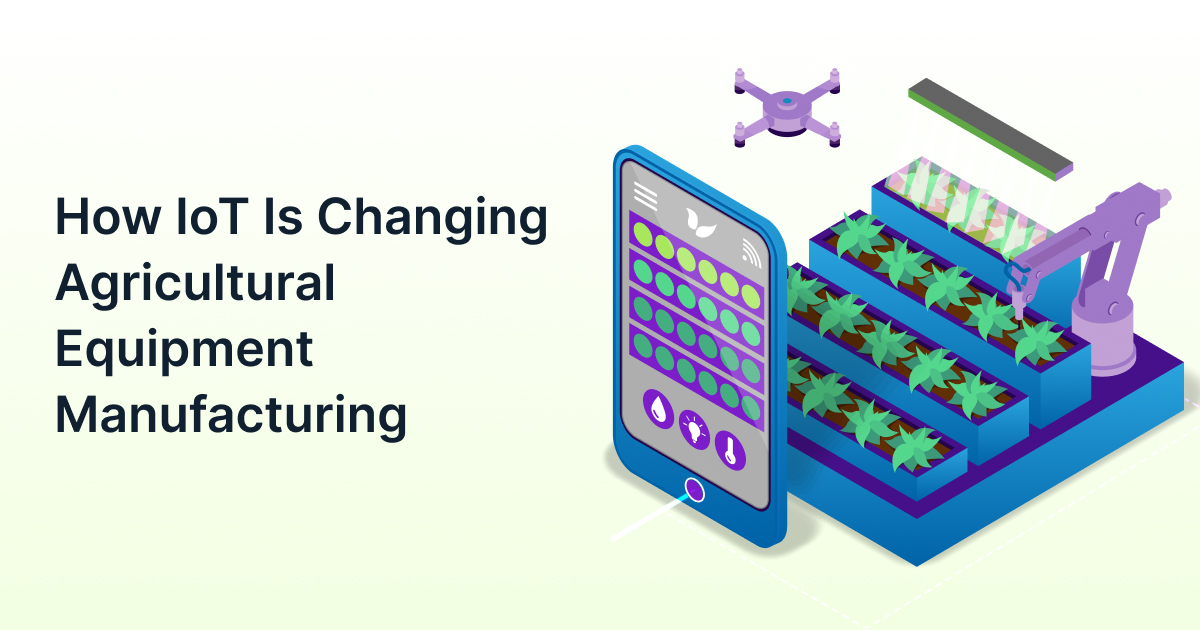
To transform agricultural equipment manufacturing, companies are integrating IoT manufacturing solutions into equipment design, production & performance monitoring. This enables real-time analytics, predictive maintenance & smart farming equipment innovation, helping manufacturers improve efficiency while addressing the challenges of IoT in agriculture and preparing for the future of IoT in agriculture.
The shift towards connected ecosystems is redefining the way farm machinery is conceptualised, built & deployed. IoT is no longer an add-on, it is becoming foundational to how modern equipment operates in the field.
For businesses in agricultural equipment manufacturing, this evolution is tightly linked with the adoption of scalable engineering design services, robust engineering services, and forward-looking advanced engineering solutions that can support intelligent, data-driven machinery.

To understand agricultural innovation, you need to know what IoT in agriculture is: a connected ecosystem of sensors, devices & platforms that collect real-time data to automate farming processes and improve decision-making.
At its core, what is IoT in agriculture? It’s the integration of physical farming equipment with digital intelligence.
This enables –
This is particularly important for building smart farming equipment, which now relies heavily on engineering design services and advanced engineering solutions to integrate hardware with software seamlessly.
To modernise production systems, you need IoT manufacturing solutions that connect machines, workflows & analytics platforms, enabling real-time visibility, predictive maintenance & optimisation across the production lifecycle.
Here’s how IoT manufacturing solutions are reshaping agricultural equipment manufacturing:
1. Smart Design and Virtual Testing
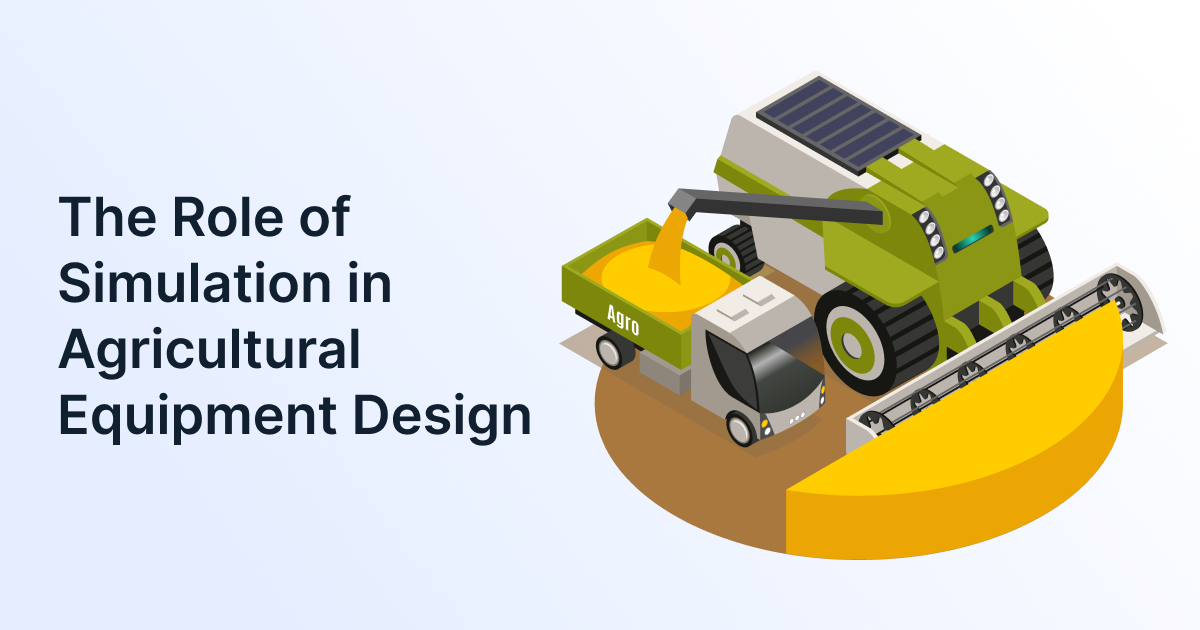
Digital twins and simulation tools allow manufacturers to test performance in virtual environments before physical prototyping. This reduces development time and cost significantly. For example, simulation-driven insights are already improving accuracy and durability in machinery design, as explained in this blog on the role of simulation in agricultural equipment design.
2. Connected Shop Floors
IoT sensors embedded in production equipment continuously track machine health, utilisation & output quality. This helps identify inefficiencies early and ensures consistent production flow with the support of advanced engineering services.
3. Predictive Maintenance Systems
Instead of reacting to machine failures, manufacturers can predict issues based on sensor data trends. This reduces downtime and improves operational continuity.
4. Integrated Supply Chains
Real-time tracking of parts and components ensures better coordination between suppliers and production units, reducing delays and inventory mismatches.
To improve competitiveness, you need to leverage the benefits of IoT in agriculture, such as enhanced efficiency, reduced downtime, improved product innovation & better customer insights.
The benefits of IoT in agriculture extend well beyond farms –
All these improvements are powered by scalable engineering design services and advanced engineering solutions that bridge the gap between mechanical systems and digital intelligence.
To successfully implement IoT systems, you must address the challenges of IoT in agriculture, including infrastructure gaps, high initial costs, data security risks & system integration complexities.
Despite its advantages, the challenges of IoT in agriculture are significant:
| Challenge | Explanation |
| Connectivity gaps | Many rural areas still lack stable internet, limiting real-time data transfer and system reliability |
| High upfront costs | Sensors, connectivity modules, and platforms require substantial initial investment |
| Data security concerns | Connected systems are vulnerable to cyber risks, requiring strong security frameworks |
| Integration issues | Legacy manufacturing systems often struggle to integrate with IoT platforms |
Addressing these challenges requires specialised engineering services and tailored advanced engineering solutions that ensure seamless system adoption.
To remain competitive, you need to develop smart farming equipment that combines sensors, automation & analytics, enabling precision farming and improved operational efficiency.
Modern smart farming equipment is not just mechanical, it’s intelligent –
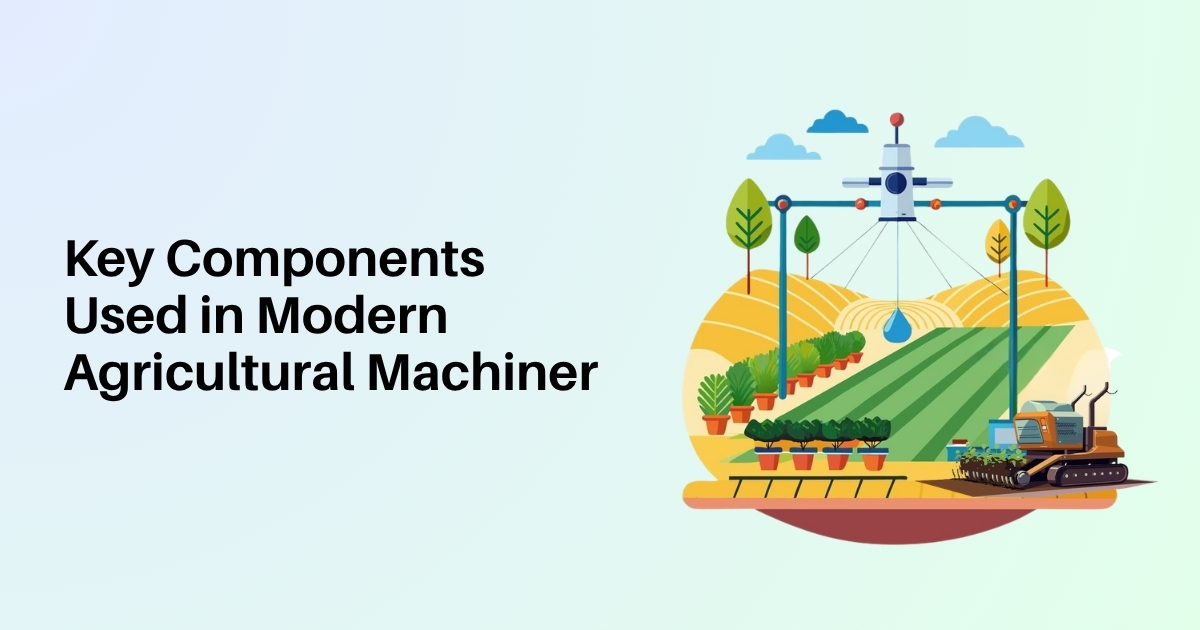
To understand the building blocks behind such innovations, this blog on key components used in modern agricultural machinery offers a deeper perspective.
To optimise production, you need to integrate IoT insights into design for manufacturability, focusing on scalability, cost efficiency & simplified assembly processes.
IoT-generated data helps manufacturers make smarter design decisions –
This aligns closely with best practices discussed in this guide to design for manufacturability in agricultural equipment, where IoT plays a critical role in closing the loop between design and production.
To stay future-ready, you need to adopt emerging trends shaping the future of IoT in agriculture, including AI integration, autonomous systems & fully connected ecosystems.
The future of IoT in agriculture is being shaped by –
Manufacturers investing in advanced engineering solutions today will be at the forefront of this transformation.
IoT is no longer a future concept, it’s actively reshaping how agricultural equipment is designed, manufactured, and used. For manufacturers, this means moving beyond traditional processes and embracing IoT manufacturing solutions, backed by scalable engineering design services and robust advanced engineering solutions.
As the industry moves towards intelligent, connected ecosystems, the real differentiator will be how effectively organisations integrate these technologies into their manufacturing workflows.
If you’re looking to build smarter, more connected equipment and stay ahead in agricultural equipment manufacturing, it’s time to take the next step, connect with experts who can help you design, optimise & scale your IoT-driven solutions.

1. What is IoT in agriculture?
IoT in agriculture refers to connected systems of sensors, devices & machinery that collect and analyse real-time data. This enables automation, precision farming & improved decision-making for both farmers and equipment manufacturers.
2. How does IoT impact agricultural equipment manufacturing?
IoT enables manufacturers to design smarter equipment with predictive maintenance capabilities and real-time monitoring. It improves production efficiency and allows data-driven product development.
3. What are IoT manufacturing solutions?
IoT manufacturing solutions involve integrating digital connectivity into production systems. They help monitor performance, reduce downtime & improve product quality through real-time insights.
4. What are the challenges of IoT in agriculture?
Challenges include connectivity issues in rural areas, high implementation costs, data security risks & integration with legacy systems. These can be managed with specialised engineering expertise.
5. What are the benefits of IoT in agriculture?
Benefits include increased efficiency, reduced downtime, improved crop yields, better resource management & enhanced equipment performance through data-driven insights.
6. What is smart farming equipment?
Smart farming equipment includes IoT-enabled machinery like autonomous tractors and sensor-equipped systems. These machines optimise farming operations and reduce manual effort.
7. What is the future of IoT in agriculture?
The future includes AI-powered analytics, autonomous farming systems, and fully connected ecosystems that improve efficiency, sustainability & scalability in agriculture.

Senior Vice President, Katalyst Engineering
Bhavik Shah is the Vice President of Global Engineering and Manufacturing at Katalyst Engineering, with over 22 years of experience in the engineering industry. He specializes in product development, R&D, and engineering delivery operations, driving innovative, design-led solutions across automotive, industrial, and off-highway sectors. Bhavik plays a key role in strengthening engineering strategies, building global partnerships, and delivering high-performance outcomes for clients.