At Katalyst Engineering Services, we continually strive to drive innovation by deftly utilizing these resources, changing the issues encountered by various industries and fields with potential solutions.
At Katalyst Engineering Services, we continually strive to drive innovation by deftly utilizing these resources, changing the issues encountered by various industries and fields with potential solutions.

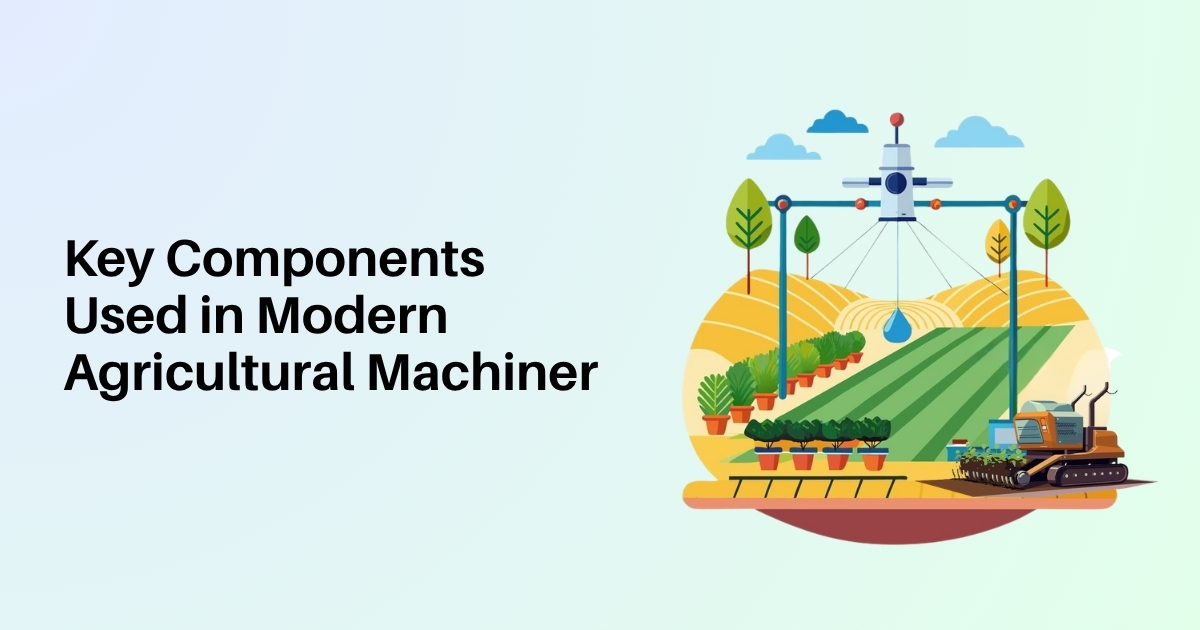
To operate efficiently, modern agricultural machinery depends on a combination of structural, mechanical, hydraulic, power transmission & electronic components. These agricultural machinery components work together to automate field operations, improve precision & reduce manual labour while ensuring durability in harsh agricultural environments.
Agriculture today is driven by speed, scale & precision. As farms grow larger and labour availability becomes uncertain, modern agricultural machinery has become the backbone of efficient food production. At the heart of these machines are carefully engineered agricultural machinery components. Each designed to perform reliably in demanding field conditions.
From tractors and harvesters to sprayers and seeders, every piece of equipment relies on a combination of mechanical strength, hydraulic efficiency & intelligent control systems. For agriculture equipment manufacturers, optimising these components through the right engineering services and engineering solutions is critical to improving productivity, reducing downtime & extending machine life.

To build reliable and efficient farm equipment, manufacturers rely on agricultural machinery components such as frames, engines, transmissions, hydraulics & electronic systems.
These components determine how machines perform under heavy loads, rough terrain & long operating hours, directly impacting productivity and operating costs. In simple terms, agricultural machinery components are the functional building blocks that enable machines to plough, sow, spray, harvest & transport crops efficiently.
To withstand constant vibration, heavy loads & uneven terrain, modern agricultural machinery depends on robust structural components like frames, chassis, and mounting brackets. These parts provide stability, protect critical systems & ensure safe operation across diverse agricultural conditions.
Key Structural Components Include –
Advanced engineering solutions such as finite element analysis (FEA) are often used to optimise these components for strength‑to‑weight ratio, reducing material cost without compromising durability.
To transfer engine power to wheels, implements & attachments, agricultural machines rely on power transmission components such as gearboxes, PTO shafts, clutches & drives. These agricultural machinery components ensure smooth torque delivery under varying loads and speeds.
Common Power Transmission Parts –
Different types of agricultural machinery require customised transmission designs depending on application, duty cycle & terrain.
To perform lifting, steering, braking, and implement control functions, modern agricultural machinery relies heavily on hydraulic systems. These systems deliver high force with precise control, making them indispensable for tractors, loaders, harvesters & sprayers.
Core Hydraulic Components –
Optimising hydraulic layouts through specialised engineering services improves responsiveness, reduces leakage & enhances overall system reliability.
To deliver consistent power in harsh operating environments, agricultural machinery uses high‑torque diesel or hybrid engines. These engines are among the most critical agricultural machinery components, influencing fuel efficiency, emissions compliance & long‑term performance.
Engine‑Related Components –
OEMs increasingly depend on engineering solutions to meet emission regulations while maintaining power output.
To enable automation and precision farming, modern agricultural machinery integrates electronic control systems, sensors & software. These components improve accuracy, reduce input waste & support data‑driven decision‑making in agriculture.
Electronic Components Used in Agriculture –
“According to the OECD, increased use of agricultural machinery and mechanisation contributes significantly to labour productivity growth and operational efficiency in farming systems.”
Source: OECD – Productivity and Innovation in Agriculture
This shift is explored in detail in our blog on how agriculture technology is transforming agricultural machinery.
| Type of Agricultural Machinery | Key Components | Primary Uses |
| Tractors | Engine, transmission, hydraulics, PTO | Tillage, hauling, planting |
| Harvesters | Cutting units, conveyors, threshers | Crop harvesting |
| Seeders & Planters | Metering systems, frames, hydraulics | Precision planting |
| Sprayers | Pumps, tanks, nozzles, control units | Crop protection |
| Balers | Compression chambers, rollers, drives | Hay and straw handling |
This table highlights common types of agricultural machinery and their parts, helping manufacturers align design decisions with real-world usage.
To support the entire farming cycle, agriculture uses equipment for soil preparation, planting, irrigation, harvesting & post‑harvest processing. Each category relies on specialised agricultural machinery components tailored to specific tasks.
Equipment Used in Agriculture and Their Uses –
Together, these machines cover all types of agricultural machinery required from pre‑sowing to storage. To improve efficiency without increasing operational costs, modern agricultural machinery relies on precision‑engineered components.
This makes component‑level accuracy critical across all types of agricultural machinery, especially in planting, spraying & irrigation equipment.
To reduce costs, improve reliability & ensure manufacturability, equipment manufacturers rely on specialised engineering services. These services optimise agricultural machinery components through simulation, material selection & design‑for‑manufacturing strategies.
Our detailed guide on design for manufacturability in agricultural equipment explains how early‑stage engineering solutions prevent costly redesigns later.
To improve reliability and reduce downtime, manufacturers must understand which agricultural machinery components are most prone to failure and how targeted engineering improvements can address these issues. Analysing common failure modes at the component level allows OEMs to apply practical engineering solutions that enhance durability, safety & long‑term performance.
| Component | Primary Function | Common Failure Issue | Recommended Engineering Improvement |
| Hydraulic Cylinders | Lifting, actuation & implement control | Seal leakage and pressure loss | Use higher-grade sealing materials and improve surface finishing |
| PTO Shafts | Transmit engine power to attachments | Fatigue wear and torsional stress damage | Adopt higher-strength alloys and optimize shaft design |
| Electronic Control Units (ECUs) | Manage precision control and system automation | Sensor faults and signal-processing errors | Integrate advanced diagnostics and better environmental protection |
This component‑level view highlights why modern agricultural machinery requires more than robust design. It demands continuous engineering refinement. By addressing failure points through material upgrades, diagnostics & simulation‑led design, engineering services help OEMs extend equipment life while reducing maintenance and warranty costs.
To stay competitive, agricultural equipment manufacturers must optimise individual components, not just entire machines. Component‑level engineering solutions improve reliability, simplify maintenance & significantly reduce lifecycle costs.
This approach allows OEMs to innovate faster while meeting regulatory and market demands.
Build agricultural machinery that performs in the field, not just on paper. If your equipment design needs stronger, lighter, or more manufacturable components, it’s time to bring in specialised engineering expertise.
Need stronger, lighter & more manufacturable agricultural machinery components? Partner with Katalyst Engineering to improve durability, reduce production risk, optimise component performance & accelerate product development timelines.

1. What are agricultural machinery components?
Agricultural machinery components are the mechanical, hydraulic, electronic & structural parts that enable farm equipment to perform tasks such as planting, harvesting & spraying. These components determine efficiency, safety, durability & operating costs in real farming conditions.
2. What are the main types of agricultural machinery?
The main types of agricultural machinery include tractors, harvesters, seeders, sprayers, balers & irrigation systems. Each type uses specialised components designed for specific agricultural operations.
3. How do modern agricultural machinery components differ from older systems?
Modern components integrate sensors, electronics & automation, unlike older purely mechanical systems. This improves precision, reduces manual intervention & enables data‑driven farming.
4. What equipment is used in agriculture and their uses?
Agriculture uses equipment for soil preparation, planting, irrigation, harvesting & post‑harvest processing. Each machine serves a distinct role in the farming lifecycle.
5. Why are engineering services important in agricultural machinery?
Engineering services help optimise design, ensure manufacturability, improve performance & reduce costs. They are essential for developing reliable and scalable agricultural machinery components.
6. What are common types of agricultural machinery and their parts?
Common machinery includes tractors (engines, transmissions), harvesters (cutting and threshing systems) & sprayers (pumps, nozzles, control units). Each relies on purpose‑built components.

Senior Vice President, Katalyst Engineering
Bhavik Shah is the Vice President of Global Engineering and Manufacturing at Katalyst Engineering, with over 22 years of experience in the engineering industry. He specializes in product development, R&D, and engineering delivery operations, driving innovative, design-led solutions across automotive, industrial, and off-highway sectors. Bhavik plays a key role in strengthening engineering strategies, building global partnerships, and delivering high-performance outcomes for clients.