At Katalyst Engineering Services, we continually strive to drive innovation by deftly utilizing these resources, changing the issues encountered by various industries and fields with potential solutions.
At Katalyst Engineering Services, we continually strive to drive innovation by deftly utilizing these resources, changing the issues encountered by various industries and fields with potential solutions.

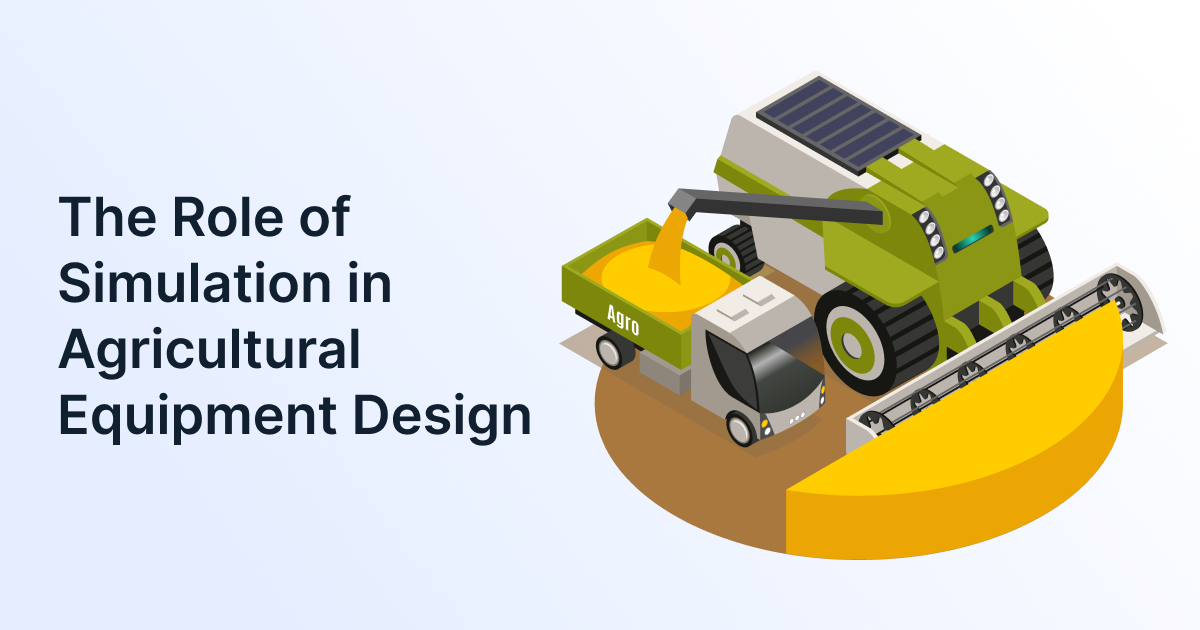
To improve efficiency, reduce costs & accelerate innovation, agricultural equipment design increasingly depends on digital simulation tools. By using advanced engineering simulation software, manufacturers can test, optimise & validate machinery in virtual environments before physical production begins.
Today, agricultural machinery engineering is undergoing a major transformation driven by data, automation & advanced engineering solutions. Simulation empowers engineers to replicate real-world farming conditions, soil resistance, structural stress & environmental factors, without building multiple prototypes. This not only improves accuracy but significantly shortens product development cycles.
For businesses offering specialised agriculture equipment manufacturing services, simulation plays a crucial role in delivering high-performance, durable machinery while maintaining cost efficiency and faster time-to-market.

To reduce development risks and improve machine performance, you need to integrate simulation early into agricultural equipment design. It enables engineers to validate designs digitally, ensuring functionality before investing in costly physical prototypes.
Simulation allows agricultural machinery manufacturers to test multiple design scenarios in controlled virtual environments. For example, engineers can analyse how a tractor behaves under uneven terrain or how harvesting equipment reacts to different crop densities. This predictive capability reduces uncertainties and enhances product reliability.
To enhance precision and innovation, you need engineering simulation software that replicates real farming conditions digitally. These tools allow engineers to model physics-based interactions and predict machine performance accurately.
Modern farm machinery design relies on simulation tools to evaluate multiple parameters simultaneously. From load-bearing capacity to vibration analysis, these tools provide detailed insights that would otherwise require extensive field testing.
The best engineering simulation software allows manufacturers to make data-backed decisions, improving both product performance and lifecycle reliability.
To maximise performance and durability, you need to apply simulation across multiple aspects of agricultural machinery engineering. It supports every stage from concept design to operational optimisation.
Simulation plays a vital role in ensuring that machinery performs consistently under real-world agricultural conditions. It also helps reduce unexpected failures and enhances safety.
For additional industry context, you can explore how digital transformation is shaping agriculture in this blog on How agriculture technology is transforming the agricultural machinery.
To stay competitive, you need simulation-driven workflows that enable faster innovation and efficient production in agricultural machinery design. Simulation has become a strategic tool for modern manufacturers.
By integrating simulation into manufacturing processes, companies can streamline production and reduce errors. It helps identify potential design flaws even before production begins, reducing waste and improving output quality.
Simulation also addresses key engineering challenges discussed in this detailed resource about Overcoming top engineering challenges in agricultural machinery manufacturing.
To achieve precision and efficiency, you need to choose the best engineering simulation software suited to your project requirements. Different tools offer specialised capabilities for various simulation needs.
| Simulation Tool | Key Strength | Application |
| ANSYS | Multi-physics simulation | Structural & thermal analysis |
| Abaqus | Nonlinear simulation | Soil and material behaviour |
| SolidWorks Simulation | CAD-integrated design | Rapid product validation |
| Siemens NX | End-to-end engineering | Design and simulation integration |
These tools are typically implemented through engineering consulting services, ensuring proper integration and maximum ROI from simulation investments.
To optimise product development, you need to embed simulation at every stage of the agricultural equipment design lifecycle. It enhances decision-making and ensures efficient execution from concept to production.
Simulation supports a structured approach to product development, enabling continuous improvement at each stage.
For a complete breakdown of this workflow, refer to The agricultural equipment design process from concept to production and get a brief understanding.
To build environmentally efficient machinery, you need simulation tools that optimise resources and reduce environmental impact in agricultural machinery design.
Sustainability is becoming a critical focus area, and simulation helps manufacturers align with global environmental standards without compromising performance.
These outcomes are often achieved through advanced engineering solutions that combine simulation with real-time data insights.
To address complexity and reduce risks, you need simulation tools that provide predictive insights for farm machinery design. It helps solve some of the biggest engineering challenges in the industry.
With the support of engineering design services and engineering consulting services, companies can effectively overcome these challenges and drive innovation.
Simulation is no longer optional; it is a fundamental part of modern agricultural equipment design. By leveraging engineering simulation software, manufacturers can improve efficiency, reduce costs & deliver high-performance machinery tailored to real-world farming needs.
Organisations that invest in advanced engineering solutions, along with expert engineering design services and engineering consulting services, are better positioned to lead in this evolving industry.
If you’re looking to optimise your design processes and enhance product performance, now is the time to take the next step. Connect with our experts today to explore how simulation-driven engineering can transform your agricultural machinery development.

1. What is simulation in agricultural equipment design?
Simulation involves using digital tools to replicate real-world conditions and test machinery virtually. It helps engineers validate designs, improve performance & reduce the need for physical prototypes, making development more efficient and cost-effective.
2. Why is engineering simulation software important?
It enables accurate modelling of mechanical, structural & environmental factors. This helps identify potential issues early, reduce risks & improve overall design accuracy.
3. Which is the best engineering simulation software?
The best tool depends on the application. ANSYS, Abaqus & SolidWorks are widely used for different types of simulations such as structural, thermal & fluid analysis.
4. How does simulation reduce design costs?
Simulation reduces costs by minimising physical prototyping, enabling virtual testing & allowing early detection of design flaws before production begins.
5. How does simulation improve farm machinery design?
It enhances performance, durability & precision by allowing engineers to test multiple scenarios and optimise designs using data-driven insights.
6. Can simulation support sustainable design?
Yes, simulation optimises material usage, improves fuel efficiency & reduces environmental impact, making machinery more sustainable.
7. What role do engineering consulting services play?
These services help implement simulation tools effectively, ensuring better design strategies and improved outcomes.
8. How do agricultural machinery manufacturers benefit from simulation?
They benefit through reduced development time, improved product quality, enhanced innovation & better cost management.

Senior Vice President, Katalyst Engineering
Bhavik Shah is the Vice President of Global Engineering and Manufacturing at Katalyst Engineering, with over 22 years of experience in the engineering industry. He specializes in product development, R&D, and engineering delivery operations, driving innovative, design-led solutions across automotive, industrial, and off-highway sectors. Bhavik plays a key role in strengthening engineering strategies, building global partnerships, and delivering high-performance outcomes for clients.