At Katalyst Engineering Services, we continually strive to drive innovation by deftly utilizing these resources, changing the issues encountered by various industries and fields with potential solutions.
At Katalyst Engineering Services, we continually strive to drive innovation by deftly utilizing these resources, changing the issues encountered by various industries and fields with potential solutions.

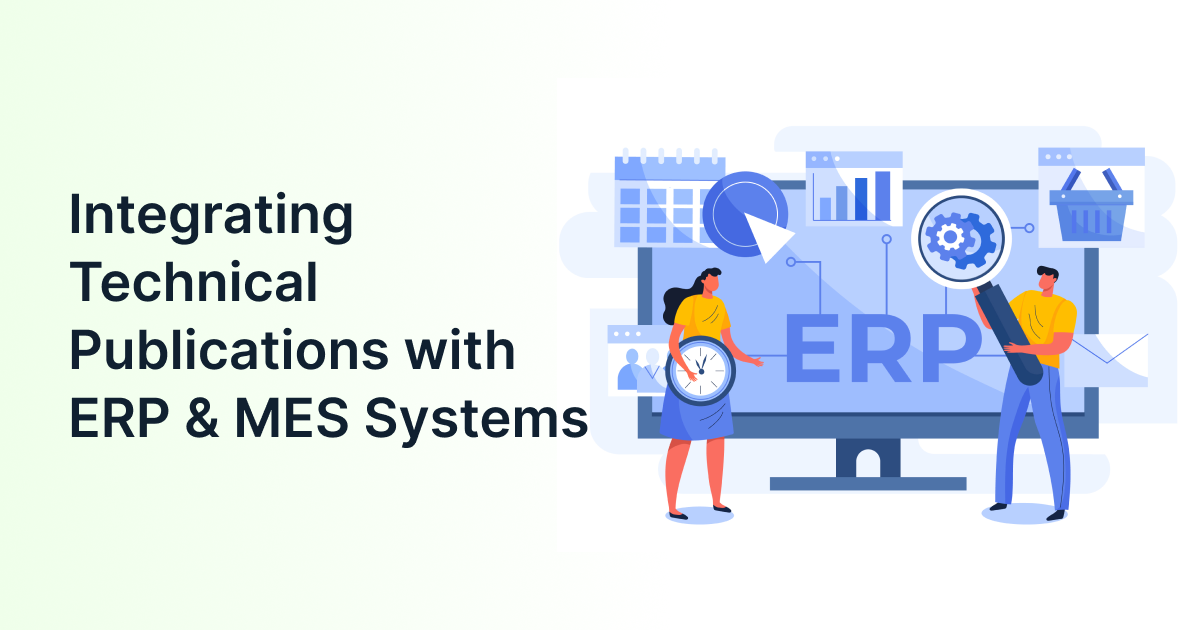
To streamline manufacturing operations and ensure real-time data accuracy, you need to integrate technical publications with ERP and MES systems. This enables seamless data flow, reduces manual errors, enhances compliance & ensures that engineering documentation systems stay aligned with production realities.
In today’s complex manufacturing ecosystem, disconnected systems often lead to inefficient workflows, outdated documentation & compliance risks. Integrating ERP and MES with technical publications helps organisations bridge this gap by transforming static manuals into dynamic, data-driven assets.
Companies leveraging engineering design services, engineering services & advanced engineering solutions are increasingly adopting ERP and MES integration to ensure their documentation evolves alongside production processes. When supported by robust technical publication services, this integration becomes a strategic advantage for manufacturing efficiency and product lifecycle management.

To unify business planning and shop-floor execution, you need ERP and MES integration that facilitates seamless data exchange between enterprise systems and manufacturing operations. This integration ensures consistent data visibility, improved decision-making & synchronised workflows across departments.
ERP systems handle planning, finance & supply chain functions, while MES systems focus on real-time production monitoring. When these systems are integrated with engineering documentation systems, they ensure documentation accuracy across the product lifecycle.
This highlights the growing need for integrated ecosystems that combine planning, execution & documentation.
To ensure accurate and up-to-date documentation, you need technical publications integrated with ERP and MES systems that automatically reflect real-time production data and engineering updates.
Technical publications act as the bridge between design and manufacturing, ensuring that process manuals, assembly instructions & compliance documentation are always accurate.
By integrating –
…organisations can eliminate silos and create a single source of truth.
This is especially critical for companies using engineering design services and advanced engineering solutions where frequent design updates must reflect instantly on the shop floor.
To enhance operational efficiency and reduce downtime, you need to integrate technical publications with ERP systems that ensure synchronised data flow between documentation and enterprise processes.
Key benefits include –
For deeper insight into reducing operational disruptions, explore this guide on best practices for technical documentation.
This integration is particularly impactful when supported by engineering services that ensure documentation aligns with evolving operational needs.
To improve production efficiency, you need MES integration that feeds real-time floor data into manufacturing documentation software, ensuring continuous updates and contextual relevance.
MES integration enables –
This creates a feedback loop where shop-floor data directly improves documentation quality, an essential feature of modern RP integrated technical publication management solutions.
Companies adopting advanced engineering solutions benefit from dynamic documentation that supports agile manufacturing environments.
To manage the entire product lifecycle effectively, you need PLM ERP MES integration that centralises product data across design, planning & execution systems.
PLM ensures that design updates flow seamlessly into ERP and MES, maintaining documentation accuracy.
For a deeper understanding of lifecycle integration, read this detailed blog on technical publications for PLM.
This integration is critical for –
Organisations leveraging engineering design services can ensure that product updates are instantly reflected across documentation and operations.
To successfully implement integration, you need to address challenges such as data silos, legacy systems & inconsistent documentation standards.
Common obstacles include –
However, adopting scalable manufacturing documentation software and modern engineering services can mitigate these challenges and ensure a smooth transition.
| Feature | Traditional Documentation | Integrated ERP & MES Documentation |
| Data Updates | Manual | Automated and real-time |
| Accuracy | Prone to errors | Highly accurate |
| Compliance | Difficult to track | Easily managed |
| Accessibility | Limited | Centralised and instant |
| Efficiency | Low | High |
To maintain compliance in manufacturing, you need integrated systems that ensure documentation is consistently updated and audit-ready.
ERP and MES integration helps –
Learn more about compliance benefits in this blog on technical publications and regulatory compliance.
This is crucial for industries like aerospace, healthcare & automotive that rely on advanced engineering solutions and strict compliance frameworks.
To maximise operational efficiency, industries such as automotive, aerospace & heavy engineering benefit significantly from integrating technical publications with ERP and MES systems.
These industries rely heavily on –
Leveraging engineering services ensures these integrations deliver measurable ROI and scalability.
To future-proof your operations, you need ERP and MES integration that transforms technical publications into dynamic, intelligent systems. This not only improves efficiency but also ensures compliance, scalability & innovation.
Organisations adopting engineering design services, engineering services & advanced engineering solutions are well-positioned to lead the next phase of digital manufacturing transformation.
Ready to optimise your documentation and integration strategy? Get in touch with our experts today.

1. What is ERP and MES integration?
ERP and MES integration connects enterprise resource planning systems with manufacturing execution systems, enabling seamless data flow across business planning and production processes. This ensures real-time visibility, improved efficiency & synchronised operations across departments.
2. Why is technical documentation important in manufacturing?
Technical documentation ensures that manufacturing processes are standardised, repeatable & compliant. It provides operators with clear instructions, reduces errors & supports product quality across the lifecycle.
3. How does integration improve manufacturing efficiency?
Integration eliminates data silos, automates documentation updates & ensures real-time visibility. This leads to reduced downtime, improved decision-making & increased productivity on the shop floor.
4. What is PLM ERP MES integration?
PLM ERP MES integration connects product lifecycle management systems with enterprise and manufacturing systems, ensuring consistent data flow from design to production and documentation.
5. What industries need ERP and MES integration the most?
Industries such as aerospace, automotive, healthcare & heavy engineering benefit significantly due to their complex processes and strict compliance requirements.
6. What challenges can arise during integration?
Challenges include legacy system compatibility, data inconsistencies, integration complexity & lack of standardisation in documentation processes.
7. How can companies overcome integration challenges?
By adopting scalable solutions, investing in modern engineering services & implementing standardised documentation systems, companies can ensure seamless integration.

Senior Vice President, Katalyst Engineering
Bhavik Shah is the Vice President of Global Engineering and Manufacturing at Katalyst Engineering, with over 22 years of experience in the engineering industry. He specializes in product development, R&D, and engineering delivery operations, driving innovative, design-led solutions across automotive, industrial, and off-highway sectors. Bhavik plays a key role in strengthening engineering strategies, building global partnerships, and delivering high-performance outcomes for clients.