At Katalyst Engineering Services, we continually strive to drive innovation by deftly utilizing these resources, changing the issues encountered by various industries and fields with potential solutions.
At Katalyst Engineering Services, we continually strive to drive innovation by deftly utilizing these resources, changing the issues encountered by various industries and fields with potential solutions.

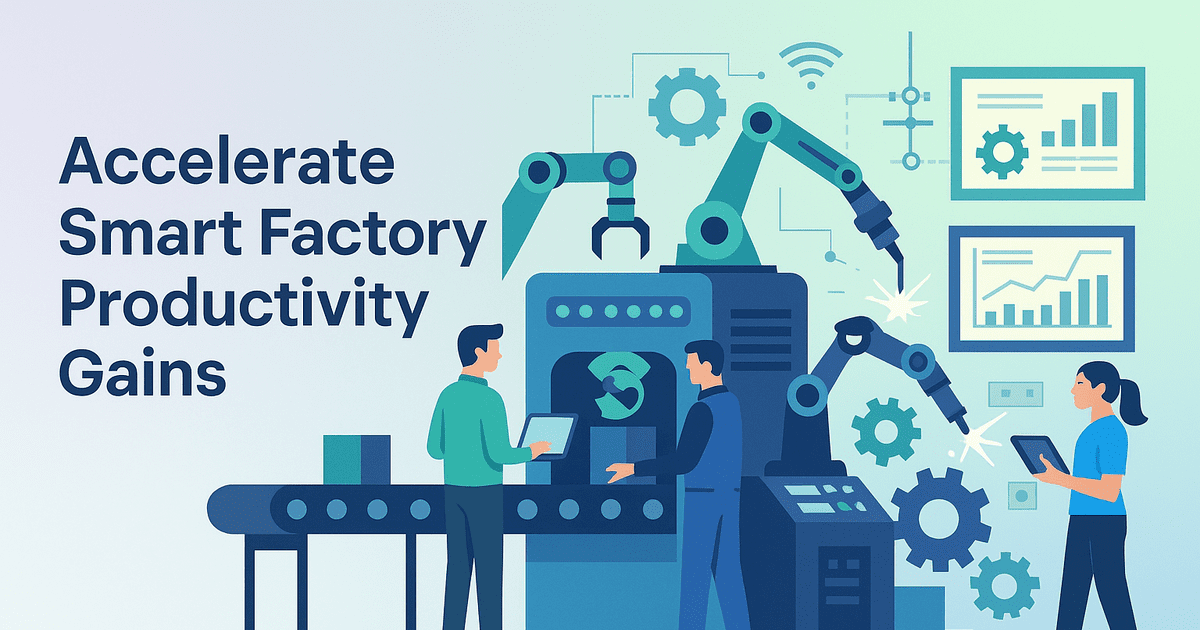
Rising energy costs, unplanned downtime, and skilled-labor shortages are squeezing margins across the shop floor. Smart manufacturing turns plants into adaptive, data-driven systems that cut waste, stabilize quality, and scale output without adding headcount. In short: to future-proof production, you need connected assets, real-time analytics & a clear adoption roadmap.
If you’re evaluating manufacturing services or manufacturing solutions to accelerate this shift, the right partner can help you design the architecture, integrate analytics, and measure ROI without disrupting daily operations.
To adopt smart manufacturing, you need a connected stack that turns machine data into automatic decisions on quality, throughput, and energy. This is why the future of manufacturing is less about bigger lines and more about smarter data flows.
Smart manufacturing blends IIoT sensors, edge/cloud compute, AI/ML models, and automation (robots, cobots, AGVs) into one operating system for the plant. The result is a smart factory that self-optimizes. It spots tolerance drift before scrap happens, schedules maintenance before breakdowns, and aligns workloads to off-peak tariffs.
Did you know? The Asia-Pacific smart manufacturing market is projected to reach USD 620 billion by 2036, growing at a 14.5% CAGR from 2026, driven by Industry 4.0, AI-powered manufacturing, and IIoT adoption. |
To make smart manufacturing technologies work, you need five layers that move data from sensors to actions. These layers form the backbone of the smart manufacturing industry and the smart factory and smart manufacturing movement.
This stack enables smart manufacturing engineering teams to compress SOP cycles, improve first-pass yield, and reduce unplanned downtime.
For a deeper look at how this plays out in real plants, see how smart engineering solutions streamline production across discrete and process lines.
To capture value from smart factory automation, you need to target KPIs that move the P&L: changeover time, first-pass yield & unplanned downtime. These are the levers that turn technology into margin.
| Metric | Traditional Line | Smart Factory Line |
| Changeover Time | ~4 hours | ~45 minutes |
| First-Pass Yield | ~92% | ~98% |
| Unplanned Downtime | ~10 hours/month | ~2 hours/month |
This snapshot shows why the smart factory industry 4.0 wave is accelerating: it converts data into measurable cost and risk reductions.
To clear the confusion, you need a simple distinction: “smart manufacturing” is the operating philosophy; “the smart factory” is the physical site where it runs. This nuance matters when planning engineering services for smart manufacturing.
Both concepts sit under the future of smart manufacturing, where plants operate as connected, data-centric networks linking producers, suppliers, and recyclers.

To estimate pilot cost, you need scope clarity: one line or cell, 3–5 critical assets instrumented, and one KPI owner. Pilots stay affordable when they’re bounded and tied to a single business outcome.
Typical pilot components –
Payback usually comes from fewer defects, less scrap, and shorter changeovers. Pair this with value engineering workshops: early design changes cost far less than post-launch fixes and protect margins.
To stay ahead in 2026, you need to plan for AI agents, composable production, and private networks on the factory floor. These trends define the future of smart factories and the next wave of the smart manufacturing industry.
For leaders mapping this journey, this guide on future-proofing factories with smart factory solutions offers a practical next read.
To scale beyond pilots, you need manufacturing systems that unify MES, ERP, and PLM under one data backbone. This is the digital spine of Industry 4.0 smart manufacturing.
A unified backbone coordinates engineering change orders, supplier networks, and compliance records, enabling faster launches and real-time insights. Without it, analytics stay siloed and ROI stalls.
To avoid stalled programs, you need to address OT/IT communication gaps, cybersecurity, and legacy PLC protocols early. These are the top three brakes on the future of manufacturing transformations.
Human-centric training matters too: phishing remains a leading breach vector, so role-based drills and SOP updates are mandatory.
To launch in 90 days, you need a sequenced plan that moves from objective to pilot to scale. This roadmap supports the future of smart manufacturing without big-bang risk.
To move from pilot to plant-wide impact, you need to shift from point solutions to a governed data backbone and repeatable playbooks. This is where many programs stall—and where a second table helps set expectations.
| Aspect | Pilot (One Line/Cell) | Scale (Plant-Wide) |
| Scope | 3–5 critical assets | Dozens of lines/cells |
| Data model | Ad hoc tags | Standardized semantics |
| Integration | Manual exports | MES/ERP/PLM APIs |
| Security | Basic segmentation | Zero-trust, continuous scanning |
| Governance | Single KPI owner | Cross-functional steering |
Use this as a checklist when you brief stakeholders or vendors. It keeps scope realistic and protects ROI as you expand the smart manufacturing industry footprint inside your plant.

The future of manufacturing isn’t a distant vision; it’s a series of practical steps that turn data into daily gains on the shop floor. Start with one KPI, run a tight 90-day pilot, and scale what works. If you’d like a second pair of eyes on your roadmap, the Katalyst team is ready to walk through your priorities and help you move from pilot to plant-wide impact.
1. What is smart manufacturing in simple terms?
Smart manufacturing is the use of connected machines, real-time data, and automation to make production faster, cleaner & more reliable. Instead of reacting to issues after they occur, plants anticipate problems and adjust automatically. This approach is central to the future of manufacturing and the smart manufacturing industry.
2. How is a smart factory different from a traditional factory?
A traditional factory relies on manual checks and end-of-shift reports. A smart factory connects assets so scheduling, maintenance, and quality decisions run on live data. This shift reduces scrap, shortens changeovers, and cuts unplanned downtime. Core benefits of smart factory automation for manufacturers.
3. Which smart manufacturing technologies should we pilot first?
Start with IIoT sensors on critical assets, edge analytics for low-latency insights, and a dashboard tied to one KPI (OEE, yield, or downtime). Once stable, layer in predictive quality and energy-aware scheduling. These are proven entry points in smart manufacturing engineering projects.
4. What ROI timeline should we expect from a smart factory pilot?
Most teams see measurable gains within 6–12 weeks on the pilot line. Fewer defects, faster changeovers, and less downtime. Full payback depends on scope, but pairing pilots with value engineering workshops accelerates margin improvements by preventing costly post-launch fixes.
5. Is smart factory industry 4.0 only for large enterprises?
No. Modular cells, cloud analytics, and cobots make smart manufacturing accessible to mid-market OEMs. The key is a focused pilot on one KPI and a clear scale playbook, not a plant-wide rip-and-replace.
6. How do manufacturing systems like MES/ERP/PLM fit into smart manufacturing?
MES, ERP, and PLM form the digital backbone that coordinates work orders, quality records, and engineering changes. Without this backbone, analytics stay siloed and hard to act on. Unified systems are essential to scale the future of smart manufacturing.
7. What cybersecurity steps are non-negotiable for smart factories?
Adopt network segmentation, role-based access, regular patching, and continuous vulnerability scanning. Human training is equally critical since phishing remains a top breach vector. These steps protect the long-term future of manufacturing transformations.
8. Can smart manufacturing help with sustainability goals?
Yes. Energy-aware scheduling aligns workloads with off-peak tariffs, and emissions tracking simplifies compliance. Over time, this reduces energy spend and supports ESG reporting: key benefits of smart factory automation for manufacturers.

Senior Vice President, Katalyst Engineering
Bhavik Shah is the Vice President of Global Engineering and Manufacturing at Katalyst Engineering, with over 22 years of experience in the engineering industry. He specializes in product development, R&D, and engineering delivery operations, driving innovative, design-led solutions across automotive, industrial, and off-highway sectors. Bhavik plays a key role in strengthening engineering strategies, building global partnerships, and delivering high-performance outcomes for clients.